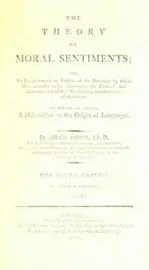
The theory of moral sentiments
Adam Smith · 1759
Politics, economics and society › Classical economics and free markets
#627 most recommended
Hacker News
81
mentions by 63 people · top 4% of 15,732 books
Open Library
4.00★★★★★★★★★★
2 ratings · 28 want to read
Wikipedia
4,348
article views a month
About the book
Adam Smith's account of how people judge conduct, their own and others', and what makes a person virtuous. It covers propriety, merit and demerit, the virtues of prudence, justice, beneficence and self-command, and how society and custom shape moral feeling. Moral judgment rests on sympathy, our ability to imagine ourselves in another person's situation and share their feelings, rather than on reason alone or on a single innate faculty. We assess our own conduct by imagining how an impartial spectator, an internalised standard drawn from the judgments of others, would view it. Self-command, restraining selfish passions to a level others can share, is central to virtue, and justice is distinguished as the duty whose violation rightly draws punishment, unlike the looser duty of beneficence.
Written by Claude from what it knows of this book.
What Hacker News says 25% recommend · 0% critical
In the commenters’ own words
I agree, at least in part, that the progress of the modern era was indeed due to both modern science and the principles of the enlightenment. However, I do…
> How is Wealth of Nations surprising for a modern reader? Most people haven't read it, and tend to only reference things like "invisible hand", and skim/skip…
What Open Library readers say 4.00 from 2 ratings
- 51
- 40
- 31
- 20
- 10
- 28 want to read
- 5 reading
- 1 have read
Only 2 ratings: treat the average as a hint.
What Wikipedia says
- published on or before 12 April 1759
- articles in 20 languages
- 4,348 views a month
Reddit communities — coming later
The threads it came up in
- Ask HN: Which book are you reading these days?
- Ask HN: What's the "best" book you've ever read?
- Ask HN: Best books read in 2022?
- Ask HN: What are your favorite books or essays written at least 100 years ago?
- Ask HN: What are the must-read books about economics/finance?
- Ask HN: Which books do you wish you'd read earlier in life?
Free to read
Details
- First published
- 1759
- ISBN
- 9781573928007
- Editions known
- 22 at Open Library
- Open Library
- OL76826W
Early works to 1800EthicsEthics, historyEthiekEthikLanguage and languagesMiami University (Oxford, Ohio)Miami University (Oxford, Ohio). Erodelphian SocietyMorale
Read next: its neighbours on the mosaic
 The Wealth of NationsAdam Smith · 1776 · recommended by 92 people · 8 people recommended both
 Essays on Philosophical SubjectsDugald Stewart · 1982 · recommended by 0 people · named together in 2 comments
 Inquiry into the nature and causes of the wealth of nationsAdam Smith · 1788 · recommended by 9 people · named together in 4 comments
 History of Economic AnalysisJoseph Alois Schumpeter · 1954 · recommended by 1 person · similar by subject and what people say about it
 The Road to SerfdomFriedrich A. von Hayek · 1944 · recommended by 59 people · 2 people recommended both
 The affluent societyJohn Kenneth Galbraith · 1958 · recommended by 11 people · 2 people recommended both
 A treatise of human natureDavid Hume · 1739 · recommended by 12 people · similar by subject and what people say about it
 Wealth of NationsCollins, John · 2017 · recommended by 0 people · similar by subject and what people say about it
 On the Wealth of NationsP. J. O'Rourke · 2007 · recommended by 2 people · similar by subject and what people say about it
 The worldly philosophersRobert L. Heilbroner · 1953 · recommended by 17 people · similar by subject and what people say about it
 Das KapitalKarl Marx · 1867 · recommended by 40 people · similar by subject and what people say about it
 On LibertyJohn Stuart Mill · 1859 · recommended by 45 people · similar by subject and what people say about it
 Two Treatises of GovernmentJohn Locke · 1689 · recommended by 4 people · similar by subject and what people say about it
 The fable of the beesBernard Mandeville · 1705 · recommended by 3 people · similar by subject and what people say about it
 Principles of Political EconomyJohn Stuart Mill · 1848 · recommended by 0 people · similar by subject and what people say about it
 The principles of psychologyWilliam James · 1890 · recommended by 4 people · loosely similar by subject
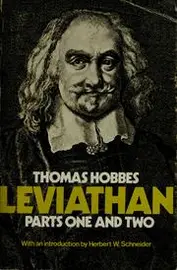 LeviathanThomas Hobbes · 1651 · recommended by 22 people · similar by subject and what people say about it
 The Theory of the Leisure ClassThorstein Veblen · 1899 · recommended by 20 people · similar by subject and what people say about it
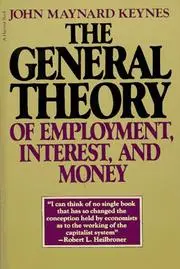 The general theory of employment, interest and moneyJohn Maynard Keynes · 1936 · recommended by 10 people · similar by subject and what people say about it
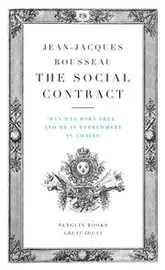 The Social ContractJean-Jacques Rousseau · 1762 · recommended by 9 people · similar by subject and what people say about it
 The Capitalism PapersJerry Mander · 2012 · recommended by 1 person · similar by subject and what people say about it
 Common SenseThomas Paine · 1776 · recommended by 9 people · similar by subject and what people say about it
 The Money MachinePhilip Coggan · 1989 · recommended by 2 people · loosely similar by subject
 Capitalism and SlaveryWilliams Eric · 2018 · recommended by 3 people · similar by subject and what people say about it