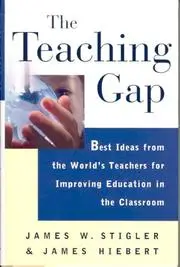
The teaching gap
James W. Stigler · 2007
Politics, economics and society › Education criticism
#4,391 most recommended
Hacker News
22
mentions by 5 people · top 15% of 15,732 books
Open Library
—
No ratings yet
3 want to read
Wikipedia
—
No article yet
About the book
This book compares how mathematics is taught in classrooms in the United States, Japan, and Germany, drawing on video recordings of lessons from the Third International Mathematics and Science Study (TIMSS). It covers classroom instruction and the professional culture around teaching, and is addressed to educators, administrators, and parents. The authors argue that the gap in American student achievement comes mainly from how teaching is done, not from the tests or the curricula. They contend that teaching should be treated as a craft that teachers develop, refine, and share, rather than as a set of individual techniques. The book presents Japanese lesson study, in which teachers plan, observe, and revise lessons together, as a model for sustained improvement, and it calls for institutional support for that kind of collective learning.
Written by Claude from what it knows of this book.
What Hacker News says 20% recommend · 0% critical
In the commenters’ own words
Colin once again submits an article from the United States popular press, here a co-authored op-ed piece, about mathematics education reform in the United…
Once again ColinWright graces the front page of HN on a weekend by submitting a story on mathematics education. The blog post submitted here, by an…
What Open Library readers say
No Open Library reader has rated it yet.
- 3 want to read
- 0 reading
- 0 have read
What critics say, via Wikipedia
No Wikipedia article about this book yet, so no critics to quote.
Reddit communities — coming later
Details
- First published
- 2007
- ISBN
- 9781439143131
- Editions known
- 4 at Open Library
- Open Library
- OL18623956W
Comparative educationMathematicsMathematics, germanMathematics, japaneseMathematics, study and teachingStudy and teaching
Read next: its neighbours on the mosaic
 Learning GapHarold Stevenson · 1994 · recommended by 1 person · named together in 3 comments
 Knowing and teaching elementary mathematicsLiping Ma · 1999 · recommended by 2 people · similar by subject and what people say about it
 Building a better teacherElizabeth Green · 2014 · recommended by 5 people · similar by subject and what people say about it
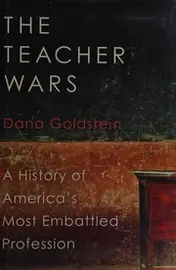 The teacher warsDana Goldstein · 2014 · recommended by 1 person · similar by subject and what people say about it
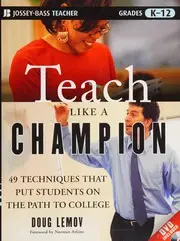 Teach like a championDoug Lemov · 2010 · recommended by 6 people · similar by subject and what people say about it
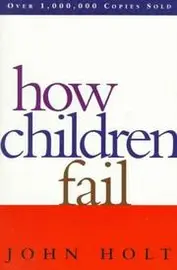 How children failJohn Caldwell Holt · 1964 · recommended by 7 people · similar by subject and what people say about it
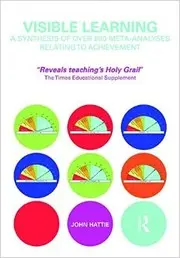 Visible learningJohn Hattie · 2008 · recommended by 6 people · similar by subject and what people say about it
 Vision in elementary mathematicsW. W. Sawyer · 1964 · recommended by 3 people · similar by subject and what people say about it
 When can you trust the experts?Daniel T. Willingham · 2012 · recommended by 1 person · loosely similar by subject
 Mathematics: A Very Short Introductionrecommended by 9 people · loosely similar by subject
 Making SoftwareAndy Oram · 2010 · recommended by 12 people · loosely similar by subject
 A Mathematician's LamentPaul Lockhart · 2009 · recommended by 47 people · similar by subject and what people say about it
 What intelligence tests missKeith E. Stanovich · 2009 · recommended by 6 people · loosely similar by subject
 SuperfreakonomicsSteven D. Levitt · 2009 · recommended by 7 people · loosely similar by subject
 Let's readCynthia A. Barnhart · 2010 · recommended by 2 people · loosely similar by subject
 An Introduction to Mathematical ReasoningPeter J. Eccles · 1997 · recommended by 11 people · loosely similar by subject
 Why Johnny can't addMorris Kline · 1973 · recommended by 1 person · similar by subject and what people say about it
 The Chinese Language: Fact and FantasyJohn DeFrancis · 1984 · recommended by 7 people · loosely similar by subject
 Deschooling SocietyIvan Illich · 1970 · recommended by 26 people · similar by subject and what people say about it
 The Smartest Kids in the WorldAmanda Ripley · 2013 · recommended by 3 people · loosely similar by subject
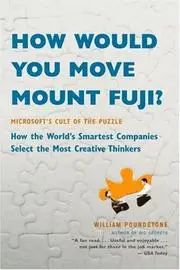 How would you move Mount Fuji?William Poundstone · 2003 · recommended by 7 people · loosely similar by subject
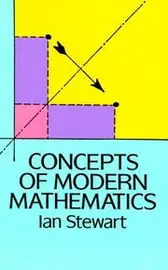 Concepts of modern mathematicsIan Stewart · 1975 · recommended by 12 people · loosely similar by subject
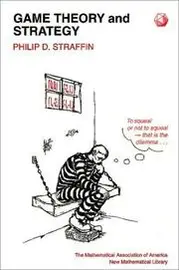 Game theory and strategyPhilip D. Straffin · 1993 · recommended by 2 people · loosely similar by subject
 How To Write MathematicsNorman Earl Steenrod · 1973 · recommended by 9 people · loosely similar by subject