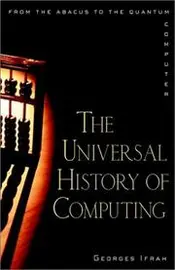
The universal history of computing
Georges Ifrah · 2000
Minds, machines and the future › Turing and computing history
#14,878 most recommended
Hacker News
2
mentions by 2 people · top 79% of 15,732 books
Open Library
—
No ratings yet
3 want to read
Wikipedia
—
No article yet
About the book
The book surveys the history of numbers and of the tools people have used to calculate, from early counting and tally practices through numeration systems such as Egyptian, Babylonian, Chinese, Mayan and Indo-Arabic notation, to the abacus, mechanical calculators and electronic computers. Its scope is worldwide and runs from prehistory to the late twentieth century. This English edition is a translation of Ifrah's French work Histoire universelle des chiffres (1994). Ifrah contends that the history of computing cannot be separated from the history of number systems, since every calculating device depends on a particular way of representing quantities. He traces how positional notation and the concept of zero, developed in India and transmitted through the Arab world, made written and later mechanical arithmetic possible. He presents the modern computer as a continuation of this older story, linking binary logic and Boolean ideas to the machine, and treats the subject as a shared achievement across many cultures rather than a single line of progress.
Written by Claude from what it knows of this book.
What Hacker News says 0% recommend · 0% critical
In the commenters’ own words
A few books on computer / computing / internet history: 1953, Faster Than Thought, B.V. Bowden (British 1940s & 50s)…
I know there's plenty of quality technical books, but I'm looking for the kind of book that I can read a few pages of on the morning bus ride. The first book…
What Open Library readers say
No Open Library reader has rated it yet.
- 3 want to read
- 0 reading
- 0 have read
What critics say, via Wikipedia
No Wikipedia article about this book yet, so no critics to quote.
Reddit communities — coming later
Details
- First published
- 2000
- ISBN
- 9780471441472
- Editions known
- 4 at Open Library
- Open Library
- OL3077421W
Ciência da computação (história)ComputerComputersComputers, historyDatenverarbeitungElectronic data processingGetallenHistoryMachine theoryNumerationProcessamento eletrônico de dados (história)Rekenen
Read next: its neighbours on the mosaic
 A history of computing technologyMichael R. Williams · 1985 · recommended by 2 people · similar by subject and what people say about it
 The Universal History of NumbersGeorges Ifrah · 2000 · recommended by 3 people · similar by subject and what people say about it
 A history of modern computingPaul E. Ceruzzi · 1998 · recommended by 8 people · similar by subject and what people say about it
 ComputationMarvin Minsky · 1967 · recommended by 5 people · similar by subject and what people say about it
 ComputingPaul E. Ceruzzi · 2012 · recommended by 1 person · similar by subject and what people say about it
 Computing in the Middle AgesSevero M. Ornstein · 2002 · recommended by 8 people · similar by subject and what people say about it
 Turing's cathedralGeorge Dyson · 2012 · recommended by 42 people · similar by subject and what people say about it
 Computer scienceJ. Glenn Brookshear · 1985 · recommended by 8 people · similar by subject and what people say about it
 A New History of Modern ComputingThomas Haigh · 2021 · recommended by 3 people · similar by subject and what people say about it
 Turings Cathedral VintageGeorge Dyson · 2012 · recommended by 8 people · similar by subject and what people say about it
 Geeks bearing giftsTed Nelson · 2008 · recommended by 4 people · loosely similar by subject
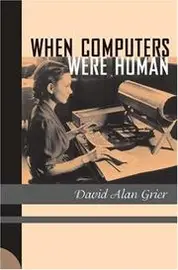 When Computers Were HumanDavid Alan Grier · 2005 · recommended by 2 people · similar by subject and what people say about it
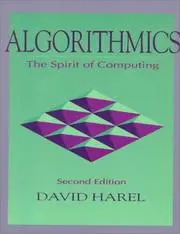 AlgorithmicsDavid Harel · 1987 · recommended by 11 people · similar by subject and what people say about it
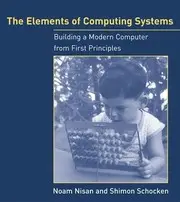 The Elements of Computing SystemsNoam Nisan · 2005 · recommended by 204 people · similar by subject and what people say about it
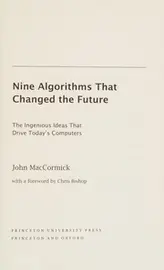 Nine algorithms that changed the futureJohn MacCormick · 2012 · recommended by 4 people · similar by subject and what people say about it
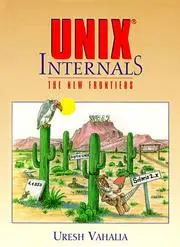 Unix InternalsUresh Vahalia · 1995 · recommended by 6 people · similar by subject and what people say about it
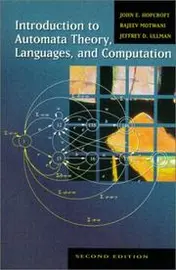 Introduction to automata theory, languages, and computationJohn E. Hopcroft · 1979 · recommended by 24 people · similar by subject and what people say about it
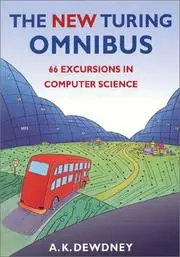 The (new) turing omnibusA.K. Dewdney · 1993 · recommended by 32 people · similar by subject and what people say about it
 History of Modern Computing, Second EditionPaul E. Ceruzzi · 2003 · recommended by 2 people · similar by subject and what people say about it
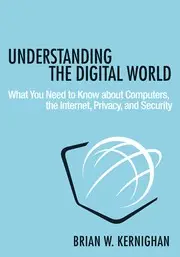 Understanding the Digital WorldBrian W. Kernighan · 2017 · recommended by 6 people · similar by subject and what people say about it
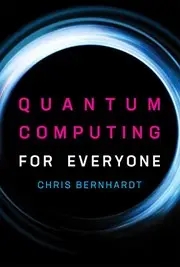 Quantum Computing for EveryoneChris Bernhardt · 2019 · recommended by 3 people · similar by subject and what people say about it
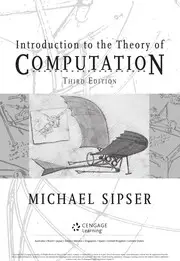 Introduction to the theory of computationMichael Sipser · 1997 · recommended by 66 people · similar by subject and what people say about it
 A history of computing in the twentieth centuryInternational Research Conference on the History of Computing (1976 Los Alamos Scientific Laboratory) · 1980 · recommended by 0 people · similar by subject and what people say about it
 Computer architectureJohn L. Hennessy · 1989 · recommended by 59 people · similar by subject and what people say about it