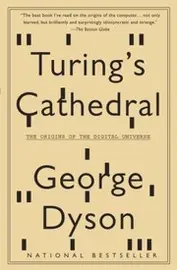
Turings Cathedral Vintage
George Dyson · 2012
Minds, machines and the future › Turing and computing history
#4,056 most recommended
Hacker News
11
mentions by 10 people · top 27% of 15,732 books
Open Library
—
No ratings yet
5 want to read
Wikipedia
—
No article yet
About the book
A history of the Institute for Advanced Study computer project in Princeton, run by John von Neumann from 1945 to about 1951, and of the people, machines and institutions around it. It also follows the parallel work of Alan Turing and the wider scientific and military context that shaped early digital computing. Dyson argues that the stored-program digital computer grew out of specific wartime and scientific needs, such as weather prediction and weapons calculation, rather than arising from pure logic alone. He presents von Neumann's machine as a practical realisation of Turing's universal machine, and treats its random-access memory and code-as-data design as the foundation of the modern digital world. He also suggests that the self-reproducing numerical experiments run on the machine foreshadowed the open-ended, life-like behaviour of later software.
Written by Claude from what it knows of this book.
What Hacker News says 80% recommend · 0% critical
In the commenters’ own words
Most of mine are going to be books by philosophers or scientists (about philosophy or other things). - The Conquest of Happiness by Bertrand Russell was a…
> None of Zuse, Babbage, Torres y Quevedo, Ludgate, Dickinson, Desch, Atanasoff–Berry, Mauchly / Eckert, nor many of the other pioneers of computing came via…
What Open Library readers say
No Open Library reader has rated it yet.
- 5 want to read
- 1 reading
- 1 have read
What critics say, via Wikipedia
No Wikipedia article about this book yet, so no critics to quote.
Reddit communities — coming later
The threads it came up in
Details
- First published
- 2012
- ISBN
- 9781400075997
- Editions known
- 2 at Open Library
- Open Library
- OL17549014W
Computable functionsComputersComputers, historyHistoryMathematicians, biographyNew York Times reviewedRandom access memoryTuring machinesTuring, alan mathison, 1912-1954Von neumann, john, 1903-1957
Read next: its neighbours on the mosaic
 Turing's cathedralGeorge Dyson · 2012 · recommended by 42 people · 6 people recommended both
 Nine algorithms that changed the futureJohn MacCormick · 2012 · recommended by 4 people · similar by subject and what people say about it
 The InformationJames Gleick · 2011 · recommended by 61 people · 2 people recommended both
 Men of mathematicsEric Temple Bell · 1937 · recommended by 12 people · similar by subject and what people say about it
 An introduction to information theoryJohn Robinson Pierce · 1980 · recommended by 15 people · similar by subject and what people say about it
 Exploding the PhonePhil Lapsley · 2013 · recommended by 23 people · similar by subject and what people say about it
 The Dream MachineM. Mitchell Waldrop · 2001 · recommended by 109 people · similar by subject and what people say about it
 The Annotated TuringCharles Petzold · 2008 · recommended by 56 people · similar by subject and what people say about it
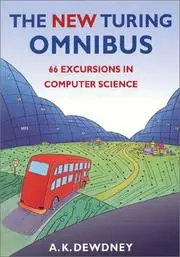 The (new) turing omnibusA.K. Dewdney · 1993 · recommended by 32 people · similar by subject and what people say about it
 The pattern on the stoneW. Daniel Hillis · 1998 · recommended by 18 people · similar by subject and what people say about it
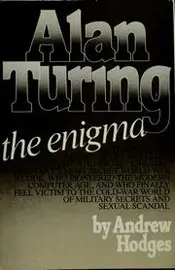 Alan TuringAndrew Hodges · 1983 · recommended by 17 people · similar by subject and what people say about it
 Computing machinery and intelligenceAlan Mathison Turing · 1981 · recommended by 10 people · similar by subject and what people say about it
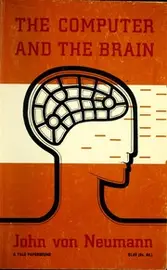 The Computer and the BrainJohn Von Neumann · 1958 · recommended by 9 people · similar by subject and what people say about it
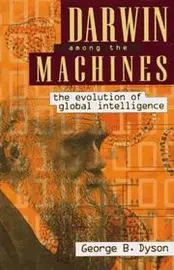 Darwin among the machinesGeorge Dyson · 1997 · recommended by 8 people · similar by subject and what people say about it
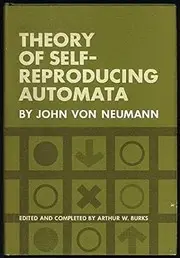 Theory of self-reproducing automataJohn Von Neumann · 1966 · recommended by 4 people · similar by subject and what people say about it
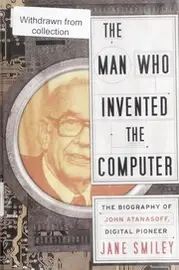 The Man Who Invented the ComputerJane Smiley · 2010 · recommended by 3 people · similar by subject and what people say about it
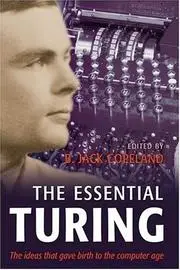 The Essential TuringAlan Mathison Turing · 2002 · recommended by 2 people · similar by subject and what people say about it
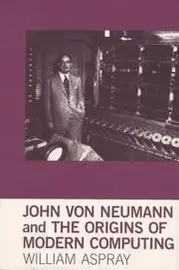 John von Neumann and the origins of modern computingWilliam Aspray · 1990 · recommended by 2 people · similar by subject and what people say about it
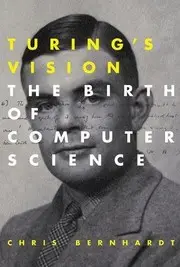 Turing's VisionChris Bernhardt · 2016 · recommended by 1 person · similar by subject and what people say about it
 The Universal Turing Machine A Half-Century SurveyRolf Herken · 1995 · recommended by 1 person · similar by subject and what people say about it
 TuringChristos H. Papadimitriou · 2005 · recommended by 2 people · similar by subject and what people say about it
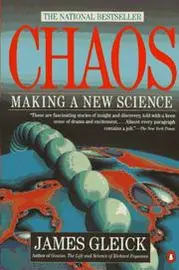 ChaosJames Gleick · 1987 · recommended by 45 people · similar by subject and what people say about it
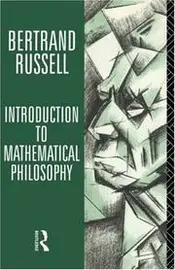 Introduction to mathematical philosophyBertrand Russell · 1919 · recommended by 5 people · similar by subject and what people say about it
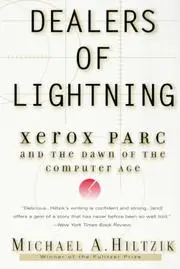 Dealers of LightningMichael A. Hiltzik · 1999 · recommended by 74 people · similar by subject and what people say about it