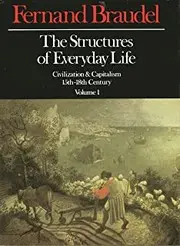
The structures of everyday life
Fernand Braudel · 1981
Minds, machines and the future › Big-picture human history
#3,433 most recommended
Hacker News
22
mentions by 9 people · top 15% of 15,732 books
Open Library
3.00★★★★★★★★★★
1 rating · 8 want to read
Wikipedia
—
No article yet
About the book
A social and economic history of everyday material life in Europe, from roughly the late Middle Ages to the eve of the Industrial Revolution. It covers population, food and drink, clothing, housing, tools and energy, money, and the movement of goods and people, treating ordinary routines as the base on which the period's larger developments rest. Braudel's central claim is that material life changes very slowly and forms a long-lasting base that limits what economies and societies can do. Population growth, harvests, transport, and fuel set ceilings that people rarely broke through, so the period has to be read against these slow cycles. Markets and trade appear as a thin, active layer above a much larger zone of subsistence and self-provision, and the long duration of these structures matters more than short-term events.
Written by Claude from what it knows of this book.
What Hacker News says 78% recommend · 0% critical
In the commenters’ own words
I'd refer you to Peter Turchin, War and Peace and War . He argues that it's not capitalism that leads to wealth concentration, it's peace, stability, and…
Famines were certainly common and devastating. I recommend Braudel's The Structures of Everyday Life: Civilization & Capitalism: 15th-18th Century: Volume 1…
What Open Library readers say 3.00 from 1 rating
- 50
- 40
- 31
- 20
- 10
- 8 want to read
- 0 reading
- 2 have read
Only 1 rating: treat the average as a hint.
What critics say, via Wikipedia
No Wikipedia article about this book yet, so no critics to quote.
Reddit communities — coming later
The threads it came up in
Details
- First published
- 1981
- ISBN
- 9780060148454
- Editions known
- 6 at Open Library
- Open Library
- OL771556W
Biblioteca de cultura socialCivilization, modern--historyColección científica (Instituto Nacional de Antropología e Historia (Mexico))Conduct of lifeEconomic historyEurope, historyHistoria socialHistoryLong Now Manual for CivilizationModern CivilizationSocial historySociology
Read next: its neighbours on the mosaic
 Civilization and Capitalism, 15th-18th CenturyFernand Braudel · 1982 · recommended by 4 people · named together in 2 comments
 The wheels of commerceFernand Braudel · 1982 · recommended by 2 people · similar by subject and what people say about it
 A history of private lifePhilippe Ariès · 1987 · recommended by 5 people · similar by subject and what people say about it
 The ancient economyM. I. Finley · 1973 · recommended by 1 person · similar by subject and what people say about it
 Rise and Fall of American GrowthRobert J. Gordon · 2016 · recommended by 24 people · 2 people recommended both
 Energy and CivilizationVaclav Smil · 2017 · recommended by 23 people · similar by subject and what people say about it
 The Mediterranean and the Mediterranean World in the Age of Philip IIFernand Braudel · 1949 · recommended by 3 people · similar by subject and what people say about it
 The worldly philosophersRobert L. Heilbroner · 1953 · recommended by 17 people · similar by subject and what people say about it
 War and Peace and WarPeter Turchin · 2005 · recommended by 5 people · loosely similar by subject
 Ways of SeeingJohn Berger · 1972 · recommended by 24 people · loosely similar by subject
 Philosophy in the fleshGeorge Lakoff · 1999 · recommended by 14 people · loosely similar by subject
 From Dawn to DecadenceJacques Barzun · 2000 · recommended by 10 people · similar by subject and what people say about it
 The Great TransformationKarl Polanyi · 1944 · recommended by 12 people · similar by subject and what people say about it
 Grand TransitionsVaclav Smil · 2021 · recommended by 1 person · similar by subject and what people say about it
 The world turned upside downChristopher Hill · 1972 · recommended by 2 people · loosely similar by subject
 The Death and Life of Great American CitiesJane Jacobs · 1961 · recommended by 61 people · similar by subject and what people say about it
 The long twentieth centuryGiovanni Arrighi · 1994 · recommended by 2 people · similar by subject and what people say about it
 Small Is BeautifulE. F. Schumacher · 1973 · recommended by 19 people · similar by subject and what people say about it
 The world we have lostPeter Laslett · 1965 · recommended by 5 people · similar by subject and what people say about it
 The money gameAdam Smith · 1968 · recommended by 2 people · loosely similar by subject
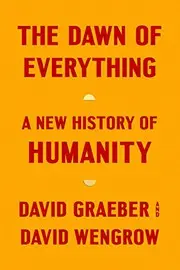 The Dawn of EverythingDavid Graeber · 2021 · recommended by 110 people · similar by subject and what people say about it
 Deschooling SocietyIvan Illich · 1970 · recommended by 26 people · loosely similar by subject
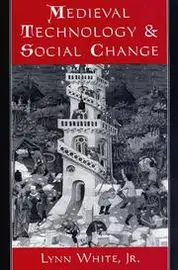 Medieval technology and social changeLynn White Jr · 1962 · recommended by 5 people · similar by subject and what people say about it
 The civilizing processNorbert Elias · 1939 · recommended by 2 people · similar by subject and what people say about it