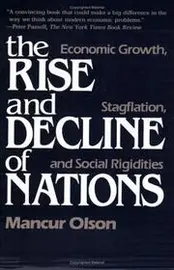
The Rise and Decline of Nations
Mancur Olson · 1982
Politics, economics and society › Authority and institutions
#3,858 most recommended
Hacker News
14
mentions by 10 people · top 22% of 15,732 books
Open Library
—
No ratings yet
31 want to read
Wikipedia
—
No article yet
About the book
The book asks why some nations grow faster than others over long periods, focusing on stable industrialized democracies since the Second World War, such as Britain, the United States, Germany, and Japan. It covers how economic institutions, social structure, and political organization shape growth, unemployment, and inflation across these countries. Olson argues that societies left undisturbed for long periods accumulate distributional coalitions, such as trade unions, cartels, professional associations, and lobbies. Small groups find it easier than large ones to organize for collective action, so these coalitions win shares of national output rather than creating new wealth. Over time they add rigidity, slow the adoption of new technology, and raise the risk of stagflation and unemployment. He presents the rapid postwar recoveries of defeated and occupied states such as Germany and Japan as evidence, since war and occupation cleared out their old coalitions.
Written by Claude from what it knows of this book.
What Hacker News says 60% recommend · 0% critical
In the commenters’ own words
> Copyright and patents only appeared in the 18th century. I find the argument that copyright and patents appear only recently in historical terms…
I read a lot. These were the best books I read this year. The Shadow of the Sun by Ryszard Kapuściński. Kapuściński was a Polish journalist who traveled…
What Open Library readers say
No Open Library reader has rated it yet.
- 31 want to read
- 1 reading
- 1 have read
What critics say, via Wikipedia
No Wikipedia article about this book yet, so no critics to quote.
Reddit communities — coming later
The threads it came up in
Details
- First published
- 1982
- ISBN
- 9780300030792
- Editions known
- 6 at Open Library
- Open Library
- OL108559W
CasteEconomic developmentEconomicsEffect of inflation onInternationaler VergleichLabor supplyPolitologieStagflationUnemploymentWirtschaftWirtschaftsentwicklungWirtschaftssoziologieWirtschaftswachstumbusiness associations
Read next: its neighbours on the mosaic
 The logic of collective actionMancur Olson · 1965 · recommended by 11 people · 2 people recommended both
 Power and prosperityMancur Olson · 2000 · recommended by 3 people · similar by subject and what people say about it
 SupercapitalismRobert B. Reich · 2007 · recommended by 3 people · similar by subject and what people say about it
 Politics among NationsHans Morgenthau · 1948 · recommended by 1 person · similar by subject and what people say about it
 The end of growthRichard Heinberg · 2011 · recommended by 2 people · similar by subject and what people say about it
 A Farewell to AlmsGregory Clark · 2007 · recommended by 16 people · similar by subject and what people say about it
 The age of uncertaintyJohn Kenneth Galbraith · 1977 · recommended by 1 person · similar by subject and what people say about it
 The entropy law and the economic processNicholas Georgescu-Roegen · 1971 · recommended by 1 person · similar by subject and what people say about it
 The Great TransformationKarl Polanyi · 1944 · recommended by 12 people · similar by subject and what people say about it
 Rise and Fall of American GrowthRobert J. Gordon · 2016 · recommended by 24 people · similar by subject and what people say about it
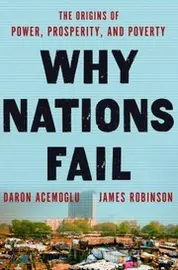 Why Nations FailDaron Acemoglu · 2012 · recommended by 74 people · similar by subject and what people say about it
 The Capitalism PapersJerry Mander · 2012 · recommended by 1 person · loosely similar by subject
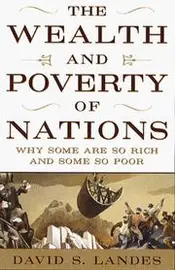 The wealth and poverty of nationsDavid S. Landes · 1998 · recommended by 4 people · similar by subject and what people say about it
 The economy of citiesJane Jacobs · 1969 · recommended by 4 people · similar by subject and what people say about it
 Inquiry into the nature and causes of the wealth of nationsAdam Smith · 1788 · recommended by 9 people · similar by subject and what people say about it
 The Tragedy of Great Power PoliticsJohn J. Mearsheimer · 2001 · recommended by 4 people · loosely similar by subject
 Ecology and the politics of scarcityWilliam Ophuls · 1977 · recommended by 1 person · loosely similar by subject
 The Great StagnationTyler Cowen · 2011 · recommended by 5 people · similar by subject and what people say about it
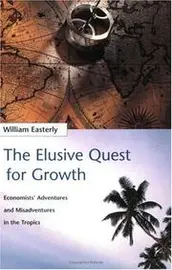 The Elusive Quest for GrowthWilliam Russell Easterly · 2001 · recommended by 5 people · similar by subject and what people say about it
 Beyond GrowthHerman E. Daly · 1996 · recommended by 2 people · similar by subject and what people say about it
 The breakdown of nationsLeopold Kohr · 1957 · recommended by 5 people · similar by subject and what people say about it
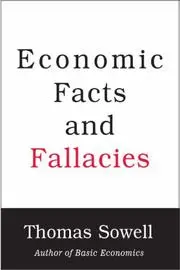 Economic Facts and FallaciesThomas Sowell · 2007 · recommended by 8 people · similar by subject and what people say about it
 The affluent societyJohn Kenneth Galbraith · 1958 · recommended by 11 people · similar by subject and what people say about it
 Rules of ContagionAdam Kucharski · 2020 · recommended by 1 person · loosely similar by subject