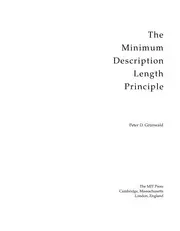
The minimum description length principle
Peter D. Grünwald · 2007
Machine learning, statistics and probability › Probability, causality and information theory
#6,152 most recommended
Hacker News
6
mentions by 6 people · top 42% of 15,732 books
Open Library
4.00★★★★★★★★★★
1 rating · 1 want to read
Wikipedia
—
No article yet
About the book
The book covers the minimum description length (MDL) principle, a method of statistical inference and model selection that rests on information theory and data compression. It moves from the basics of coding and information-theoretic concepts to universal codes and the stochastic complexity of statistical models. It sits at the intersection of statistics, machine learning, and information theory. Learning from data is a matter of compression: the best explanation of a set of observations is the one that lets them be encoded most briefly, counting the cost of describing the model as well as the data given the model. The book develops refined forms of this idea, such as normalized maximum likelihood and stochastic complexity, to avoid overfitting without relying on subjective priors. It compares MDL with Bayesian and other frequentist approaches, and argues that it gives a unified, prior-free criterion for model selection and prediction.
Written by Claude from what it knows of this book.
What Hacker News says 33% recommend · 33% critical
In the commenters’ own words
The creationist comparison shows up other places, too. I've encountered it several times before, and you can Google "denialist creationist" to find more. Me…
No need stupid moving texts. CS231n: Convolutional Neural Networks for Visual Recognition - https://cs231n.github.io/ The Unreasonable Effectiveness of…
What Open Library readers say 4.00 from 1 rating
- 50
- 41
- 30
- 20
- 10
- 1 want to read
- 0 reading
- 0 have read
Only 1 rating: treat the average as a hint.
What critics say, via Wikipedia
No Wikipedia article about this book yet, so no critics to quote.
Reddit communities — coming later
The threads it came up in
Details
- First published
- 2007
- ISBN
- 9780262072816
- Editions known
- 8 at Open Library
- Open Library
- OL9285354W
Information theoryMinimum description length (Information theory)
Read next: its neighbours on the mosaic
 Probability TheoryE. T. Jaynes · 2003 · recommended by 77 people · similar by subject and what people say about it
 An introduction to information theoryJohn Robinson Pierce · 1980 · recommended by 15 people · similar by subject and what people say about it
 The Nature of Statistical Learning TheoryVladimir Naumovich Vapnik · 1995 · recommended by 3 people · similar by subject and what people say about it
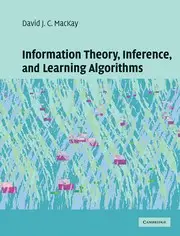 Information Theory, Inference & Learning AlgorithmsDavid J.C. MacKay · 2003 · recommended by 77 people · similar by subject and what people say about it
 Principia mathematicaAlfred North Whitehead · 1910 · recommended by 9 people · similar by subject and what people say about it
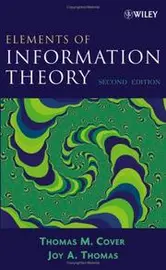 Elements of Information TheoryT. M. Cover · 2006 · recommended by 20 people · similar by subject and what people say about it
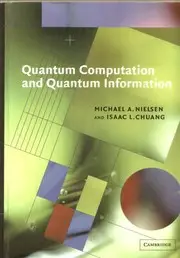 Quantum computation and quantum informationMichael A. Nielsen · 2000 · recommended by 30 people · similar by subject and what people say about it
 Introduction to probability theoryPaul Gerhard Hoel · 1971 · recommended by 7 people · similar by subject and what people say about it
 CausalityJudea Pearl · 2000 · recommended by 17 people · similar by subject and what people say about it
 An introduction to Kolmogorov complexity and its applicationsMing Li · 1993 · recommended by 5 people · similar by subject and what people say about it
 Good and realGary L. Drescher · 2006 · recommended by 8 people · similar by subject and what people say about it
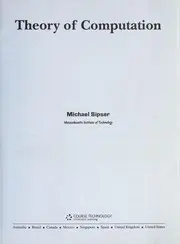 Theory of computationMichael Sipser · 2007 · recommended by 14 people · similar by subject and what people say about it
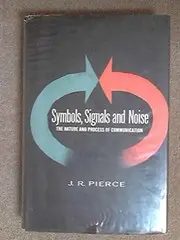 Symbols, signals, and noiseJohn R. Pierce · 1961 · recommended by 12 people · similar by subject and what people say about it
 Universal Artificial IntelligenceMarcus Hutter · 2004 · recommended by 3 people · similar by subject and what people say about it
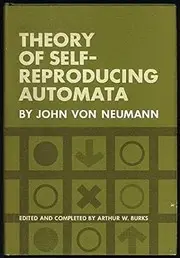 Theory of self-reproducing automataJohn Von Neumann · 1966 · recommended by 4 people · similar by subject and what people say about it
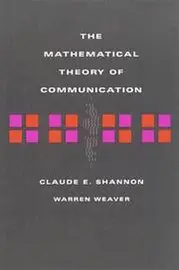 The mathematical theory of communicationClaude Elwood Shannon · 1949 · recommended by 47 people · similar by subject and what people say about it
 Theoretical neurosciencePeter Dayan · 2001 · recommended by 3 people · similar by subject and what people say about it
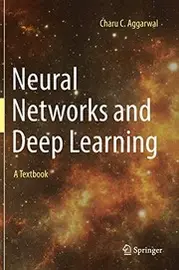 Neural Networks and Deep LearningCharu C. Aggarwal · 2018 · recommended by 72 people · similar by subject and what people say about it
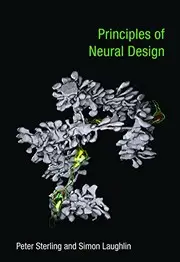 Principles of Neural DesignPeter Sterling · 2015 · recommended by 6 people · similar by subject and what people say about it
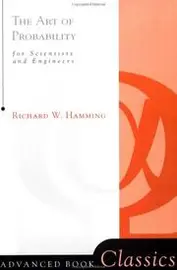 The Art of ProbabilityRichard Hamming · 1990 · recommended by 7 people · similar by subject and what people say about it
 The essence of chaosEdward N. Lorenz · 1993 · recommended by 1 person · similar by subject and what people say about it
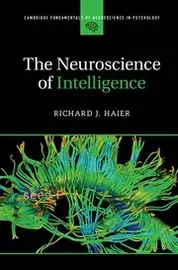 The neuroscience of intelligenceRichard J. Haier · 2016 · recommended by 4 people · similar by subject and what people say about it
 Principles of program analysisFlemming Nielson · 1999 · recommended by 7 people · similar by subject and what people say about it
 The logic of chanceEugene V. Koonin · 2011 · recommended by 2 people · similar by subject and what people say about it