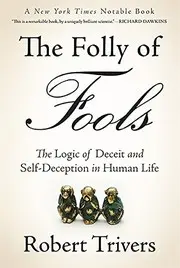
The folly of fools
Robert Trivers, Santiago Foz (argentino) · 2011
Self-help, psychology and business books › Popular social psychology
#11,519 most recommended
Hacker News
5
mentions by 2 people · top 48% of 15,732 books
Open Library
4.00★★★★★★★★★★
1 rating · 10 want to read
Wikipedia
310
article views a month
About the book
The book covers self-deception as a subject in evolutionary biology and psychology, drawing on Trivers' work on deception, conflict and cooperation. It spans the social settings where self-deception operates, including group conflict and courtship, and the physiological systems involved, including neurophysiology and immunology. Trivers argues that self-deception evolved because hiding the truth from one's own conscious mind makes deception of others more convincing and less costly to detect. He links this to the brain's interpretive machinery, to the body's health and immune costs, and to the social advantages of appearing sincere. He also argues that self-deception is not fixed: its effects can be reduced once a person becomes aware of it and of the damage it causes.
Written by Claude from what it knows of this book.
What Hacker News says 50% recommend · 0% critical
In the commenters’ own words
An interesting experiment (for a company that actually has a job and is not leading people on) would be to distinguish a job posting that says "Hiring for…
Because the submitted article mentions the placebo effect, in the usual manner of popular articles, perhaps I should share here some links that are helpful…
What Open Library readers say 4.00 from 1 rating
- 50
- 41
- 30
- 20
- 10
- 10 want to read
- 0 reading
- 2 have read
Only 1 rating: treat the average as a hint.
What Wikipedia says
- published October 25, 2011
- 310 views a month
Reddit communities — coming later
Details
- First published
- 2011
- ISBN
- 9780465027552
- Editions known
- 16 at Open Library
- Open Library
- OL16014923W
Behavior evolutionDeceptionNew York Times reviewedPsychological aspectsSelf-deceptionSocial aspects
Read next: its neighbours on the mosaic
 MindwiseNicholas Epley · 2014 · recommended by 2 people · loosely similar by subject
 Why we make mistakesJoseph T. Hallinan · 2009 · recommended by 3 people · loosely similar by subject
 Why people believe weird thingsMichael Shermer · 1997 · recommended by 9 people · loosely similar by subject
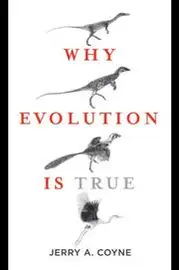 Why evolution is trueJerry A. Coyne · 2009 · recommended by 9 people · loosely similar by subject
 SuperfreakonomicsSteven D. Levitt · 2009 · recommended by 7 people · loosely similar by subject
 Intelligence and how to get itRichard E. Nisbett · 2009 · recommended by 4 people · loosely similar by subject
 The believing brainMichael Shermer · 2011 · recommended by 4 people · loosely similar by subject
 When can you trust the experts?Daniel T. Willingham · 2012 · recommended by 1 person · loosely similar by subject
 Why Everyone Else Is A Hypocrite Evolution And The Modular MindRobert Kurzban · 2012 · recommended by 2 people · similar by subject and what people say about it
 Are we getting smarter?James Robert Flynn · 2012 · recommended by 1 person · loosely similar by subject
 Reading in the BrainStanislas Dehaene · 2009 · recommended by 2 people · loosely similar by subject
 GeniusJames Gleick · 1992 · recommended by 17 people · loosely similar by subject
 Your inner fishNeil Shubin · 2008 · recommended by 8 people · loosely similar by subject
 What intelligence tests missKeith E. Stanovich · 2009 · recommended by 6 people · loosely similar by subject
 BrainwashedSally L. Satel · 2013 · recommended by 2 people · loosely similar by subject
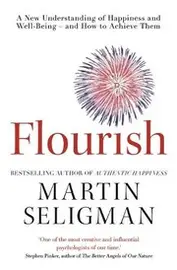 FlourishMartin Elias Pete Seligman · 2011 · recommended by 4 people · loosely similar by subject
 The 33 Strategies of WarRobert Greene · 2006 · recommended by 11 people · loosely similar by subject
 What is intelligence?James Robert Flynn · 2007 · recommended by 4 people · loosely similar by subject
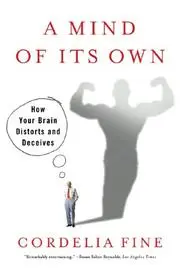 A Mind of Its OwnCordelia Fine · 2005 · recommended by 2 people · similar by subject and what people say about it
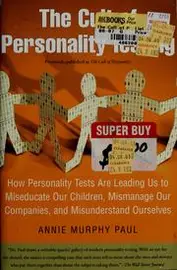 The cult of personality testingAnnie Murphy Paul · 2005 · recommended by 1 person · loosely similar by subject
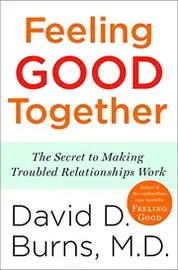 Feeling Good TogetherDavid D. Burns M.D. · 2010 · recommended by 1 person · loosely similar by subject
 The enigma of reasonHugo Mercier · 2017 · recommended by 8 people · similar by subject and what people say about it
 How children failJohn Caldwell Holt · 1964 · recommended by 7 people · loosely similar by subject
 Mistakes Were MadeCarol Tavris · 2007 · recommended by 18 people · similar by subject and what people say about it