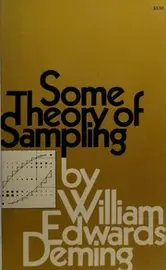
Some theory of sampling
W. Edwards Deming · 1950
Self-help, psychology and business books › Lean manufacturing and quality management
#11,743 most recommended
Hacker News
4
mentions by 2 people · top 54% of 15,732 books
Open Library
—
No ratings yet
3 want to read
Wikipedia
—
No article yet
About the book
The book is a treatment of sampling theory for studies of finite populations, such as inventories, surveys of people, and records kept by business and government. It covers how samples are designed, how the frame a sample is drawn from affects what can be inferred, and how to estimate totals and their precision from the results. Deming argues that a sample is only useful when its frame and purpose are defined, and that the main threats to a practical survey often lie outside chance variation, in matters such as incomplete frames, nonresponse, and measurement error. He presents probability sampling as the basis for defensible statements about a population and treats the choice of design as a question of balancing precision against cost. The central claim is that statistical reasoning about a sample has to be tied to the concrete operations that produced it.
Written by Claude from what it knows of this book.
What Hacker News says 100% recommend · 0% critical
In the commenters’ own words
I second both The Signal and the Noise as well as How to Measure Anything . I also mentioned upthread Willful Ignorance . I think perhaps the best bang for…
I don't think the mathematics is what gets most people into trouble. You can get by with relatively primitive maths, and the advanced stuff is really just a…
What Open Library readers say
No Open Library reader has rated it yet.
- 3 want to read
- 0 reading
- 0 have read
What critics say, via Wikipedia
No Wikipedia article about this book yet, so no critics to quote.
Reddit communities — coming later
Details
- First published
- 1950
- Editions known
- none recorded at Open Library
- Open Library
- OL3190936W
Sampling (Statistics)Statistics
Read next: its neighbours on the mosaic
 Understanding VariationDonald J. Wheeler · 1993 · recommended by 5 people · named together in 2 comments
 Out of the crisisW. Edwards Deming · 1982 · recommended by 24 people · 2 people recommended both
 The new economicsW. Edwards Deming · 1994 · recommended by 5 people · similar by subject and what people say about it
 Theory of ProbabilityBruno de Finetti · 2017 · recommended by 4 people · similar by subject and what people say about it
 The Flaw of AveragesSavage · 1921 · recommended by 4 people · similar by subject and what people say about it
 Performance modeling and design of computer systemsMor Harchol-Balter · 2013 · recommended by 5 people · similar by subject and what people say about it
 NoiseDaniel Kahneman · 2021 · recommended by 3 people · loosely similar by subject
 Lean Product and Process DevelopmentAllen C. Ward · 2007 · recommended by 1 person · loosely similar by subject
 Computer Age Statistical InferenceBradley Efron · 2016 · recommended by 14 people · similar by subject and what people say about it
 Willful IgnoranceHerbert I. Weisberg · 2014 · recommended by 2 people · loosely similar by subject
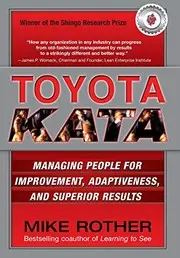 Toyota kataMike Rother · 2009 · recommended by 4 people · loosely similar by subject
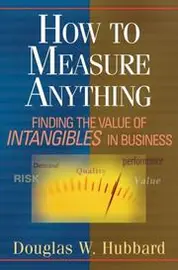 How to Measure AnythingDouglas W. Hubbard · 2007 · recommended by 46 people · similar by subject and what people say about it
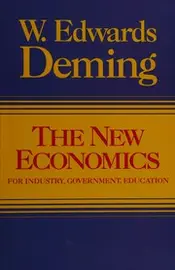 The new economics for industry, government, educationW. Edwards Deming · 1993 · recommended by 2 people · similar by subject and what people say about it
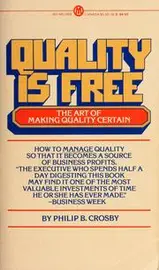 Quality is freePhilip B. Crosby · 1980 · recommended by 1 person · loosely similar by subject
 Accelerated ExpertiseRobert R. Hoffman · 2013 · recommended by 2 people · loosely similar by subject
 Kelly Capital Growth Investment CriterionLeonard C. MacLean · 2010 · recommended by 3 people · loosely similar by subject
 The Signal and the NoiseNate Silver · 2012 · recommended by 47 people · loosely similar by subject
 The poker face of Wall StreetAaron Brown · 2006 · recommended by 3 people · loosely similar by subject
 Data analysisD. S. Sivia · 2006 · recommended by 6 people · similar by subject and what people say about it
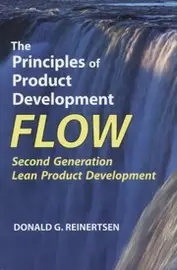 The Principles of Product Development FlowDonald G. Reinertsen · 2009 · recommended by 44 people · loosely similar by subject
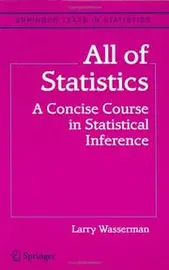 All of StatisticsLarry Wasserman · 2004 · recommended by 40 people · similar by subject and what people say about it
 The Democracy ProjectDavid Graeber · 2013 · recommended by 8 people · loosely similar by subject
 The war trapBruce Bueno de Mesquita · 1981 · recommended by 1 person · loosely similar by subject
 MoneyJacob Goldstein · 2020 · recommended by 7 people · loosely similar by subject