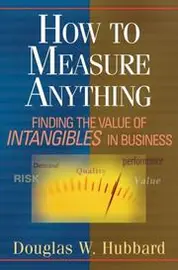
How to Measure Anything
Douglas W. Hubbard · 2007
Self-help, psychology and business books › Managing software teams
#613 most recommended
Hacker News
102
mentions by 58 people · top 4% of 15,732 books
Open Library
4.25★★★★★★★★★★
4 ratings · 45 want to read
Wikipedia
—
No article yet
About the book
The book covers how organizations can quantify things they often assume cannot be measured, such as the value of intangibles, IT security risk, project estimates, and the benefits of a decision. It is aimed at managers and analysts who must make decisions under uncertainty and want practical methods rather than heavy statistics. Hubbard's central claim is that measurement means reducing uncertainty, not achieving perfect precision, so any quantity that matters to a decision can be measured at least somewhat. He argues that people's estimates can be improved through calibration training, and that probability ranges and simple statistical methods such as confidence intervals, Monte Carlo simulation, and expected value of information are enough for most business problems. He also contends that even small samples often reduce uncertainty enough to be useful, and that measurements should be judged by how much they change a decision.
Written by Claude from what it knows of this book.
What Hacker News says 79% recommend · 0% critical
In the commenters’ own words
1.) Be curious. Stay curious. Experiment, play with things. Your time during university is likely the best time for this and it will likely get harder later…
My highlights from this year: 1. "How to Measure Anything" (Douglas Hubbard) Presents a few simple techniques (confidence intervals, Monte Carlo simulations…
What Open Library readers say 4.25 from 4 ratings
- 51
- 43
- 30
- 20
- 10
- 45 want to read
- 1 reading
- 4 have read
Only 4 ratings: treat the average as a hint.
What critics say, via Wikipedia
No Wikipedia article about this book yet, so no critics to quote.
Reddit communities — coming later
The threads it came up in
- Ask HN: Books you read in 2018?
- Ask HN: What books changed the way you think about almost everything?
- Ask HN: Books you read in 2015?
- Ask HN: Which book are you reading these days?
- Ask HN: Favorite nonfiction books of 2018?
- Ask HN: Which books you have read till now that were worth investing time in?
- Ask HN: Books you wish you had read earlier?
- Ask HN: What are the best unknown books you have read?
Details
- First published
- 2007
- ISBN
- 9781118539279
- Editions known
- 32 at Open Library
- Open Library
- OL8206219W
Immateriële activaIntangible propertyLong Now Manual for CivilizationMeasurementMetingenSamplingValuation
Read next: its neighbours on the mosaic
 The Principles of Product Development FlowDonald G. Reinertsen · 2009 · recommended by 44 people · 3 people recommended both
 SuperforecastingPhilip E. Tetlock · 2015 · recommended by 44 people · named together in 3 comments
 Algorithms to Live ByBrian Christian · 2016 · recommended by 69 people · 3 people recommended both
 The Flaw of AveragesSavage · 1921 · recommended by 4 people · named together in 2 comments
 The Lean StartupEric Ries · 2011 · recommended by 281 people · 5 people recommended both
 The new economicsW. Edwards Deming · 1994 · recommended by 5 people · named together in 2 comments
 How to Measure Anything in Cybersecurity RiskDouglas W. Hubbard · 2016 · recommended by 3 people · similar by subject and what people say about it
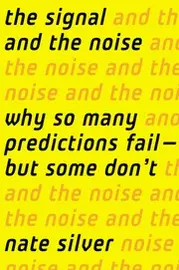 The Signal and the NoiseNate Silver · 2012 · recommended by 47 people · 3 people recommended both
 Lean Product and Process DevelopmentAllen C. Ward · 2007 · recommended by 1 person · named together in 2 comments
 Understanding VariationDonald J. Wheeler · 1993 · recommended by 5 people · named together in 2 comments
 Waltzing With BearsTom DeMarco · 2003 · recommended by 9 people · similar by subject and what people say about it
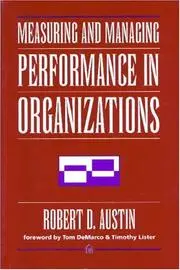 Measuring and managing performance in organizationsRobert D. Austin · 1996 · recommended by 9 people · similar by subject and what people say about it
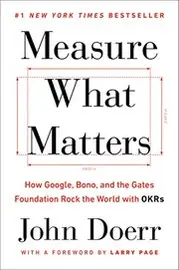 Measure what mattersJohn Doerr · 2017 · recommended by 34 people · similar by subject and what people say about it
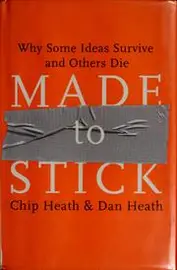 Made to stickChip Heath · 2007 · recommended by 70 people · similar by subject and what people say about it
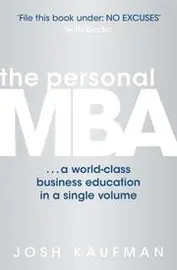 The personal MBAJosh Kaufman · 2010 · recommended by 66 people · 3 people recommended both
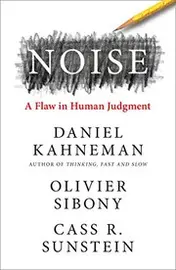 NoiseDaniel Kahneman · 2021 · recommended by 3 people · similar by subject and what people say about it
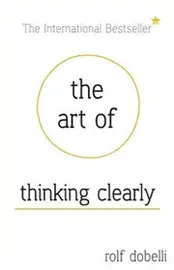 The art of thinking clearlyRolf Dobelli · 2013 · recommended by 15 people · named together in 2 comments
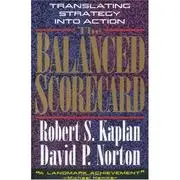 The balanced scorecardRobert S. Kaplan · 1996 · recommended by 2 people · 2 people recommended both
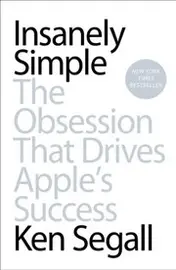 Insanely simpleKen Segall · 2012 · recommended by 4 people · similar by subject and what people say about it
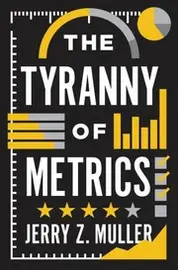 The Tyranny of MetricsJerry Z. Muller · 2017 · recommended by 13 people · similar by subject and what people say about it
 Willful IgnoranceHerbert I. Weisberg · 2014 · recommended by 2 people · similar by subject and what people say about it
 How will you measure your life?Clayton M. Christensen · 2012 · recommended by 29 people · similar by subject and what people say about it
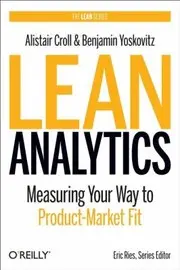 Lean AnalyticsAlistair Croll · 2013 · recommended by 14 people · similar by subject and what people say about it
 Trees, maps, and theoremsJean-Luc Doumont · 2009 · recommended by 3 people · similar by subject and what people say about it