
Promise Theory
Mark Burgess, Jan A. Bergstra · 2014
Programming and computer science › Lisp and Scheme
#6,561 most recommended
Hacker News
7
mentions by 5 people · top 38% of 15,732 books
Open Library
—
No ratings yet
1 want to read
Wikipedia
—
No article yet
About the book
Promise Theory is a framework for describing systems made of autonomous agents, such as computers, software components, devices, and people, where each agent declares what it intends to do and what it will accept from others. The book covers the formal basics of promises and how they combine, along with applications in distributed computing, IT configuration management, and the design of networks and organizations. Mark Burgess argues that a system is best modeled as voluntary promises an agent makes about its own behavior, not as commands imposed from outside, since an agent can only directly control itself. From this he develops principles such as the difference between impositions and promises, and the need to assess whether promises are both kept and accepted. He claims these principles explain why centralized, command-based management tends to be fragile at scale, and that promise-based designs are more robust and easier to reason about.
Written by Claude from what it knows of this book.
What Hacker News says 20% recommend · 20% critical
In the commenters’ own words
The formalization of what it means for modules to exist and compose with each other is valuable, but learning category theory as a mathematician would is not…
In a different HN thread, I was talking about "permatech". This was a term that some friends and I were exploring as a generalization of permacomputing…
What Open Library readers say
No Open Library reader has rated it yet.
- 1 want to read
- 0 reading
- 0 have read
What critics say, via Wikipedia
No Wikipedia article about this book yet, so no critics to quote.
Reddit communities — coming later
Details
- First published
- 2014
- ISBN
- 9781495437779
- Editions known
- 4 at Open Library
- Open Library
- OL30284655W
Read next: its neighbours on the mosaic
 In Search of CertaintyMark Burgess · 2015 · recommended by 2 people · similar by subject and what people say about it
 A theory of objectsMartín Abadi · 1996 · recommended by 4 people · similar by subject and what people say about it
 Proofs and typesJean-Yves Girard · 1989 · recommended by 6 people · similar by subject and what people say about it
 Probabilistic logic networksBen Goertzel · 2008 · recommended by 2 people · similar by subject and what people say about it
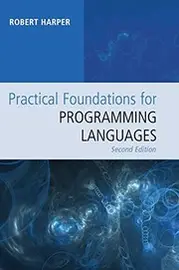 Practical Foundations for Programming LanguagesRobert Harper · 2016 · recommended by 17 people · similar by subject and what people say about it
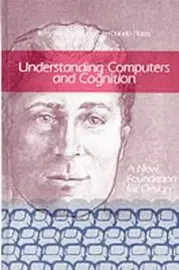 Understanding computers and cognitionTerry Winograd · 1986 · recommended by 4 people · similar by subject and what people say about it
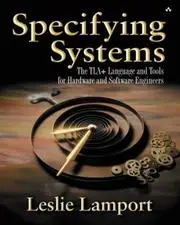 Specifying systemsLeslie Lamport · 2002 · recommended by 18 people · similar by subject and what people say about it
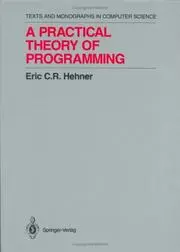 A practical theory of programmingEric C. R. Hehner · 1993 · recommended by 1 person · similar by subject and what people say about it
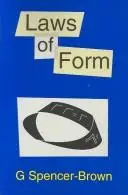 Laws of formGeorge Spencer-Brown · 1969 · recommended by 8 people · similar by subject and what people say about it
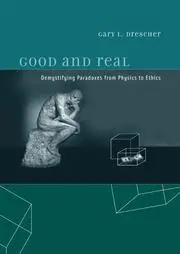 Good and realGary L. Drescher · 2006 · recommended by 8 people · loosely similar by subject
 Little ProverDaniel P. Friedman · 2015 · recommended by 9 people · loosely similar by subject
 Surfing uncertaintyClark, Andy · 2016 · recommended by 19 people · loosely similar by subject
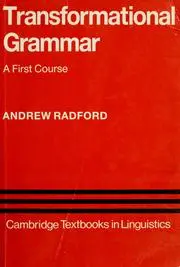 Transformational grammarAndrew Radford · 1989 · recommended by 1 person · loosely similar by subject
 Prometheus RisingRobert Anton Wilson · 1983 · recommended by 30 people · loosely similar by subject
 PragmatismWilliam James · 1907 · recommended by 6 people · loosely similar by subject
 Type Theory and Formal ProofRob Nederpelt · 2014 · recommended by 11 people · loosely similar by subject
 The mind is flatNick Chater · 2018 · recommended by 5 people · loosely similar by subject
 The Myth of the FrameworkKarl Popper · 1984 · recommended by 3 people · loosely similar by subject
 ProtocolAlexander R. Galloway · 2004 · recommended by 1 person · loosely similar by subject
 Probability TheoryE. T. Jaynes · 2003 · recommended by 77 people · loosely similar by subject
 The structure of magicRichard Bandler · 1975 · recommended by 4 people · loosely similar by subject
 Patterns of softwareRichard P. Gabriel · 1996 · recommended by 31 people · loosely similar by subject
 Communicating sequential processesC. A. R. Hoare · 1985 · recommended by 25 people · loosely similar by subject
 System design from provably correct constructsJames Martin · 1984 · recommended by 2 people · loosely similar by subject