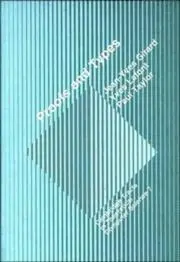
Proofs and types
Jean-Yves Girard · 1989
Programming and computer science › Lisp and Scheme
#3,788 most recommended
Hacker News
14
mentions by 10 people · top 22% of 15,732 books
Open Library
—
No ratings yet
1 want to read
Wikipedia
—
No article yet
About the book
An introduction to the relationship between logical proofs and typed lambda calculus, covering second-order propositional logic and the type system known as System F. It is aimed at readers who have finished basic logic and want a more mathematical treatment of type theory and proof theory. The book presents the Curry-Howard correspondence, in which proofs and typed programs are the same objects and cut elimination corresponds to program execution. Its central technical result is a proof that well-typed terms in the second-order system terminate, obtained with the method of reducibility candidates. It positions this as an alternative to Martin-Löf's approach to type theory, with proof normalization as the source of computational content.
Written by Claude from what it knows of this book.
What Hacker News says 60% recommend · 10% critical
In the commenters’ own words
Arguing over such definitions is futile and silly, because there's bound to be some approximation, some papering-over at some point. Let's start with the…
A similar book to Concrete Semantics, which I love, is Formal Reasoning about Programs by the same group the OP link comes from…
What Open Library readers say
No Open Library reader has rated it yet.
- 1 want to read
- 0 reading
- 0 have read
What critics say, via Wikipedia
No Wikipedia article about this book yet, so no critics to quote.
Reddit communities — coming later
The threads it came up in
Details
- First published
- 1989
- ISBN
- 9780521371810
- Editions known
- 2 at Open Library
- Open Library
- OL16965641W
CalculusComputer programmingLambda calculusProof theorySymbolic and mathematical LogicType theory
Read next: its neighbours on the mosaic
 Types and Programming LanguagesBenjamin C. Pierce · 2002 · recommended by 132 people · 3 people recommended both
 Philosophies of mathematicsAlexander George · 2001 · recommended by 3 people · similar by subject and what people say about it
 Little ProverDaniel P. Friedman · 2015 · recommended by 9 people · similar by subject and what people say about it
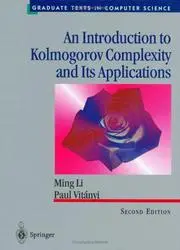 An introduction to Kolmogorov complexity and its applicationsMing Li · 1993 · recommended by 5 people · similar by subject and what people say about it
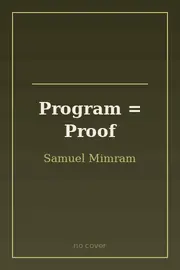 Program = ProofSamuel Mimram · 2020 · recommended by 5 people · similar by subject and what people say about it
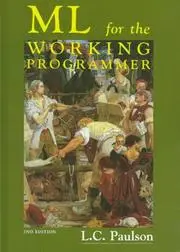 ML for the working programmerLawrence C. Paulson · 1991 · recommended by 16 people · similar by subject and what people say about it
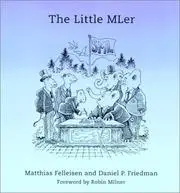 The little MLerMatthias Felleisen · 1998 · recommended by 6 people · similar by subject and what people say about it
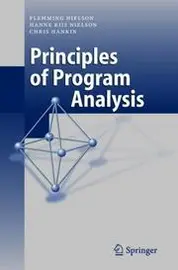 Principles of program analysisFlemming Nielson · 1999 · recommended by 7 people · similar by subject and what people say about it
 Software FoundationsBenjamin C. Pierce · 2010 · recommended by 58 people · similar by subject and what people say about it
 Die Grundlagen der ArithmetikGottlob Frege · 1884 · recommended by 2 people · loosely similar by subject
 A mathematical introduction to logicHerbert B. Enderton · 1972 · recommended by 6 people · similar by subject and what people say about it
 Category Theory for ProgrammersBortosz Milewski · 2018 · recommended by 51 people · similar by subject and what people say about it
 Certified Programming with Dependent TypesAdam Chlipala · 2013 · recommended by 25 people · similar by subject and what people say about it
 The Implementation of Functional Programming LanguagesSimon L. Peyton Jones · 1987 · recommended by 22 people · similar by subject and what people say about it
 Specifying systemsLeslie Lamport · 2002 · recommended by 18 people · similar by subject and what people say about it
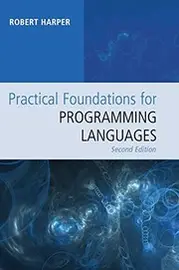 Practical Foundations for Programming LanguagesRobert Harper · 2016 · recommended by 17 people · similar by subject and what people say about it
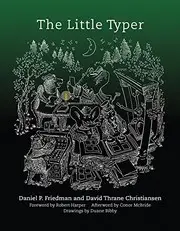 The Little TyperDaniel P. Friedman · 2018 · recommended by 16 people · similar by subject and what people say about it
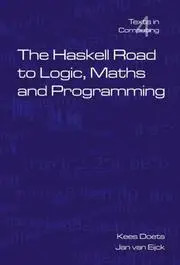 The Haskell Road To Logic, Maths And ProgrammingJan van Eijck · 2004 · recommended by 13 people · similar by subject and what people say about it
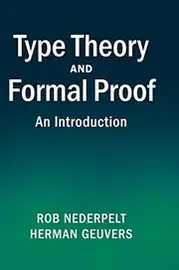 Type Theory and Formal ProofRob Nederpelt · 2014 · recommended by 11 people · similar by subject and what people say about it
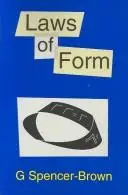 Laws of formGeorge Spencer-Brown · 1969 · recommended by 8 people · similar by subject and what people say about it
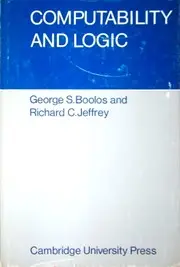 Computability and logicGeorge Boolos · 1974 · recommended by 7 people · similar by subject and what people say about it
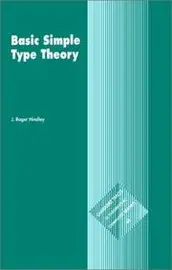 Basic simple type theoryJ. Roger Hindley · 1997 · recommended by 2 people · similar by subject and what people say about it
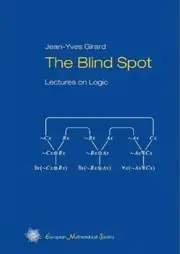 The blind spotJean-Yves Girard · 2011 · recommended by 4 people · similar by subject and what people say about it
 Concrete SemanticsTobias Nipkow · 2014 · recommended by 4 people · similar by subject and what people say about it