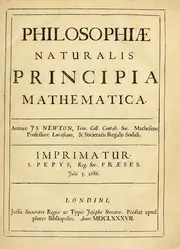
Philosophiae naturalis principia mathematica
Sir Isaac Newton · 1687
Mathematics and physics › Feynman and physics
#5,467 most recommended
Hacker News
7
mentions by 7 people · top 38% of 15,732 books
Open Library
3.88★★★★★★★★★★
16 ratings · 376 want to read
Wikipedia
—
No article yet
About the book
Newton's treatise on mechanics and celestial motion, written in Latin and organised into three books. It covers the laws of motion, the motion of bodies through resisting media such as fluids, and the motion of the planets, Moon, comets and tides under gravitation. Newton argues that bodies on Earth and in the heavens obey the same laws of motion and a single universal attraction between masses that weakens with the square of distance. He derives Kepler's laws of planetary motion from this premise and uses it to account for lunar motion, the tides and the orbits of comets. The work also sets out his method of reasoning from observed phenomena to general propositions, stated in its rules of reasoning in philosophy.
Written by Claude from what it knows of this book.
What Hacker News says 14% recommend · 0% critical
In the commenters’ own words
I take your point. But actually, not so. 'Scientists' from the ancient Greeks until the 19th C were called natural philosophers , studying natural philosophy…
How is natural philosophy different from moral philosophy? I'm sure that comes across as a dumb question, but, modernity - technology. The irony of…
What Open Library readers say 3.88 from 16 ratings
- 58
- 44
- 31
- 20
- 13
- 376 want to read
- 19 reading
- 19 have read
Only 16 ratings: treat the average as a hint.
What critics say, via Wikipedia
No Wikipedia article about this book yet, so no critics to quote.
Reddit communities — coming later
The threads it came up in
Details
- First published
- 1687
- ISBN
- 9780520009288
- Editions known
- 30 at Open Library
- Open Library
- OL104736W
AstronomyCalculusCelestial mechanicsCurves, planeDouble RefractionDynamics of a particleEarly works to 1800Fluid dynamicsGravitationMathematical ConceptsMathematicsMathematics, historyMathematics, philosophyMechanica
Read next: its neighbours on the mosaic
 Mathematical principles of natural philosophyIsaac Newton · 1777 · recommended by 1 person · named together in 2 comments
 The Principles of Quantum MechanicsPaul Adrian Maurice Dirac · 1930 · recommended by 10 people · similar by subject and what people say about it
 Treatise on natural philosophyWilliam Thomson Kelvin · 1867 · recommended by 1 person · similar by subject and what people say about it
 On the origin of species by means of natural selectionCharles Darwin · 1859 · recommended by 2 people · loosely similar by subject
 Spacetime physicsEdwin F. Taylor · 1966 · recommended by 8 people · loosely similar by subject
 The large scale structure of space-timeStephen Hawking · 1973 · recommended by 3 people · loosely similar by subject
 Principia mathematicaAlfred North Whitehead · 1910 · recommended by 9 people · similar by subject and what people say about it
 Magnificent PrincipiaColin Pask · 2013 · recommended by 5 people · similar by subject and what people say about it
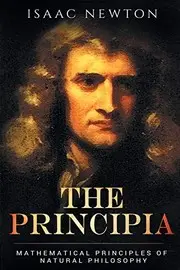 The PrincipiaSir Isaac Newton · 2014 · recommended by 2 people · similar by subject and what people say about it
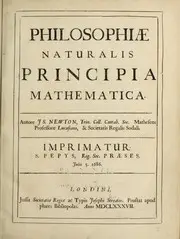 Philosophiæ Naturalis Principia Mathematica.Sir Isaac Newton · 1687 · recommended by 2 people · similar by subject and what people say about it
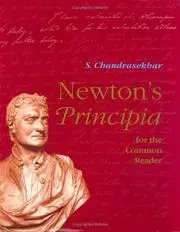 Newton's Principia for the common readerSubrahmanyan Chandrasekhar · 1995 · recommended by 2 people · similar by subject and what people say about it
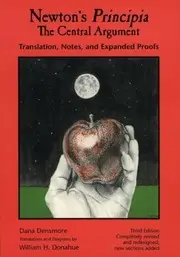 Newton's Principia, the central ArgumentDana Densmore · 2003 · recommended by 2 people · similar by subject and what people say about it
 ElementsEuclid · 1482 · recommended by 60 people · similar by subject and what people say about it
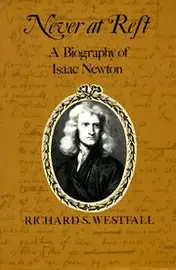 Never at restRichard S. Westfall · 1980 · recommended by 8 people · similar by subject and what people say about it
 Methods of mathematical physicsRichard Courant · 1953 · recommended by 1 person · similar by subject and what people say about it
 On the Shoulders of GiantsStephen Hawking · 2002 · recommended by 1 person · similar by subject and what people say about it
 Calculus Made EasySilvanus Phillips Thompson · 1910 · recommended by 81 people · similar by subject and what people say about it
 Isaac NewtonJames Gleick · 2003 · recommended by 4 people · similar by subject and what people say about it
 PhysicsAristotle · 1472 · recommended by 5 people · similar by subject and what people say about it
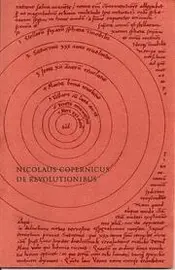 De revolutionibusNicolaus Copernicus · 1947 · recommended by 0 people · similar by subject and what people say about it
 On the Electrodynamics of Moving BodiesAlbert Einstein · 2016 · recommended by 7 people · similar by subject and what people say about it
 Clear and simple as the truthFrancis-Noël Thomas · 1994 · recommended by 15 people · loosely similar by subject
 Electricity and magnetismEdward M. Purcell · 1985 · recommended by 14 people · similar by subject and what people say about it
 Modern Classical PhysicsKip S. Thorne · 2017 · recommended by 4 people · similar by subject and what people say about it