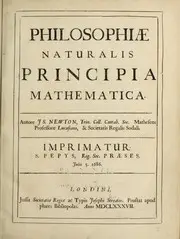
Philosophiæ Naturalis Principia Mathematica.
Sir Isaac Newton · 1687
Mathematics and physics › Feynman and physics
#2,292 most recommended
Hacker News
20
mentions by 19 people · top 17% of 15,732 books
Open Library
—
No ratings yet
7 want to read
Wikipedia
16k
article views a month
About the book
The Principia sets out the foundations of classical mechanics and celestial mechanics in three books. Book I treats the motion of bodies in free space, Book II the motion of bodies resisting or moving through fluids, and Book III the system of the world, including the planets, moons, comets, tides and the figure of the Earth. Newton states three laws of motion and holds that the same principles govern falling bodies on Earth and the motions of the heavens. He claims that every particle of matter attracts every other with a force proportional to the product of their masses and inversely proportional to the square of the distance between them. From this he derives Kepler's laws of planetary motion and shows how gravitation accounts for the Moon's orbit, the tides and the paths of comets, presenting these results through geometric demonstrations.
Written by Claude from what it knows of this book.
What Hacker News says 11% recommend · 16% critical
In the commenters’ own words
>One lesson of this tale is that capitalism doesn’t really work when it relies on the profit motive alone. If everybody is just chasing material…
There are three issues here: primary sources, secondary sources, and original research. You said "An encyclopedia is a survey of existing secondary sources"…
What Open Library readers say
No Open Library reader has rated it yet.
- 7 want to read
- 2 reading
- 0 have read
What Wikipedia says
- published 1687
- articles in 73 languages
- 16k views a month
Reddit communities — coming later
Details
- First published
- 1687
- Editions known
- none recorded at Open Library
- Open Library
- OL17640601W
33.11 classical mechanicsAstronomyCelestial mechanicsEarly works to 1800GravitationMathematical ConceptsMechanicaMechanicsMécanique célesteNatural philosophyOpticsOuvrages avant 1800Physics
Read next: its neighbours on the mosaic
 Mathematical principles of natural philosophyIsaac Newton · 1777 · recommended by 1 person · named together in 2 comments
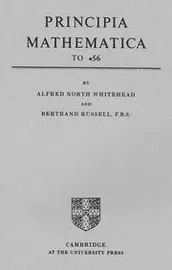 Principia mathematicaAlfred North Whitehead · 1910 · recommended by 9 people · similar by subject and what people say about it
 On the Electrodynamics of Moving BodiesAlbert Einstein · 2016 · recommended by 7 people · similar by subject and what people say about it
 Magnificent PrincipiaColin Pask · 2013 · recommended by 5 people · similar by subject and what people say about it
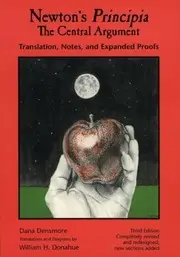 Newton's Principia, the central ArgumentDana Densmore · 2003 · recommended by 2 people · similar by subject and what people say about it
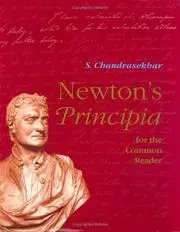 Newton's Principia for the common readerSubrahmanyan Chandrasekhar · 1995 · recommended by 2 people · similar by subject and what people say about it
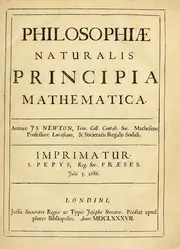 Philosophiae naturalis principia mathematicaSir Isaac Newton · 1687 · recommended by 1 person · similar by subject and what people say about it
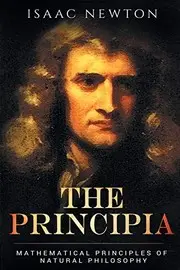 The PrincipiaSir Isaac Newton · 2014 · recommended by 2 people · similar by subject and what people say about it
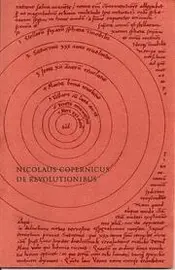 De revolutionibusNicolaus Copernicus · 1947 · recommended by 0 people · similar by subject and what people say about it
 Isaac NewtonJames Gleick · 2003 · recommended by 4 people · similar by subject and what people say about it
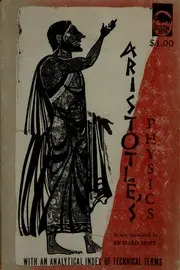 PhysicsAristotle · 1472 · recommended by 5 people · similar by subject and what people say about it
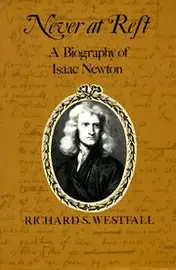 Never at restRichard S. Westfall · 1980 · recommended by 8 people · similar by subject and what people say about it
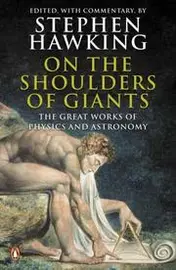 On the Shoulders of GiantsStephen Hawking · 2002 · recommended by 1 person · similar by subject and what people say about it
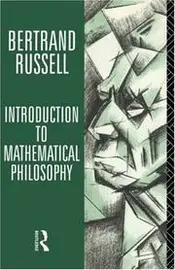 Introduction to mathematical philosophyBertrand Russell · 1919 · recommended by 5 people · similar by subject and what people say about it
 GravitationCharles W. Misner · 1973 · recommended by 16 people · similar by subject and what people say about it
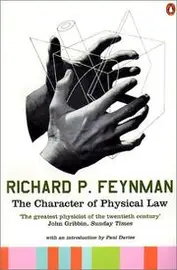 The Character of Physical LawRichard Phillips Feynman · 1965 · recommended by 14 people · similar by subject and what people say about it
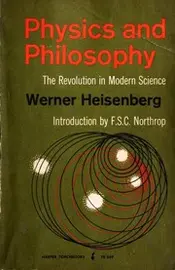 Physics and philosophyWerner Heisenberg · 1958 · recommended by 6 people · similar by subject and what people say about it
 Methods of mathematical physicsRichard Courant · 1953 · recommended by 1 person · similar by subject and what people say about it
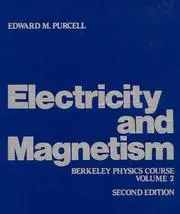 Electricity and magnetismEdward M. Purcell · 1985 · recommended by 14 people · similar by subject and what people say about it
 De Rerum NaturaLucretius · 2014 · recommended by 6 people · similar by subject and what people say about it
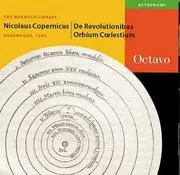 De revolutionibus orbium coelestiumNicolaus Copernicus · 1543 · recommended by 0 people · similar by subject and what people say about it
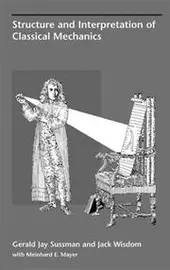 Structure and Interpretation of Classical MechanicsGerald Jay Sussman · 2001 · recommended by 42 people · similar by subject and what people say about it
 A new kind of scienceStephen Wolfram · 2002 · recommended by 44 people · similar by subject and what people say about it
 Physics for mathematiciansMichael Spivak · 2010 · recommended by 8 people · similar by subject and what people say about it