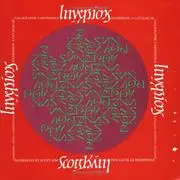
Inversions
Scott Kim · 1985
Writing, design and web craft › Data visualization and visual communication
#11,534 most recommended
Hacker News
5
mentions by 2 people · top 48% of 15,732 books
Open Library
—
No ratings yet
4 want to read
Wikipedia
—
No article yet
About the book
A collection of Scott Kim's word designs in which letters and phrases are drawn so that they read the same when turned, mainly through 180-degree rotation, with some flipped and mirrored forms. The subject spans lettering, calligraphy, symmetry, and wordplay, and the scope covers both the constructed pieces and the geometry behind them. The book holds that letters are recognized through their structure and symmetry, so a designer can exploit that structure to make words that survive inversion. It treats the making of these pieces as a practical study of visual perception: which strokes and shapes a reader relies on to identify a letter. Its central claim is that play with symmetry and letterform can reveal how reading works.
Written by Claude from what it knows of this book.
What Hacker News says 100% recommend · 0% critical
In the commenters’ own words
Excerpt from my post about FORTH and Homer and Associates from the discussion of Forth vs Lisp: https://news.ycombinator.com/item?id=29261868 Coco Conn and…
From the HN "Boustrophedon" discussion: https://news.ycombinator.com/item?id=15539373 https://en.wikipedia.org/wiki/Boustrophedon…
What Open Library readers say
No Open Library reader has rated it yet.
- 4 want to read
- 0 reading
- 0 have read
What critics say, via Wikipedia
No Wikipedia article about this book yet, so no critics to quote.
Reddit communities — coming later
Details
- First published
- 1985
- ISBN
- 9781559532808
- Editions known
- 6 at Open Library
- Open Library
- OL3227282W
CalligraphyInversions (geometry)Plays on wordsSymmetrySymmetry (Art)Visual perceptionWords in art
Read next: its neighbours on the mosaic
 InversionsKim, Scott. · 1981 · recommended by 2 people · similar by subject and what people say about it
 Reinventing ComicsScott McCloud · 2000 · recommended by 5 people · similar by subject and what people say about it
 UnflatteningNick Sousanis · 2015 · recommended by 4 people · similar by subject and what people say about it
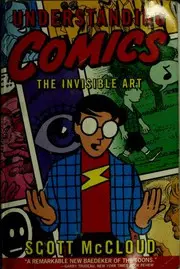 Understanding ComicsScott McCloud · 1993 · recommended by 56 people · similar by subject and what people say about it
 ShapeGeorge Stiny · 2006 · recommended by 1 person · loosely similar by subject
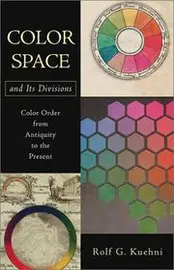 Color Space and Its DivisionsRolf G. Kuehni · 2003 · recommended by 2 people · loosely similar by subject
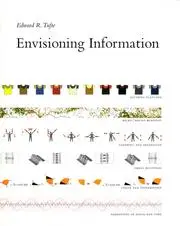 Envisioning InformationEdward R. Tufte · 1990 · recommended by 31 people · loosely similar by subject
 Metamagical ThemasDouglas R. Hofstadter · 1985 · recommended by 45 people · loosely similar by subject
 3:16Donald Knuth · 1991 · recommended by 1 person · loosely similar by subject
 The myths of innovationScott Berkun · 2007 · recommended by 5 people · loosely similar by subject
 Phantoms in the brainV. S. Ramachandran (neurology) · 1998 · recommended by 19 people · loosely similar by subject
 The Accidental MasterpieceMichael Kimmelman · 2005 · recommended by 2 people · loosely similar by subject
 SymbolAngus Hyland · 2011 · recommended by 2 people · loosely similar by subject
 Design for HackersDavid Kadavy · 2011 · recommended by 45 people · loosely similar by subject
 Mathematical gamesMartin Gardner · 2005 · recommended by 8 people · loosely similar by subject
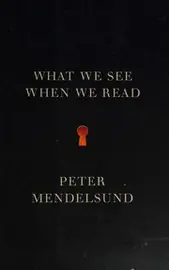 What We See When We ReadPeter Mendelsund · 2014 · recommended by 1 person · loosely similar by subject
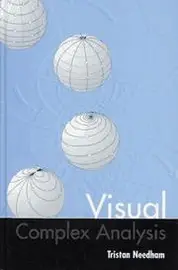 Visual complex analysisTristan Needham · 1997 · recommended by 38 people · loosely similar by subject
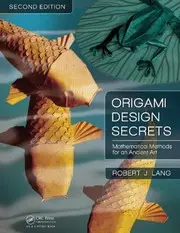 Origami Design SecretsRobert J. Lang · 2003 · recommended by 8 people · loosely similar by subject
 Frame InnovationKees Dorst · 2015 · recommended by 3 people · loosely similar by subject
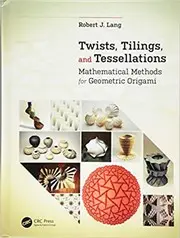 Twists, Tilings, and TessellationsRobert J. Lang · 2017 · recommended by 2 people · loosely similar by subject
 Geek SublimeVikram Chandra · 2014 · recommended by 5 people · loosely similar by subject
 Le Ton beau de MarotDouglas R. Hofstadter · 1997 · recommended by 27 people · loosely similar by subject
 KimRudyard Kipling · 1901 · recommended by 10 people · loosely similar by subject
 Ordering disorderKhoi Vinh · 2011 · recommended by 4 people · loosely similar by subject