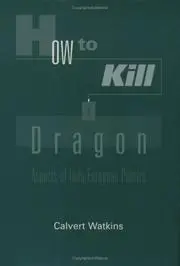
How to kill a dragon
Calvert Watkins · 1995
Classic and literary fiction › Epics and ancient myth
#8,476 most recommended
Hacker News
4
mentions by 4 people · top 54% of 15,732 books
Open Library
—
No ratings yet
4 want to read
Wikipedia
554
article views a month
About the book
The book is a study of inherited poetic formulae in the Indo-European languages, following them from Old Hittite through Vedic Sanskrit, Greek, Latin, Germanic and Old Irish. Its scope is the traditional verbal art that these languages share, approached through the philological tools of comparative linguistics. Watkins uses the comparative method to reconstruct formulaic phrases and narrative patterns that predate the separate Indo-European daughter languages, such as the recurring formula for a hero's imperishable fame and the myth of a warrior slaying a serpent or dragon. He claims these formulae are complex, fixed in structure, and preserved with unusual tenacity across more than a thousand years of separate development. The result, in his account, shows that Indo-European poetry was a conservative, deeply rooted tradition rather than a set of unrelated local inventions.
Written by Claude from what it knows of this book.
What Hacker News says 50% recommend · 0% critical
In the commenters’ own words
> A great poem is “about” a specific person or moment embedded in a particular culture, composed in such a way that it reaches across time and distance to…
For PIE, the most accessible recent book in English is probably The Horse, the Wheel, and Language (Anthony 2007), and I would highly recommend it. (It pulls…
What Open Library readers say
No Open Library reader has rated it yet.
- 4 want to read
- 0 reading
- 0 have read
What Wikipedia says
- published 1995
- 640 pages
- articles in 5 languages
Reddit communities — coming later
Details
- First published
- 1995
- ISBN
- 9780195085952
- Editions known
- 4 at Open Library
- Open Library
- OL2927937W
Comparative linguisticsIndo-European philologyPoetics
Read next: its neighbours on the mosaic
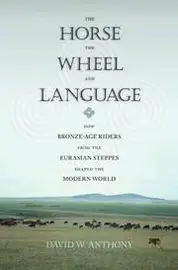 The Horse, the Wheel, and LanguageDavid W. Anthony · 2007 · recommended by 17 people · similar by subject and what people say about it
 RuneloreEdred Thorsson · 1987 · recommended by 2 people · loosely similar by subject
 The Riddle of the LabyrinthMargalit Fox · 2013 · recommended by 2 people · loosely similar by subject
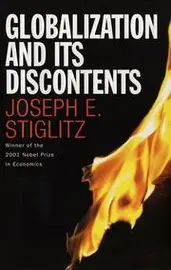 Globalization and its discontentsJoseph E. Stiglitz · 2002 · recommended by 3 people · loosely similar by subject
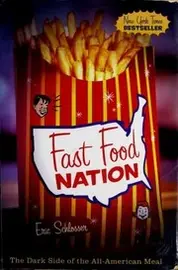 Fast Food NationEric Schlosser · 2001 · recommended by 16 people · loosely similar by subject
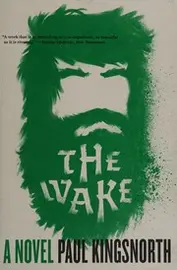 The wakePaul Kingsnorth · 2014 · recommended by 5 people · loosely similar by subject
 Game of Rat and DragonMyron Linebarger · 2018 · recommended by 0 people · loosely similar by subject
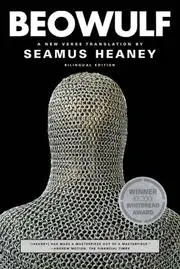 BeowulfSeamus Heaney · 2000 · recommended by 8 people · loosely similar by subject
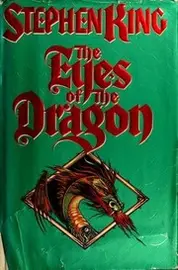 The Eyes of the DragonStephen King · 1984 · recommended by 2 people · loosely similar by subject
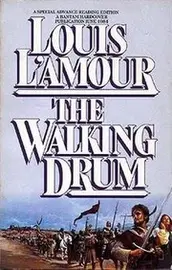 The Walking DrumLouis L'Amour · 1984 · recommended by 0 people · loosely similar by subject
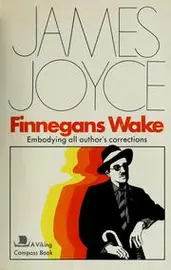 Finnegan's wakeJames Joyce · 1939 · recommended by 16 people · loosely similar by subject
 Breaking the Maya codeMichael D. Coe · 1992 · recommended by 4 people · loosely similar by subject
 The loom of languageFrederick Bodmer · 1943 · recommended by 3 people · loosely similar by subject
 In the Land of Invented LanguagesArika Okrent · 2009 · recommended by 21 people · loosely similar by subject
 The epic of GilgameshBenjamin R. Foster · 2001 · recommended by 5 people · loosely similar by subject
 Death of VirgilHermann Broch · 1945 · recommended by 3 people · loosely similar by subject
 The white goddessRobert Graves · 1948 · recommended by 1 person · loosely similar by subject
 The Memory CodeLynne Kelly · 2017 · recommended by 3 people · loosely similar by subject
 The Unfolding of LanguageGuy Deutscher · 2005 · recommended by 9 people · loosely similar by subject
 Ingenious LanguageAndrea Marcolongo · 2019 · recommended by 1 person · loosely similar by subject
 IdeasPeter Watson · 2005 · recommended by 4 people · loosely similar by subject
 How to do things with wordsJ. L. Austin · 1962 · recommended by 2 people · loosely similar by subject
 The art of fictionJohn Gardner · 1984 · recommended by 2 people · loosely similar by subject
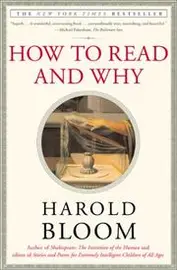 How to read and whyHarold Bloom · 2000 · recommended by 1 person · loosely similar by subject