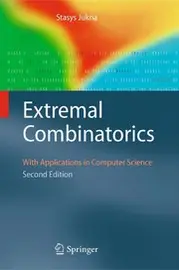
Extremal combinatorics
Stasys Jukna · 2011
Mathematics and physics › Numerical and matrix computation
#15,370 most recommended
Hacker News
2
mentions by 2 people · top 79% of 15,732 books
Open Library
—
No ratings yet
2 want to read
Wikipedia
—
No article yet
About the book
A graduate-level textbook on extremal combinatorics, which asks how large or small a finite structure can be while avoiding a given property, such as how many edges a graph can have without containing a certain subgraph. It covers classical results in extremal set theory, graph theory, and Ramsey theory, along with the main proof techniques used for them. The book is aimed at students and researchers in mathematics and theoretical computer science. The book presents extremal combinatorics as a unified toolkit rather than a collection of isolated theorems, so that methods such as double counting, linear algebra, the probabilistic method, and shifting or compression arguments can be seen recurring across many problems. It emphasises applications of these bounds in computer science, including circuit complexity, communication complexity, and lower bounds for algorithms. Its main claim is pedagogical: that mastering a small set of general techniques lets a reader attack new extremal questions, and that these techniques connect pure combinatorics to problems in computing.
Written by Claude from what it knows of this book.
What Hacker News says 100% recommend · 0% critical
In the commenters’ own words
I'm in a similar position as well - perhaps at just a wee bit higher level (am learning grad-level math by myself). Below is a list of books that I have…
some "out there" suggestions: - "Extremal Combinatorics" by Staysys Jukna - "Convex Optimization" by Boyd and Vandenberghe - "Delay Insensitive Circuits" [1]…
What Open Library readers say
No Open Library reader has rated it yet.
- 2 want to read
- 0 reading
- 0 have read
What critics say, via Wikipedia
No Wikipedia article about this book yet, so no critics to quote.
Reddit communities — coming later
The threads it came up in
Details
- First published
- 2011
- Editions known
- 4 at Open Library
- Open Library
- OL16368608W
Combinatorial analysisExtremal problems (Mathematics)
Read next: its neighbours on the mosaic
 An introduction to mathematical cryptographyJeffrey Hoffstein · 2008 · recommended by 5 people · similar by subject and what people say about it
 Graph theoryReinhard Diestel · 2010 · recommended by 4 people · similar by subject and what people say about it
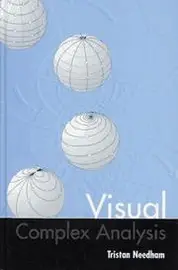 Visual complex analysisTristan Needham · 1997 · recommended by 38 people · similar by subject and what people say about it
 Convex optimizationStephen P. Boyd · 2006 · recommended by 40 people · similar by subject and what people say about it
 A Walk Through CombinatoricsMiklos Bona · 2002 · recommended by 4 people · similar by subject and what people say about it
 Combinatorial optimizationChristos H. Papadimitriou · 1981 · recommended by 1 person · similar by subject and what people say about it
 Combinatorial OptimizationAlexander Schrijver · 2003 · recommended by 1 person · similar by subject and what people say about it
 Analytic combinatoricsPhilippe Flajolet · 2009 · recommended by 8 people · similar by subject and what people say about it
 Enumerative combinatoricsRichard P. Stanley · 1900 · recommended by 4 people · similar by subject and what people say about it
 Modern graph theoryBéla Bollobás · 1998 · recommended by 3 people · similar by subject and what people say about it
 ADDITIVE COMBINATORICSTerence Tao · 2006 · recommended by 3 people · similar by subject and what people say about it
 Integer and combinatorial optimizationGeorge L. Nemhauser · 1988 · recommended by 2 people · similar by subject and what people say about it
 Theory of computationMichael Sipser · 2007 · recommended by 14 people · similar by subject and what people say about it
 Computational complexityChristos H. Papadimitriou · 1994 · recommended by 7 people · similar by subject and what people say about it
 Distributed Computing Through Combinatorial TopologyMaurice Herlihy · 2013 · recommended by 3 people · similar by subject and what people say about it
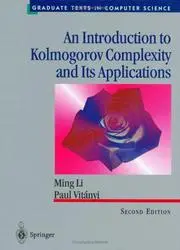 An introduction to Kolmogorov complexity and its applicationsMing Li · 1993 · recommended by 5 people · similar by subject and what people say about it
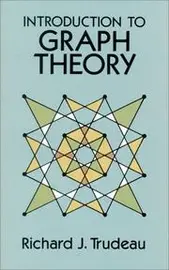 Introduction to graph theoryRichard J. Trudeau · 1993 · recommended by 10 people · similar by subject and what people say about it
 Foundations of CryptographyOded Goldreich · 2001 · recommended by 7 people · similar by subject and what people say about it
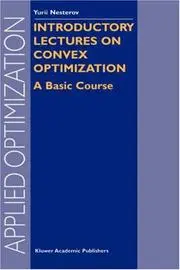 Introductory Lectures on Convex OptimizationY. Nesterov · 2003 · recommended by 1 person · similar by subject and what people say about it
 The mathematics of public key cryptographySteven D. Galbraith · 2012 · recommended by 2 people · similar by subject and what people say about it
 Elementary number theoryUnderwood Dudley · 1969 · recommended by 8 people · similar by subject and what people say about it
 Discrete mathematicsLászló Lovász · 2003 · recommended by 2 people · similar by subject and what people say about it
 Introduction to probability theoryPaul Gerhard Hoel · 1971 · recommended by 7 people · similar by subject and what people say about it
 Optimization by Vector Space MethodsDavid G. Luenberger · 1968 · recommended by 7 people · similar by subject and what people say about it