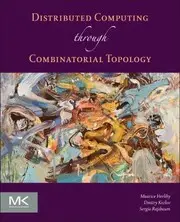
Distributed Computing Through Combinatorial Topology
Maurice Herlihy, Dmitry Kozlov, Sergio Rajsbaum · 2013
Mathematics and physics › Numerical and matrix computation
#10,199 most recommended
Hacker News
3
mentions by 3 people · top 64% of 15,732 books
Open Library
—
No ratings yet
1 want to read
Wikipedia
—
No article yet
About the book
The book covers distributed computing, the study of systems of processes that communicate through shared memory or message passing and must cope with failures and asynchrony. It uses tools from combinatorial and algebraic topology, such as simplicial and chromatic complexes, subdivisions, and homology, to model these systems and their executions. Its scope is mainly the theory of wait-free and asynchronous computation. Executions of a distributed protocol can be represented as geometric objects, so questions about what a system can compute become questions about topological structure. Connectivity and holes in these complexes determine whether tasks such as consensus, set agreement, and renaming are solvable. The authors develop a general characterization of which tasks are solvable and show that topological invariants explain classic impossibility results and the lower bounds on the protocols that achieve them.
Written by Claude from what it knows of this book.
What Hacker News says 100% recommend · 0% critical
In the commenters’ own words
It may surprise you, but you might consider algebraic topology. See Maurice Herlihy's marvellous little book, Distributed Computing through Combinatorial…
"A first course in differential equations" by Dennis G. Zill "Introduction to Algorithms" by Cormen "Distributed Computing Through Combinatorial Topology" by…
What Open Library readers say
No Open Library reader has rated it yet.
- 1 want to read
- 0 reading
- 0 have read
What critics say, via Wikipedia
No Wikipedia article about this book yet, so no critics to quote.
Reddit communities — coming later
Details
- First published
- 2013
- ISBN
- 9780124045781
- Editions known
- 4 at Open Library
- Open Library
- OL17545587W
Combinatorial topologyDistributed processingElectronic data processingElectronic data processing, distributed processingMathematics
Read next: its neighbours on the mosaic
 Practical UNIX programmingKay A. Robbins · 1996 · recommended by 2 people · similar by subject and what people say about it
 A First Course in Differential EquationsDennis G. Zill · 1993 · recommended by 2 people · similar by subject and what people say about it
 Topology for ComputingAfra J. Zomorodian · 2005 · recommended by 2 people · similar by subject and what people say about it
 Distributed systemsGeorge F. Coulouris · 2012 · recommended by 2 people · similar by subject and what people say about it
 Elements of distributed computingVijay K. Garg · 2002 · recommended by 2 people · similar by subject and what people say about it
 Distributed SystemsAndrew S. Tanenbaum · 2001 · recommended by 14 people · similar by subject and what people say about it
 Programming Distributed Computing SystemsCarlos A. Varela · 2013 · recommended by 1 person · similar by subject and what people say about it
 Distributed algorithmsNancy A. Lynch · 1996 · recommended by 3 people · similar by subject and what people say about it
 TopologyJames R. Munkres · 1988 · recommended by 11 people · similar by subject and what people say about it
 ComputationMarvin Minsky · 1967 · recommended by 5 people · similar by subject and what people say about it
 Combinatorial optimizationChristos H. Papadimitriou · 1981 · recommended by 1 person · similar by subject and what people say about it
 Extremal combinatoricsStasys Jukna · 2011 · recommended by 2 people · similar by subject and what people say about it
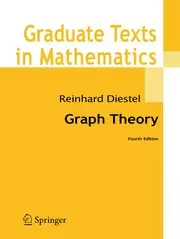 Graph theoryReinhard Diestel · 2010 · recommended by 4 people · similar by subject and what people say about it
 Introduction to the theory of computationMichael Sipser · 1997 · recommended by 66 people · similar by subject and what people say about it
 General TopologyJohn Leroy Kelley · 2008 · recommended by 2 people · similar by subject and what people say about it
 The nature of computationCristopher Moore · 2009 · recommended by 10 people · similar by subject and what people say about it
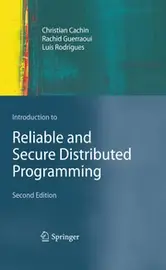 Introduction to Reliable and Secure Distributed ProgrammingChristian Cachin · 2011 · recommended by 2 people · similar by subject and what people say about it
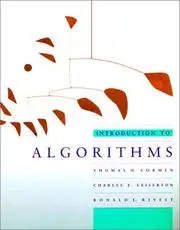 Introduction to AlgorithmsThomas H. Cormen · 1990 · recommended by 274 people · similar by subject and what people say about it
 Patterns of Distributed SystemsUnmesh Joshi · 2023 · recommended by 1 person · similar by subject and what people say about it
 Distributed Systems for Fun and ProfitMikito Takada · 2013 · recommended by 25 people · similar by subject and what people say about it
 Introduction to graph theoryRichard J. Trudeau · 1993 · recommended by 10 people · similar by subject and what people say about it
 Modern graph theoryBéla Bollobás · 1998 · recommended by 3 people · similar by subject and what people say about it
 Combinatorial OptimizationAlexander Schrijver · 2003 · recommended by 1 person · similar by subject and what people say about it
 Combinatorial AlgorithmsHerbert S. Wilf · 1989 · recommended by 1 person · similar by subject and what people say about it