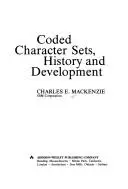
Coded Character Sets
Charles E. MacKenzie · 1979
Tech industry, hacking and security books › Computing culture and pioneers
#7,859 most recommended
Hacker News
5
mentions by 4 people · top 48% of 15,732 books
Open Library
—
No ratings yet
1 want to read
Wikipedia
—
No article yet
About the book
The history and technical development of coded character sets, the schemes that map letters, digits and control functions to numeric codes for telegraphy, punched cards, computers and data communication. It covers the principal codes in use up to the late 1970s, including the Baudot and related telegraph codes, punched-card codes, ASCII and EBCDIC, and the national and international standards built around them. Its central theme is that character codes are shaped by the machines, transmission media and organizational compromises that produced them, and that the resulting diversity of incompatible sets is a major obstacle to information interchange. It examines how extension techniques such as shift characters and escape sequences were developed to add characters beyond a fixed code table, and it treats standardization as an ongoing negotiation among manufacturers, users and national bodies rather than a finished solution.
Written by Claude from what it knows of this book.
What Hacker News says 25% recommend · 0% critical
In the commenters’ own words
it seems somewhat unlikely. let's follow the trail the existence of bell characters, of course, predates gordon bell's existence itself (they're in the ita2…
Several early programming systems did use custom character sets (custom type bars) as well as typewriter-oriented notations like overstrikes, half-line…
What Open Library readers say
No Open Library reader has rated it yet.
- 1 want to read
- 0 reading
- 0 have read
What critics say, via Wikipedia
No Wikipedia article about this book yet, so no critics to quote.
Reddit communities — coming later
Details
- First published
- 1979
- ISBN
- 9780201144604
- Editions known
- 2 at Open Library
- Open Library
- OL8019369W
Read next: its neighbours on the mosaic
 Mathematical cranksUnderwood Dudley · 1992 · recommended by 3 people · loosely similar by subject
 The codebreakersDavid Kahn · 1967 · recommended by 17 people · similar by subject and what people say about it
 The magic machineA.K. Dewdney · 1990 · recommended by 2 people · similar by subject and what people say about it
 CodeCharles Petzold · 1999 · recommended by 243 people · similar by subject and what people say about it
 ColossusB. Jack Copeland · 2010 · recommended by 6 people · similar by subject and what people say about it
 Motel of the mysteriesDavid Macaulay · 1979 · recommended by 31 people · loosely similar by subject
 D is for digitalBrian W. Kernighan · 2011 · recommended by 7 people · loosely similar by subject
 The world's writing systemsWilliam Bright · 1996 · recommended by 2 people · loosely similar by subject
 The Code BookSimon Singh · 1999 · recommended by 98 people · loosely similar by subject
 SoftwareKim W. Tracy · 2021 · recommended by 1 person · loosely similar by subject
 The Chinese typewriterThomas S. Mullaney · 2017 · recommended by 5 people · loosely similar by subject
 Fundamentals of Error Correcting CodesW. Cary Huffman · 2003 · recommended by 1 person · loosely similar by subject
 Apple machine languageDon Inman · 1981 · recommended by 1 person · loosely similar by subject
 The Woman Who Smashed CodesJason Fagone · 2017 · recommended by 5 people · loosely similar by subject
 Computer Modern TypefacesDonald Knuth · 1986 · recommended by 0 people · loosely similar by subject
 Gödel, Escher, BachDouglas R. Hofstadter · 1979 · recommended by 505 people · loosely similar by subject
 Applied CryptographyBruce Schneier · 1994 · recommended by 76 people · loosely similar by subject
 Understanding the Digital WorldBrian W. Kernighan · 2017 · recommended by 6 people · loosely similar by subject
 Kingdom of CharactersJing Tsu · 2022 · recommended by 1 person · loosely similar by subject
 C++ common knowledgeStephen C. Dewhurst · 2005 · recommended by 2 people · loosely similar by subject
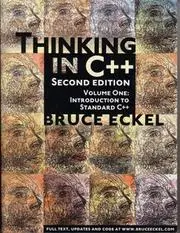 Thinking in C++Bruce Eckel · 1995 · recommended by 11 people · loosely similar by subject
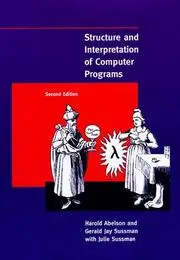 Structure and Interpretation of Computer ProgramsHarold Abelson · 1984 · recommended by 347 people · loosely similar by subject
 Computers and TypesettingDonald Knuth · 1986 · recommended by 6 people · loosely similar by subject
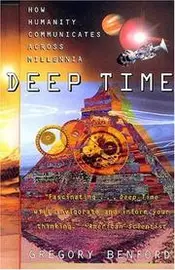 Deep timeGregory Benford · 1999 · recommended by 7 people · loosely similar by subject