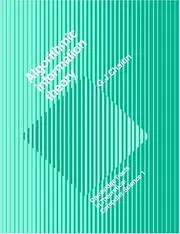
Algorithmic information theory
Gregory J. Chaitin · 1987
Minds, machines and the future › Information theory and chaos
#8,661 most recommended
Hacker News
4
mentions by 4 people · top 54% of 15,732 books
Open Library
—
No ratings yet
1 want to read
Wikipedia
—
No article yet
About the book
This book covers algorithmic information theory, which measures the information content of a string, or of a mathematical object, by the length of the shortest program that produces it. It is built on program-size complexity, self-delimiting programs, and the theory of computation, and it includes LISP code that implements the central constructions. Chaitin argues that program-size complexity gives a precise, machine-based account of randomness and of information in mathematics. A string is random when no program much shorter than the string itself can generate it. The book's central result is that the halting probability, Omega, is algorithmically random, so any fixed formal system can determine only finitely many of its bits. From this he derives an information-theoretic route to incompleteness, in which a formal system cannot prove that a specific string has complexity above a bound set by the system's own size.
Written by Claude from what it knows of this book.
What Hacker News says 25% recommend · 0% critical
In the commenters’ own words
> it is a function about Turing machines, which is how the BBF gets the special properties/results that it does. The properties of the Busy Beaver function…
The standard reference is "An Introduction to Kolmogorov Complexity and Its Applications", from Ming Li and Paul Vitányi. It is the "must-go" for the subject…
What Open Library readers say
No Open Library reader has rated it yet.
- 1 want to read
- 0 reading
- 0 have read
What critics say, via Wikipedia
No Wikipedia article about this book yet, so no critics to quote.
Reddit communities — coming later
Details
- First published
- 1987
- ISBN
- 9780521616041
- Editions known
- 4 at Open Library
- Open Library
- OL23034W
AlgorithmsComputational complexityLISP (Computer program language)Machine theory
Read next: its neighbours on the mosaic
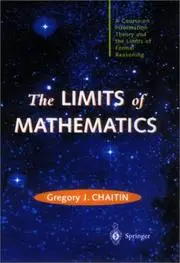 The Limits of MathematicsGregory J. Chaitin · 1997 · recommended by 2 people · similar by subject and what people say about it
 Meta mathsGregory J. Chaitin · 2006 · recommended by 1 person · similar by subject and what people say about it
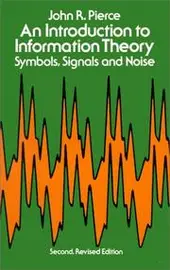 An introduction to information theoryJohn Robinson Pierce · 1980 · recommended by 15 people · similar by subject and what people say about it
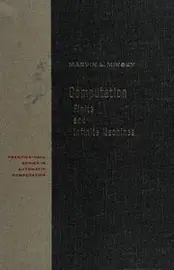 ComputationMarvin Minsky · 1967 · recommended by 5 people · similar by subject and what people say about it
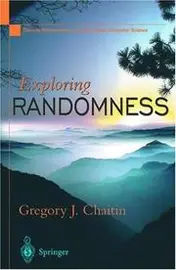 Exploring randomnessGregory J. Chaitin · 2001 · recommended by 2 people · similar by subject and what people say about it
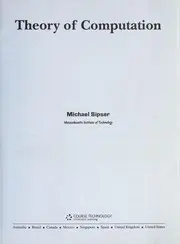 Theory of computationMichael Sipser · 2007 · recommended by 14 people · similar by subject and what people say about it
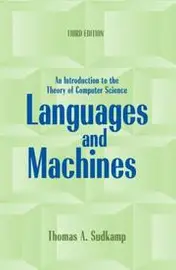 Languages and machinesThomas A. Sudkamp · 1988 · recommended by 2 people · similar by subject and what people say about it
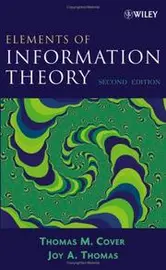 Elements of Information TheoryT. M. Cover · 2006 · recommended by 20 people · similar by subject and what people say about it
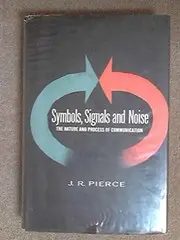 Symbols, signals, and noiseJohn R. Pierce · 1961 · recommended by 12 people · similar by subject and what people say about it
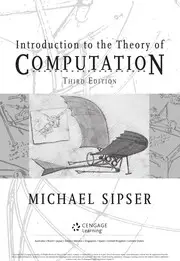 Introduction to the theory of computationMichael Sipser · 1997 · recommended by 66 people · similar by subject and what people say about it
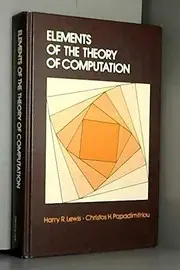 Elements of the Theory of ComputationLewis, Harry R., and Christos H. Papadimitriou · 1981 · recommended by 5 people · similar by subject and what people say about it
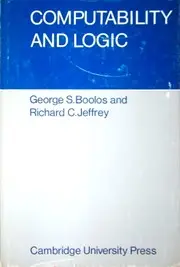 Computability and logicGeorge Boolos · 1974 · recommended by 7 people · similar by subject and what people say about it
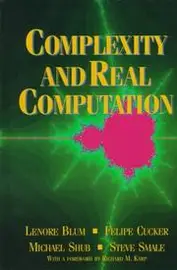 Complexity and real computationLenore Blum · 1998 · recommended by 2 people · similar by subject and what people say about it
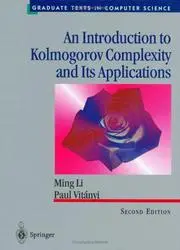 An introduction to Kolmogorov complexity and its applicationsMing Li · 1993 · recommended by 5 people · similar by subject and what people say about it
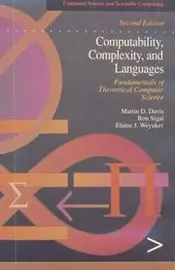 Computability, complexity, and languagesDavis, Martin · 1983 · recommended by 1 person · similar by subject and what people say about it
 Structure and Interpretation of Computer ProgramsHarold Abelson · 1984 · recommended by 347 people · similar by subject and what people say about it
 The art of computer programmingDonald Knuth · 1968 · recommended by 336 people · similar by subject and what people say about it
 Information Theory, Inference & Learning AlgorithmsDavid J.C. MacKay · 2003 · recommended by 77 people · similar by subject and what people say about it
 Introduction to automata theory, languages, and computationJohn E. Hopcroft · 1979 · recommended by 24 people · similar by subject and what people say about it
 The laws of thoughtGeorge Boole · 1854 · recommended by 1 person · similar by subject and what people say about it
 Grammatical manJeremy Campbell · 1982 · recommended by 7 people · similar by subject and what people say about it
 Information TheoryJames V Stone · 2015 · recommended by 2 people · similar by subject and what people say about it
 Computability and complexityNeil D. Jones · 1997 · recommended by 1 person · similar by subject and what people say about it
 Out of the inner circleBill Landreth · 1985 · recommended by 3 people · similar by subject and what people say about it