Writing secure code
Michael Howard · 2003
Tech industry, hacking and security books › Cryptography and security engineering
#10,101 most recommended
Hacker News
3
mentions by 3 people · top 64% of 15,732 books
Open Library
—
No ratings yet
Wikipedia
—
No article yet
About the book
A practical guide to writing software that resists attack, aimed at developers and testers working on Windows and other C and C++ code bases. It covers how common security flaws arise in code, including buffer overflows, input validation errors, injection, and weak handling of data and privileges, along with the tools and review practices for finding them. The second edition, co-written with David LeBlanc, reflects Microsoft's security push after 2002. Security is a property that has to be designed and built in from the start, not added by testing or patching after release. Most exploitable vulnerabilities come from a small set of repeatable coding mistakes that developers can learn to recognise and avoid. The book makes the case for secure design principles such as least privilege, defence in depth, and failing securely, and for threat modelling as a routine part of development.
Written by Claude from what it knows of this book.
What Hacker News says 67% recommend · 0% critical
In the commenters’ own words
A small correction on the redo step. What you are talking about was called the Windows Security Push and this is how it worked. Basically, every developer…
Ask HN: I picked up a coworker's book today - Writing Secure Code by David LeBlanc and Michael Howard. I immediately went to a chapter on buffer overruns…
What Open Library readers say
No Open Library reader has rated it yet.
What critics say, via Wikipedia
No Wikipedia article about this book yet, so no critics to quote.
Reddit communities — coming later
Details
- First published
- 2003
- ISBN
- 9780735617223
- Editions known
- 2 at Open Library
- Open Library
- OL12066727W
005.8Computer securityData encryption (Computer science)Data encryption (computer science)Qa76.9.a25 h698 2003
Read next: its neighbours on the mosaic
 Secure coding in C and C++Robert C. Seacord · 2005 · recommended by 7 people · similar by subject and what people say about it
 The CERT C secure coding standardRobert C. Seacord · 2008 · recommended by 3 people · similar by subject and what people say about it
 Embedded Software Development for Safety-Critical SystemsChris Hobbs · 2015 · recommended by 3 people · similar by subject and what people say about it
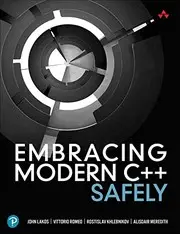 Embracing Modern C++ SafelyJohn Lakos · 2021 · recommended by 2 people · similar by subject and what people say about it
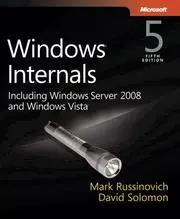 Windows® InternalsDavid A. Solomon · 2008 · recommended by 6 people · similar by subject and what people say about it
 Building High Integrity Applications with SPARKJohn W. McCormick · 2015 · recommended by 4 people · similar by subject and what people say about it
 Compiler design in CAllen I. Holub · 1990 · recommended by 11 people · similar by subject and what people say about it
 Beautiful C++John Davidson · 2021 · recommended by 1 person · similar by subject and what people say about it
 Mac OS X and iOS InternalsJonathan Levin · 2013 · recommended by 1 person · loosely similar by subject
 Essential COMDon Box · 1998 · recommended by 11 people · loosely similar by subject
 Designing object-oriented C++ applications using the Booch methodRobert C. Martin · 1995 · recommended by 3 people · loosely similar by subject
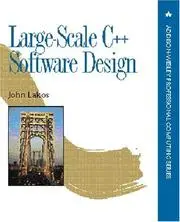 Large-scale C++ software designJohn Lakos · 1996 · recommended by 24 people · similar by subject and what people say about it
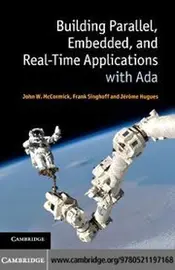 Building parallel, embedded, and real-time applications with AdaJohn W. McCormick · 2011 · recommended by 3 people · loosely similar by subject
 Solaris internalsRichard McDougall · 2006 · recommended by 4 people · loosely similar by subject
 Zen of assembly languageMichael Abrash · 1990 · recommended by 6 people · loosely similar by subject
 Swing hacksJoshua Marinacci · 2005 · recommended by 2 people · loosely similar by subject
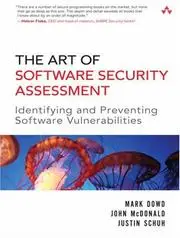 The art of software security assessmentMark Dowd · 2006 · recommended by 21 people · similar by subject and what people say about it
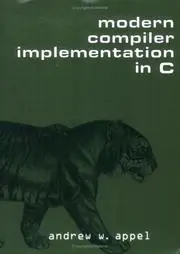 Modern compiler implementation in CAndrew W. Appel · 2004 · recommended by 8 people · similar by subject and what people say about it
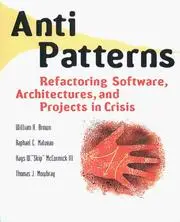 AntiPatternsWilliam J. Brown · 1998 · recommended by 4 people · loosely similar by subject
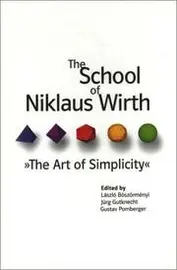 School of Niklaus WirthLászló Böszörményi · 2000 · recommended by 6 people · loosely similar by subject
 Applied CryptographyBruce Schneier · 1994 · recommended by 76 people · similar by subject and what people say about it
 Writing solid codeSteve Maguire · 1993 · recommended by 18 people · similar by subject and what people say about it
 Component softwareClemens Szyperski · 1997 · recommended by 3 people · loosely similar by subject
 Security EngineeringRoss J. Anderson · 2001 · recommended by 38 people · similar by subject and what people say about it