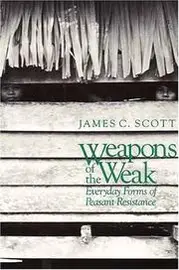
Weapons of the weak
James C. Scott · 1985
Politics, economics and society › Authority and institutions
#10,633 most recommended
Hacker News
3
mentions by 3 people · top 64% of 15,732 books
Open Library
3.00★★★★★★★★★★
1 rating · 18 want to read
Wikipedia
1,198
article views a month
About the book
A study of peasant politics centred on a rice-growing village in Kedah, northwestern Malaysia, in the late 1970s, a period of mechanisation and Green Revolution change. It examines how poor farmers confront landlords, employers and the state through daily, low-visibility actions rather than organised protest or revolt. Scott argues that everyday forms of resistance, such as foot-dragging, feigned ignorance, pilfering, false compliance, gossip and sabotage, are the normal mode of peasant class struggle, and that the rarity of open rebellion does not show acquiescence. These acts are safer, need no formal organisation, and can secure material gains for the poor, which is why they persist. He also contends that elite-focused and purely structural accounts miss the ideological meaning of these acts, since they reflect a hidden subsistence ethic and a refusal to accept the dominant account of the social order.
Written by Claude from what it knows of this book.
What Hacker News says 100% recommend · 0% critical
In the commenters’ own words
Sociology: - The Coddling of the American Mind - The Tao of Pooh - Guns, Germs, and Steel - Weapons of the Weak Religious: - Guru Granth Sahib - Bible (King…
I met him once but never took a class. I wish I had because I enjoyed listening to him. Deeply knowledgeable and great intellect. We spoke mostly about the…
What Open Library readers say 3.00 from 1 rating
- 50
- 40
- 31
- 20
- 10
- 18 want to read
- 0 reading
- 2 have read
Only 1 rating: treat the average as a hint.
What Wikipedia says
- published 1985
- 389 pages
- articles in 2 languages
Reddit communities — coming later
The threads it came up in
Details
- First published
- 1985
- ISBN
- 9780585363301
- Editions known
- 10 at Open Library
- Open Library
- OL2692044W
Activité politiqueBoerenCase studiesConflicto socialLutte des classesMalaysia, economic conditionsOpstandenPassive resistancePaysanneriePeasant uprisingsPeasantryPeasantsPolitical activityResistencia pasiva
Read next: its neighbours on the mosaic
 The making of the English working classE. P. Thompson · 1963 · recommended by 4 people · similar by subject and what people say about it
 The Art of Not Being GovernedJames C. Scott · 2009 · recommended by 9 people · similar by subject and what people say about it
 John AdamsDavid McCullough · 2001 · recommended by 8 people · loosely similar by subject
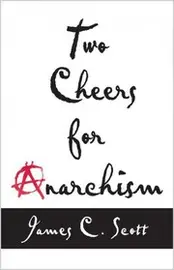 Two Cheers for AnarchismJames C. Scott · 2012 · recommended by 4 people · similar by subject and what people say about it
 Why civil resistance worksErica Chenoweth · 2011 · recommended by 3 people · similar by subject and what people say about it
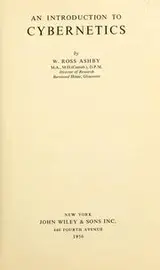 An introduction to cyberneticsWilliam Ross Ashby · 1956 · recommended by 7 people · loosely similar by subject
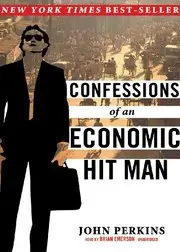 Confessions of an economic hit manPerkins, John · 2004 · recommended by 23 people · loosely similar by subject
 Total ResistanceH. Von Dach · 1957 · recommended by 1 person · loosely similar by subject
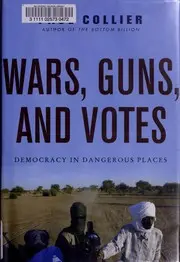 Wars, Guns, and VotesPaul Collier · 2009 · recommended by 3 people · loosely similar by subject
 Silent Weapons For Quiet WarsJeremy Robert Johnson · 2009 · recommended by 3 people · loosely similar by subject
 The phenomenology of spiritGeorg Wilhelm Friedrich Hegel · 1807 · recommended by 7 people · loosely similar by subject
 War on the WestDouglas Murray · 2022 · recommended by 0 people · loosely similar by subject
 War in the age of intelligent machinesManuel De Landa · 1991 · recommended by 1 person · loosely similar by subject
 Analog VLSI and neural systemsCarver Mead · 1989 · recommended by 2 people · loosely similar by subject
 The locust effectGary A. Haugen · 2013 · recommended by 2 people · loosely similar by subject
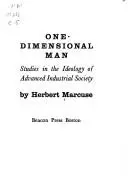 One-Dimensional ManHerbert Marcuse · 1964 · recommended by 12 people · loosely similar by subject
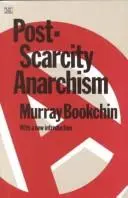 Post-scarcity anarchismMurray Bookchin · 1971 · recommended by 5 people · loosely similar by subject
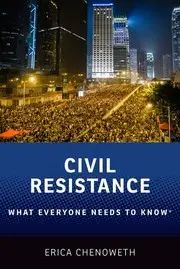 Civil ResistanceErica Chenoweth · 2019 · recommended by 2 people · loosely similar by subject
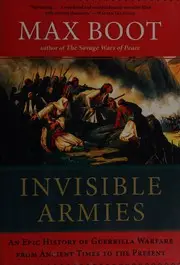 Invisible armiesMax Boot · 2012 · recommended by 1 person · loosely similar by subject
 The Wretched of the EarthFrantz Fanon · 1961 · recommended by 2 people · loosely similar by subject
 Mastering the art of French cookingJulia Child · 1961 · recommended by 16 people · loosely similar by subject
 War Against the WeakEdwin Black · 2003 · recommended by 1 person · loosely similar by subject
 Weapons of mass instructionJohn Taylor Gatto · 2008 · recommended by 3 people · loosely similar by subject
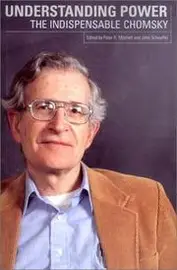 Understanding PowerNoam Chomsky · 2002 · recommended by 27 people · loosely similar by subject