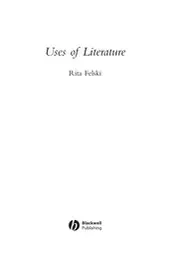
Uses of literature
Rita Felski · 2008
Politics, economics and society › Critical theory and cultural philosophy
#12,790 most recommended
Hacker News
2
mentions by 2 people · top 79% of 15,732 books
Open Library
—
No ratings yet
4 want to read
Wikipedia
—
No article yet
About the book
Uses of Literature is a work of literary theory that asks why people read and what reading does for them. It addresses both professional criticism and the everyday beliefs readers hold about literature's value, and it draws on a wide range of reading experiences rather than a single theoretical school. Felski argues that literary criticism has been too dominated by suspicion, critique, and the unmasking of hidden meanings, which treat readers either as dupes or as detached decoders. She proposes instead that the relation between reader and text be described through four modes of textual engagement: recognition, enchantment, knowledge, and shock. Together these modes are meant to account for the varied uses readers make of literature without reducing them to one aesthetic or political function.
Written by Claude from what it knows of this book.
What Hacker News says 0% recommend · 0% critical
In the commenters’ own words
> Others, though, suggest that the humanities’ loss of cultural capital has been hastened by the path of humanities scholarship itself. One theory is that the…
In The Bestseller Code , Archer and Jockers touch on this to explain why literary criticism is out of touch with popular reading. They mention Uses of…
What Open Library readers say
No Open Library reader has rated it yet.
- 4 want to read
- 0 reading
- 0 have read
What critics say, via Wikipedia
No Wikipedia article about this book yet, so no critics to quote.
Reddit communities — coming later
Details
- First published
- 2008
- ISBN
- 9781405147248
- Editions known
- 4 at Open Library
- Open Library
- OL3522597W
Books and readingBöcker och läsningElectronic booksFilosofiLITERARY CRITICISMLeserLiteraturLiteratureLiterature, philosophyLitteraturPhilosophyRezeptionsästhetikSemiotics & Theory
Read next: its neighbours on the mosaic
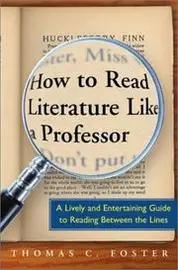 How to read literature like a professorThomas C. Foster · 2003 · recommended by 1 person · similar by subject and what people say about it
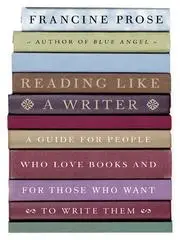 Reading Like a WriterFrancine Prose · 2006 · recommended by 3 people · similar by subject and what people say about it
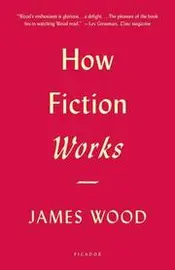 How fiction worksJames Wood · 2008 · recommended by 3 people · similar by subject and what people say about it
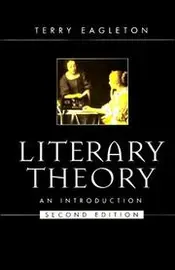 Literary theoryTerry Eagleton · 1983 · recommended by 1 person · similar by subject and what people say about it
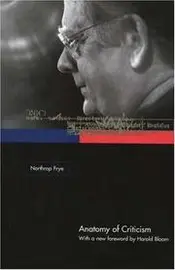 Anatomy of criticismNorthrop Frye · 1957 · recommended by 2 people · similar by subject and what people say about it
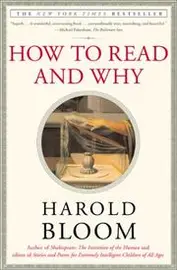 How to read and whyHarold Bloom · 2000 · recommended by 1 person · similar by subject and what people say about it
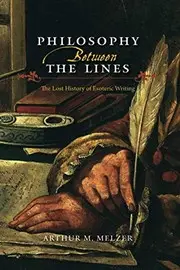 Philosophy between the linesArthur M. Melzer · 2014 · recommended by 5 people · similar by subject and what people say about it
 The practice of writingDavid Lodge · 1996 · recommended by 2 people · similar by subject and what people say about it
 Contingency, irony, and solidarityRichard Rorty · 1989 · recommended by 4 people · similar by subject and what people say about it
 The killing of historyKeith Windschuttle · 1994 · recommended by 0 people · similar by subject and what people say about it
 Graphs, Maps, TreesFranco Moretti · 2007 · recommended by 1 person · loosely similar by subject
 How to Write a ThesisUmberto Eco · 2015 · recommended by 9 people · loosely similar by subject
 The Romantic ManifestoAyn Rand · 1969 · recommended by 4 people · loosely similar by subject
 The writing lifeAnnie Dillard · 1989 · recommended by 4 people · loosely similar by subject
 Jane EyreCharlotte Brontë · 1847 · recommended by 6 people · loosely similar by subject
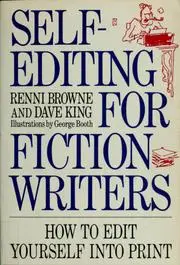 Self-editing for fiction writersRenni Browne · 1993 · recommended by 3 people · loosely similar by subject
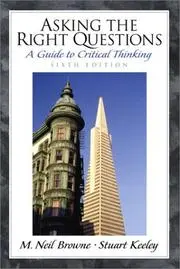 Asking the right questionsM. Neil Browne · 1981 · recommended by 2 people · loosely similar by subject
 The business of being a writerJane Friedman · 2018 · recommended by 0 people · loosely similar by subject
 Foucault's PendulumUmberto Eco · 1988 · recommended by 54 people · loosely similar by subject
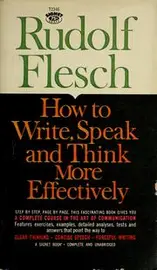 How to Write, Speak, and Think More EffectivelyRudolf Flesch · 1960 · recommended by 2 people · loosely similar by subject
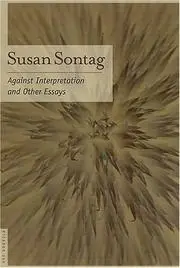 Against InterpretationSusan Sontag · 1966 · recommended by 1 person · loosely similar by subject
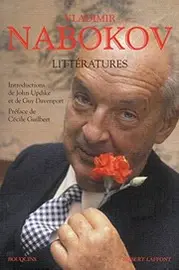 Lectures on LiteratureVladimir Nabokov · 1980 · recommended by 4 people · loosely similar by subject
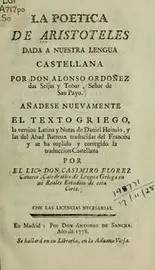 PoeticsAristotle · 1536 · recommended by 6 people · loosely similar by subject
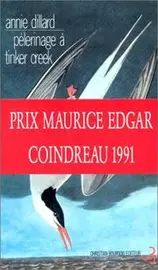 Pilgrim at Tinker CreekAnnie Dillard · 1974 · recommended by 11 people · loosely similar by subject