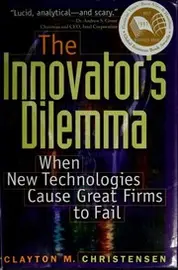
The Innovator's Dilemma
Clayton M. Christensen, L J Ganser, Don Leslie · 1997
Self-help, psychology and business books › Innovation and business strategy
#59 most recommended
Hacker News
522
mentions by 340 people · top 0.4% of 15,732 books
Open Library
4.06★★★★★★★★★★
18 ratings · 309 want to read
Wikipedia
6,381
article views a month
About the book
Clayton Christensen's 1997 book argues that well-run, established companies can lose their market leadership, or collapse, even while doing everything that conventional management wisdom prescribes. Such firms listen closely to their customers and invest in the most valuable products, yet newcomers with cheaper, less developed technology serve overlooked low-end customers. Those newcomers then improve step by step until they are good enough to take over the established firms' markets. The book builds on the idea of disruptive technologies, which Christensen introduced in a 1995 article. It offers rules for managers, such as when to ignore customers, when to back lower-margin products, and when to pursue small markets. It also recommends that large firms set up small, nimble units that imitate the disruptors.
Written by Claude from the Open Library description, the Wikipedia article and the Hacker News comments.
What Hacker News says 44% recommend · 4% critical
Points to the book as the full account of disruptive innovation, and warns that ignoring it risks being overtaken by a disruptive entrant.
Cites the book and its follow-up to argue that electric cars will become competitive, since the technology curves it describes have kept holding.
Says the book explains why big companies resist new goals, but wonders how Christensen would explain Apple's repeated reinventions under Steve Jobs.
Argues the book has a poor record as a corporate handbook, noting that Nokia's leaders embraced it and still lost to Apple's genuinely new product.
Groups the book with works whose few clever ideas are stretched across a whole book through repetition and examples.
The criticism. Critics say the framework has predicted poorly in practice, as Nokia's failure shows, and that the book stretches a few ideas into a full volume.
What Open Library readers say 4.06 from 18 ratings
- 57
- 46
- 34
- 21
- 10
- 309 want to read
- 14 reading
- 23 have read
Only 18 ratings: treat the average as a hint.
What Wikipedia says
- published 1997
- articles in 3 languages
- 6,381 views a month
Reddit communities — coming later
The threads it came up in
- Ask HN: Books you read in 2016?
- Ask HN: Mind bending books to read and never be the same as before?
- Ask HN: Interesting (Non software) books?
- Ask HN: What are your favorite non-fiction books of all time?
- Ask HN: What books helped you in your entrepreneurship journey?
- Ask HN: What is one book you would recommend everyone to read?
- Ask HN: Books you read in 2017?
- Ask HN: What are the must-read books about economics/finance?
Details
- First published
- 1997
- ISBN
- 9780062060242
- Editions known
- 28 at Open Library
- Open Library
- OL1999873W
658AffairesBUSINESS & ECONOMICSBUSINESS & ECONOMICS / Decision-Making & Problem SolvingBUSINESS & ECONOMICS / LeadershipBUSINESS & ECONOMICS / Strategic PlanningBusiness economicsCommerceConsumer BehaviorCreative abilityCreative ability in businessCréativité dans les affairesCustomer SatisfactionCustomer services
Read next: its neighbours on the mosaic
 The Innovator's SolutionClayton M. Christensen · 2003 · recommended by 26 people · 15 people recommended both
 Crossing the ChasmGeoffrey A. Moore · 1991 · recommended by 106 people · 16 people recommended both
 Blue ocean strategyW. Chan Kim · 2005 · recommended by 37 people · 7 people recommended both
 Inside the TornadoGeoffrey A. Moore · 1995 · recommended by 11 people · 3 people recommended both
 The Chasm CompanionPaul Wiefels · 2002 · recommended by 4 people · 4 people recommended both
 The Hard Thing About Hard ThingsBen Horowitz · 2014 · recommended by 124 people · 9 people recommended both
 The Lean StartupEric Ries · 2011 · recommended by 281 people · 15 people recommended both
 Competing Against LuckClayton M. Christensen · 2016 · recommended by 15 people · 3 people recommended both
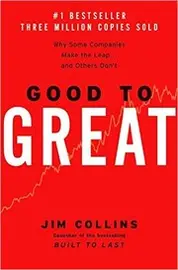 Good to GreatCollins, James C. · 2001 · recommended by 71 people · 8 people recommended both
 The nature of technologyW. Brian Arthur · 2009 · recommended by 4 people · 2 people recommended both
 Growing a businessPaul Hawken · 1987 · recommended by 14 people · 5 people recommended both
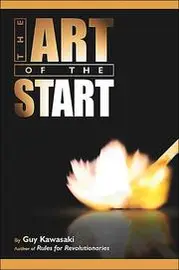 The Art of the StartGuy Kawasaki · 2004 · recommended by 48 people · 4 people recommended both
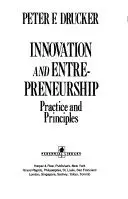 Innovation and EntrepreneurshipPeter F. Drucker · 1985 · recommended by 14 people · 4 people recommended both
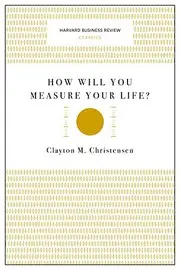 How will you measure your life?Clayton M. Christensen · 2012 · recommended by 29 people · named together in 7 comments
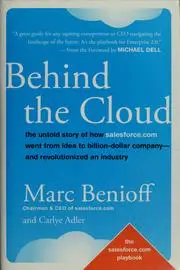 Behind the cloudMarc R. Benioff · 2009 · recommended by 9 people · named together in 4 comments
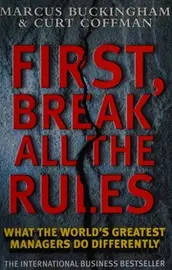 First, break all the rulesMarcus Buckingham · 1999 · recommended by 27 people · 4 people recommended both
 InspiredMarty Cagan · 2008 · recommended by 42 people · 4 people recommended both
 Thinking, fast and slowDaniel Kahneman · 2011 · recommended by 455 people · 12 people recommended both
 Zero to OnePeter A. Thiel · 2014 · recommended by 166 people · 7 people recommended both
 Founders at workJessica Livingston · 2007 · recommended by 246 people · 9 people recommended both
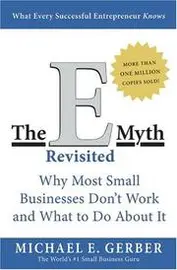 The E-myth revisitedMichael E. Gerber · 1995 · recommended by 126 people · 7 people recommended both
 Guerrilla MarketingJay Conrad Levinson · 1984 · recommended by 2 people · similar by subject and what people say about it
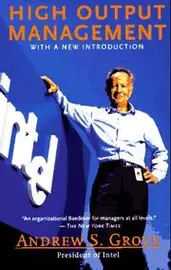 High Output ManagementAndrew S. Grove · 1983 · recommended by 116 people · 7 people recommended both
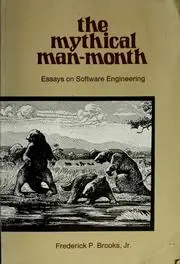 The Mythical Man-MonthFrederick P. Brooks · 1975 · recommended by 383 people · 11 people recommended both