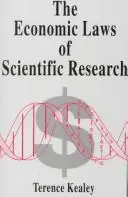
The economic laws of scientific research
Terence Kealey · 1996
Politics, economics and society › Classical economics and free markets
#10,111 most recommended
Hacker News
3
mentions by 3 people · top 64% of 15,732 books
Open Library
4.00★★★★★★★★★★
1 rating
Wikipedia
—
No article yet
About the book
The book examines how scientific research is funded and organised, and whether government funding is needed for science to produce economic, cultural and scientific growth. It draws on international comparisons and historical evidence, including the cases of Britain, the United States, Japan, Switzerland, Russia and India. Kealey argues that state funding of research is not the engine of scientific or economic progress that it is usually assumed to be, and that the historical record shows private funding, including from individuals, industry and universities, supporting most science. He contends that government support tends to crowd out private investment rather than add to it, and that the economic case for public funding rests on a flawed model of how knowledge spreads. He concludes that free-market arrangements have been the more successful way to promote science, innovation and wealth.
Written by Claude from what it knows of this book.
What Hacker News says 67% recommend · 0% critical
In the commenters’ own words
As if "A" or "C" defined a person capacity. I know some straight A's that went directly for a repetitive and boring but well paid and stable job. Other stayed…
The premise of this article seems to be that since the government funding of scientific research has bore fruits, then it must be justified. The ole saying "a…
What Open Library readers say 4.00 from 1 rating
- 50
- 41
- 30
- 20
- 10
- 0 want to read
- 0 reading
- 1 have read
Only 1 rating: treat the average as a hint.
What critics say, via Wikipedia
No Wikipedia article about this book yet, so no critics to quote.
Reddit communities — coming later
Details
- First published
- 1996
- ISBN
- 9780333560457
- Editions known
- 10 at Open Library
- Open Library
- OL2913248W
Economic aspectsEconomic aspects of Industrial researchEconomic historyEconomic policyEconomicsHistoryIndustrial ResearchResearchResearch, IndustrialResearch, economic aspectsScienceScience, economic aspectsScience, history
Read next: its neighbours on the mosaic
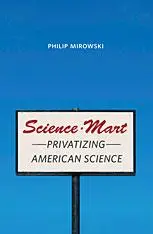 Science-martPhilip Mirowski · 2011 · recommended by 3 people · similar by subject and what people say about it
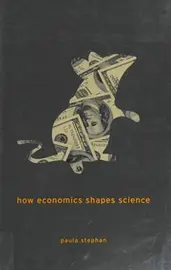 How economics shapes sciencePaula E. Stephan · 2012 · recommended by 2 people · similar by subject and what people say about it
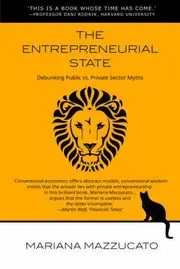 THE ENTREPRENEURIAL STATEMariana Mazzucato · 2011 · recommended by 19 people · similar by subject and what people say about it
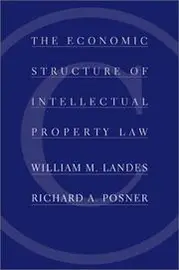 The economic structure of intellectual property lawWilliam M. Landes · 2003 · recommended by 1 person · similar by subject and what people say about it
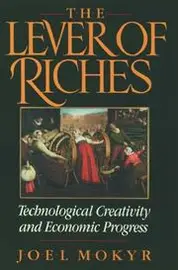 The lever of richesJoel Mokyr · 1990 · recommended by 7 people · similar by subject and what people say about it
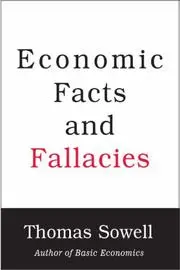 Economic Facts and FallaciesThomas Sowell · 2007 · recommended by 8 people · similar by subject and what people say about it
 Science--the endless frontierVannevar Bush · 1980 · recommended by 3 people · similar by subject and what people say about it
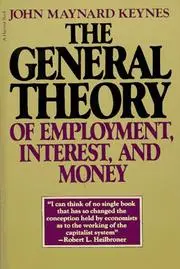 The general theory of employment, interest and moneyJohn Maynard Keynes · 1936 · recommended by 10 people · similar by subject and what people say about it
 Science in a Free SocietyPaul K. Feyerabend · 1978 · recommended by 1 person · similar by subject and what people say about it
 Basic economicsThomas Sowell · 2000 · recommended by 88 people · similar by subject and what people say about it
 FreakonomicsSteven D. Levitt · 2005 · recommended by 27 people · similar by subject and what people say about it
 The Darwin economyRobert H. Frank · 2011 · recommended by 1 person · similar by subject and what people say about it
 The Knowledge MachineMichael Strevens · 2020 · recommended by 0 people · similar by subject and what people say about it
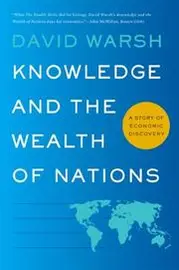 Knowledge and the Wealth of NationsDavid Warsh · 2006 · recommended by 4 people · similar by subject and what people say about it
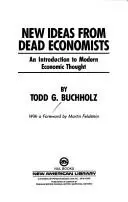 New ideas from dead economistsTodd G. Buchholz · 1989 · recommended by 7 people · similar by subject and what people say about it
 A Farewell to AlmsGregory Clark · 2007 · recommended by 16 people · similar by subject and what people say about it
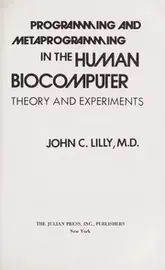 Programming and metaprogramming in the human biocomputerJohn Cunningham Lilly · 1968 · recommended by 7 people · loosely similar by subject
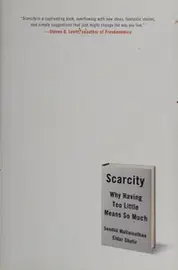 ScarcitySendhil Mullainathan · 2013 · recommended by 10 people · similar by subject and what people say about it
 Information rulesCarl Shapiro · 1999 · recommended by 18 people · similar by subject and what people say about it
 The use of knowledge in societyFriedrich A. von Hayek · 1945 · recommended by 16 people · similar by subject and what people say about it
 Science FictionsStuart Ritchie · 2020 · recommended by 8 people · similar by subject and what people say about it
 Law, legislation and libertyFriedrich A. von Hayek · 1973 · recommended by 5 people · similar by subject and what people say about it
 The Structure of Scientific RevolutionsThomas S. Kuhn · 1962 · recommended by 96 people · similar by subject and what people say about it
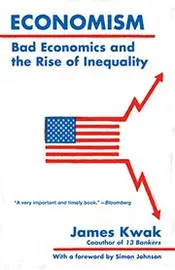 EconomismJames Kwak · 2017 · recommended by 3 people · similar by subject and what people say about it