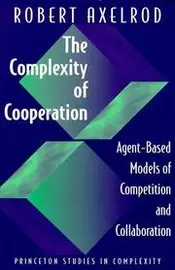
The complexity of cooperation
Robert M. Axelrod · 1997
Politics, economics and society › Authority and institutions
#8,161 most recommended
Hacker News
7
mentions by 3 people · top 38% of 15,732 books
Open Library
—
No ratings yet
5 want to read
Wikipedia
110
article views a month
About the book
The book collects Robert Axelrod's agent-based computer models of competition and cooperation among adaptive actors. It covers repeated games such as the iterated prisoner's dilemma, and how groups develop, enforce, and sometimes break shared norms. Its scope is theoretical social science, with simulation as the main method. Cooperation can emerge among self-interested agents that adapt over time, especially when they interact repeatedly and the future matters to them. Norms can be sustained through sanctions, including punishment of those who fail to punish. Simple adaptive rules can produce complex collective patterns, such as in-group favouritism, that are hard to predict from the rules alone. Computer simulation is presented as a way to test which conditions make cooperation stable.
Written by Claude from what it knows of this book.
What Hacker News says 67% recommend · 0% critical
In the commenters’ own words
You are not quite right and there are "organized groups" active on HN influencing sensitive topics. The equivalence you are making i.e. "society is divided…
This looks quite interesting; thanks for sharing. A related concept is Jugaad - https://en.wikipedia.org/wiki/Jugaad Often interpreted as "good enough" with…
What Open Library readers say
No Open Library reader has rated it yet.
- 5 want to read
- 0 reading
- 0 have read
What Wikipedia says
- published 2011
- 232 pages
- 110 views a month
Reddit communities — coming later
Details
- First published
- 1997
- ISBN
- 9780691015675
- Editions known
- 4 at Open Library
- Open Library
- OL2620281W
Adaptability (Psychology)Adjustment (Psychology)CompetitionComputational complexityComputer simulationConflict managementCooperativenessSocial systems
Read next: its neighbours on the mosaic
 The evolution of cooperationRobert M. Axelrod · 1984 · recommended by 21 people · named together in 3 comments
 Behavioral Game TheoryColin F. Camerer · 2003 · recommended by 2 people · similar by subject and what people say about it
 Why we do what we doEdward L. Deci · 1995 · recommended by 4 people · loosely similar by subject
 Introduction to the Theory of Complex SystemsStefan Thurner · 2018 · recommended by 4 people · loosely similar by subject
 SupercooperatorsMartin A. Nowak · 2011 · recommended by 2 people · similar by subject and what people say about it
 Thinking and decidingJonathan Baron · 1988 · recommended by 6 people · loosely similar by subject
 Advanced C₊₊ programming styles and idiomsJames O. Coplien · 1992 · recommended by 4 people · loosely similar by subject
 Design by ContractBertrand Meyer · 2020 · recommended by 4 people · loosely similar by subject
 Handbook Of Neuroevolution Through ErlangGene I. Sher · 2012 · recommended by 5 people · loosely similar by subject
 Sources of PowerGary Klein · 1999 · recommended by 14 people · loosely similar by subject
 Computer System DesignMichael J. Flynn · 2011 · recommended by 4 people · loosely similar by subject
 AlgorithmicsDavid Harel · 1987 · recommended by 11 people · loosely similar by subject
 Complex adaptive systemsJohn H. Miller · 2006 · recommended by 1 person · similar by subject and what people say about it
 Software fundamentalsDavid Lorge Parnas · 2001 · recommended by 4 people · loosely similar by subject
 Micromotives and MacrobehaviorThomas C. Schelling · 1978 · recommended by 3 people · similar by subject and what people say about it
 The Politics of ObedienceEtienne de la Boetie · 2015 · recommended by 1 person · loosely similar by subject
 Crucial ConfrontationsKerry Patterson · 2005 · recommended by 2 people · loosely similar by subject
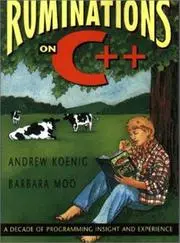 Ruminations on C++Andrew Koenig · 1996 · recommended by 3 people · loosely similar by subject
 Object-oriented programmingPeter Coad · 1993 · recommended by 3 people · loosely similar by subject
 The Art of ProbabilityRichard Hamming · 1990 · recommended by 7 people · loosely similar by subject
 Evolutionary DynamicsMartin A. Nowak · 2006 · recommended by 5 people · similar by subject and what people say about it
 The Model ThinkerScott E. Page · 2018 · recommended by 9 people · loosely similar by subject
 The empowered managerPeter Block · 1987 · recommended by 2 people · loosely similar by subject
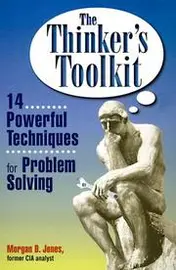 The thinker's toolkitMorgan D. Jones · 1995 · recommended by 4 people · loosely similar by subject