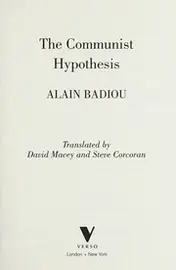
The communist hypothesis
Alain Badiou · 2010
Politics, economics and society › Marxism and capitalism critique
#6,640 most recommended
Hacker News
10
mentions by 4 people · top 29% of 15,732 books
Open Library
4.00★★★★★★★★★★
1 rating · 6 want to read
Wikipedia
—
No article yet
About the book
The book is a short philosophical essay on communism as a political hypothesis: the claim that collective equality and emancipation from private property and the state remain thinkable and necessary. It takes as reference points the French Revolution, the Paris Commune of 1871, the events of 1968, and the state-socialist experiments of the twentieth century, and asks why the idea has been discredited. Badiou argues that the failure of twentieth-century communist states does not refute the underlying hypothesis, but shows that the party-state form was a mistake that must be rethought. He divides the modern history of the idea into sequences, the first ending with the Paris Commune and the second with the Soviet and Maoist experiments, and holds that a third sequence depends on new forms of popular organization. He also contends that the liberal-democratic consensus of the present, which he calls democratic materialism, leaves little room for a radical alternative to capitalism.
Written by Claude from what it knows of this book.
What Hacker News says 25% recommend · 0% critical
In the commenters’ own words
Your definitions of Socialism and Communism are almost entirely false and lacking in any reference to the founders of the movement, their usage in the…
I agree, it's something that sounds difficult to get right, and if it's possible to get right, what's the best way to go about it? I contend that the model…
What Open Library readers say 4.00 from 1 rating
- 50
- 41
- 30
- 20
- 10
- 6 want to read
- 0 reading
- 1 have read
Only 1 rating: treat the average as a hint.
What critics say, via Wikipedia
No Wikipedia article about this book yet, so no critics to quote.
Reddit communities — coming later
Details
- First published
- 2010
- ISBN
- 9781844676002
- Editions known
- 2 at Open Library
- Open Library
- OL15572549W
1968CommunismKommunismKommunismusPariskommunen, Frankrike, 1871Teori, filosofi
Read next: its neighbours on the mosaic
 The Principles of CommunismFriedrich Engels · 2019 · recommended by 2 people · similar by subject and what people say about it
 One-Dimensional ManHerbert Marcuse · 1964 · recommended by 12 people · similar by subject and what people say about it
 Towards a new socialismW. Paul Cockshott · 1993 · recommended by 8 people · similar by subject and what people say about it
 The Sublime Object of IdeologySlavoj Žižek · 1989 · recommended by 8 people · similar by subject and what people say about it
 The culture industryTheodor W. Adorno · 1991 · recommended by 7 people · loosely similar by subject
 Society of the spectacleGuy Debord · 1967 · recommended by 27 people · loosely similar by subject
 The German IdeologyKarl Marx · 1932 · recommended by 0 people · similar by subject and what people say about it
 Wage Labour and CapitalKarl Marx · 1849 · recommended by 6 people · loosely similar by subject
 The Soul of Man Under SocialismOscar Wilde · 1891 · recommended by 3 people · loosely similar by subject
 Main currents of MarxismLeszek Kolakowski · 1978 · recommended by 1 person · similar by subject and what people say about it
 The Communist ManifestoDavid Boyle · 2004 · recommended by 6 people · similar by subject and what people say about it
 Communist ManifestoKarl Marx · 1848 · recommended by 31 people · similar by subject and what people say about it
 State and RevolutionVladimir Il’ich Lenin · 1918 · recommended by 7 people · similar by subject and what people say about it
 Manifest der Kommunistischen ParteiKarl Marx · 1848 · recommended by 0 people · similar by subject and what people say about it
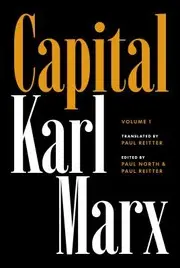 CapitalKarl Marx · 2007 · recommended by 31 people · similar by subject and what people say about it
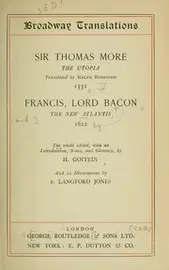 UtopiaThomas More · 1518 · recommended by 3 people · similar by subject and what people say about it
 Das KapitalKarl Marx · 1867 · recommended by 40 people · similar by subject and what people say about it
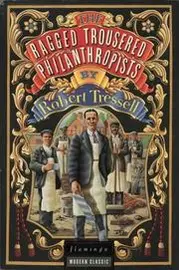 The Ragged Trousered PhilanthropistsRobert Tressell · 1914 · recommended by 10 people · loosely similar by subject
 Escape from FreedomErich Fromm · 1941 · recommended by 23 people · loosely similar by subject
 The eighteenth Brumaire of Louis BonaparteKarl Marx · 1852 · recommended by 0 people · similar by subject and what people say about it
 Cultural Marxism and political sociologyRichard R. Weiner · 1981 · recommended by 0 people · similar by subject and what people say about it
 Explaining PostmodernismStephen R. C. Hicks · 2004 · recommended by 5 people · similar by subject and what people say about it
 Dialectic of EnlightenmentTheodor W. Adorno · 1944 · recommended by 10 people · similar by subject and what people say about it
 Capitalist RealismMark Fisher · 2009 · recommended by 41 people · similar by subject and what people say about it