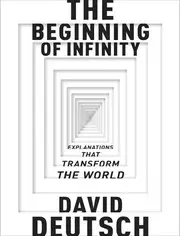
The Beginning of Infinity
David Deutsch · 2011
Minds, machines and the future › Cosmology and physics
#365 most recommended
Hacker News
143
mentions by 91 people · top 2% of 15,732 books
Open Library
4.14★★★★★★★★★★
7 ratings · 147 want to read
Wikipedia
3,822
article views a month
About the book
Deutsch argues that the growth of knowledge, driven by better and better explanations, is the central force in science and in all successful human effort. He holds that anything permitted by the laws of physics can be achieved once the right knowledge exists, so understanding has no fixed upper limit. He casts the 18th-century Enlightenment as the start of an open-ended run of knowledge creation, made possible by valuing creativity and by open debate that exposes ideas to criticism. Earlier flowerings, such as Renaissance Florence and Plato's Academy, faded when their static societies resisted change. He also contends that intelligence depends on creativity rather than raw computing power. He applies this outlook to topics such as free will, the multiverse, moral and political philosophy, aesthetics, and the future of humanity.
Written by Claude from the Open Library description, the Wikipedia article and the Hacker News comments.
What Hacker News says 84% recommend · 1% critical
Summarizes the book as saying progress comes from good explanations and from conditions that let them be generated, corrected and replaced, and notes Deutsch's skepticism of focusing on prediction instead of explanation.
Recommends it as a surprisingly optimistic account of humanity's nearly unlimited potential for discovery, and suggests it as a counter to appeals to the principle of mediocrity.
Points to chapter 11 as a far better description of the multiverse than the Copenhagen view, since in it the whole multiverse always exists and universes don't come into being at measurement.
Says the book explains why theories whose details can be freely adjusted ad hoc aren't worth testing, because only philosophical criticism can refute them.
Was deeply disappointed after finishing it, finding Deutsch overly certain about his conclusions compared with the more curious Rovelli.
What Open Library readers say 4.14 from 7 ratings
- 51
- 46
- 30
- 20
- 10
- 147 want to read
- 3 reading
- 11 have read
Only 7 ratings: treat the average as a hint.
What critics say, via Wikipedia
- published 31 March 2011
- 496 pages
- articles in 9 languages
Praise
Calls it brilliant and exhilarating, though more a wide, meandering conversation than a tight system.
Finds it as bold and profound as his earlier book, and both provocative and persuasive.
Describes it as a lucid, thought-provoking philosophical exploration of progress.
Criticism
Strong on the multiverse, but less convincing when applying ideas to aesthetics, culture and moral philosophy.
Says it offers a reflective mood rather than a live scientific hypothesis.
Paraphrased from the Wikipedia article; the critics and outlets are as it names them.
Reddit communities — coming later
The threads it came up in
- Ask HN: What books changed the way you think about almost everything?
- Ask HN: Mind bending books to read and never be the same as before?
- Ask HN: Books you plan to read in 2020?
- Ask HN: Best books you read in the past decade?
- Ask HN: What's the "best" book you've ever read?
- Ask HN: What's the best book you read in 2021?
- Ask HN: What books have made the biggest impact on your mental models?
- Ask HN: Favorite nonfiction books of 2018?
Details
- First published
- 2011
- ISBN
- 9780143121350
- Editions known
- 16 at Open Library
- Open Library
- OL4325174W
ExplanationInfiniteNew York Times bestsellerNew York Times reviewedOneindigheidPhilosophyPhysicsSCIENCE / Philosophy & Social AspectsScienceScience, philosophySpace and timeWetenschapnyt:hardcover_nonfiction=2011-08-13
Read next: its neighbours on the mosaic
 The fabric of realityDavid Deutsch · 1997 · recommended by 23 people · 7 people recommended both
 Our Mathematical UniverseMax Tegmark · 2014 · recommended by 32 people · 5 people recommended both
 Conjectures and refutationsKarl Popper · 1962 · recommended by 9 people · 2 people recommended both
 The Meaning of It AllRichard Phillips Feynman · 1998 · recommended by 4 people · 2 people recommended both
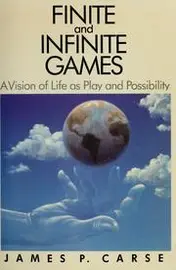 Finite and infinite gamesJames P. Carse · 1986 · recommended by 58 people · 2 people recommended both
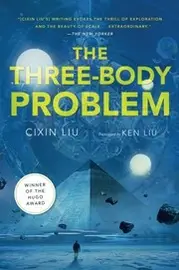 Three-Body ProblemCixin Liu · 2006 · recommended by 233 people · 3 people recommended both
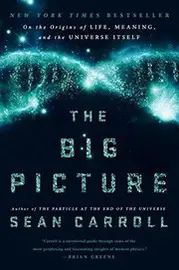 The Big PictureSean M. Carroll · 2016 · recommended by 7 people · similar by subject and what people say about it
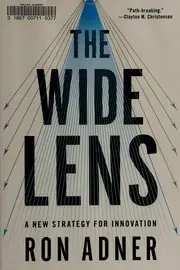 The wide lensRon Adner · 2012 · recommended by 3 people · similar by subject and what people say about it
 What technology wantsKevin Kelly · 2010 · recommended by 24 people · 3 people recommended both
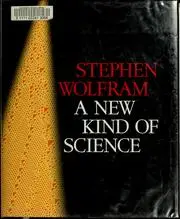 A new kind of scienceStephen Wolfram · 2002 · recommended by 44 people · similar by subject and what people say about it
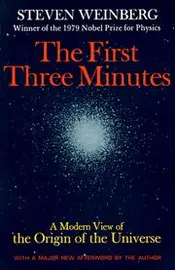 The First Three MinutesSteven Weinberg · 1977 · recommended by 8 people · similar by subject and what people say about it
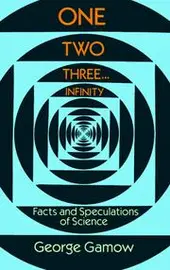 One, two, three ... infinityGeorge Gamow · 1947 · recommended by 16 people · similar by subject and what people say about it
 Personal knowledgeMichael Polanyi · 1958 · recommended by 3 people · similar by subject and what people say about it
 The Fabric of the CosmosBrian Greene · 2004 · recommended by 23 people · similar by subject and what people say about it
 Everything and moreDavid Foster Wallace · 2003 · recommended by 30 people · similar by subject and what people say about it
 The Elegant UniverseBrian Greene · 1999 · recommended by 20 people · similar by subject and what people say about it
 Meta Math!Gregory Chaitin · 2005 · recommended by 11 people · similar by subject and what people say about it
 A Universe from NothingLawrence Maxwell Krauss · 2012 · recommended by 8 people · similar by subject and what people say about it
 Infinity and the mindRudy Rucker · 1982 · recommended by 8 people · similar by subject and what people say about it
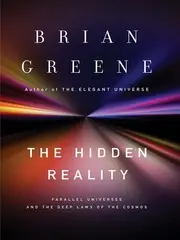 The Hidden RealityBrian Greene · 2011 · recommended by 7 people · similar by subject and what people say about it
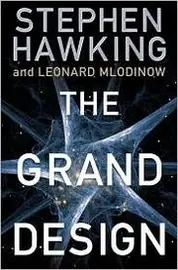 The Grand DesignStephen Hawking · 2010 · recommended by 5 people · similar by subject and what people say about it
 What is real?Adam Becker · 2018 · recommended by 6 people · similar by subject and what people say about it
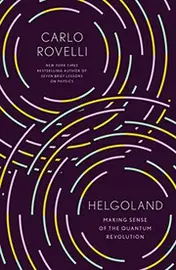 HelgolandCarlo Rovelli · 2020 · recommended by 4 people · similar by subject and what people say about it
 At home in the universeStuart A. Kauffman · 1995 · recommended by 10 people · similar by subject and what people say about it