The Archaeology of Knowledge:
Michel Foucault · 1976
Philosophy and ancient history › Philosophy of science
#12,863 most recommended
Hacker News
2
mentions by 2 people · top 79% of 15,732 books
Open Library
—
No ratings yet
1 want to read
Wikipedia
2,002
article views a month
About the book
A methodological treatise in which Foucault sets out the procedure he calls archaeology, a way of analysing the history of knowledge by examining the discursive formations that govern what can be said, and by whom, in a given period. It responds to critics of his earlier works such as Madness and Civilization and The Order of Things, and clarifies the concepts of statement, discourse, archive and discursive formation. Discourse should be studied as a body of statements that follow rules of formation, not as the expression of an author's intention or as a reflection of underlying ideas. Foucault argues that the history of thought is marked by discontinuities, with shifts in the conditions that make objects, concepts and strategies visible at a given time, and that these shifts cannot be explained by continuous development or by a sovereign subject. He contrasts this method with traditional history of ideas and with the search for origins, and proposes that the archive, the total set of discursive events, is the proper object of historical analysis.
Written by Claude from what it knows of this book.
What Hacker News says 0% recommend · 0% critical
In the commenters’ own words
What? Well, given their dismissal of the whole of the humanities, and the ridicule with which they spoke about Foucault, I doubt they're going to be reading…
If there was no change, would there be history? Here is Foucault from Archaeology of Knowledge: The notion of discontinuity is a paradoxical one: because it…
What Open Library readers say
No Open Library reader has rated it yet.
- 1 want to read
- 0 reading
- 0 have read
What Wikipedia says
- published 1969
- 275 pages
- articles in 18 languages
Reddit communities — coming later
Details
- First published
- 1976
- ISBN
- 9780060905446
- Editions known
- 2 at Open Library
- Open Library
- OL276926W
Learning and scholarship
Read next: its neighbours on the mosaic
 History of SexualityMichel Foucault · recommended by 8 people · similar by subject and what people say about it
 The order of thingsMichel Foucault · 1966 · recommended by 4 people · similar by subject and what people say about it
 Discipline and PunishMichel Foucault · 1975 · recommended by 36 people · similar by subject and what people say about it
 A History of KnowledgeCharles Lincoln Van Doren · 1991 · recommended by 1 person · similar by subject and what people say about it
 The killing of historyKeith Windschuttle · 1994 · recommended by 0 people · similar by subject and what people say about it
 Discipline and PunishmentSteve FOUCAULT · 2021 · recommended by 2 people · similar by subject and what people say about it
 Fragments of an Anarchist AnthropologyDavid Graeber · 2004 · recommended by 6 people · similar by subject and what people say about it
 Forbidden ArcheologyMichael A. Cremo · 1993 · recommended by 2 people · similar by subject and what people say about it
 Kant's Critical PhilosophyGilles Deleuze · 1984 · recommended by 2 people · similar by subject and what people say about it
 The science of knowledgeJohann Gottlieb Fichte · 1889 · recommended by 1 person · similar by subject and what people say about it
 Medieval PhilosophyAnthony Kenny · 2005 · recommended by 0 people · similar by subject and what people say about it
 Birth of the ClinicMichel Foucault · 2012 · recommended by 1 person · loosely similar by subject
 The social construction of realityPeter L. Berger · 1966 · recommended by 5 people · loosely similar by subject
 What Is Ancient Philosophy?Pierre Hadot · 2002 · recommended by 2 people · loosely similar by subject
 Laboratory lifeBruno Latour · 1979 · recommended by 4 people · loosely similar by subject
 Against MethodPaul K. Feyerabend · 1975 · recommended by 32 people · loosely similar by subject
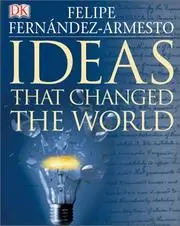 Ideas that changed the worldFelipe Fernández-Armesto · 2003 · recommended by 0 people · loosely similar by subject
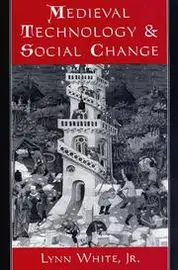 Medieval technology and social changeLynn White Jr · 1962 · recommended by 5 people · loosely similar by subject
 A thousand years of nonlinear historyManuel De Landa · 1997 · recommended by 4 people · loosely similar by subject
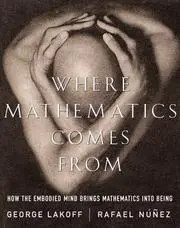 Where Mathematics Comes FromGeorge Lakoff · 2000 · recommended by 18 people · loosely similar by subject
 Personal knowledgeMichael Polanyi · 1958 · recommended by 3 people · loosely similar by subject
 Post-HistoryVilem Flusser · 2013 · recommended by 1 person · loosely similar by subject
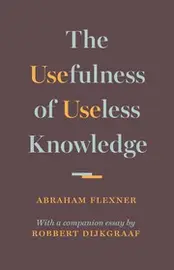 The Usefulness of Useless KnowledgeAbraham Flexner · 1939 · recommended by 2 people · loosely similar by subject
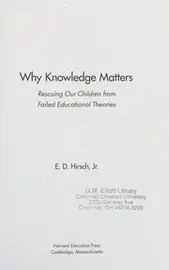 Why knowledge mattersE. D. Hirsch · 2016 · recommended by 2 people · loosely similar by subject