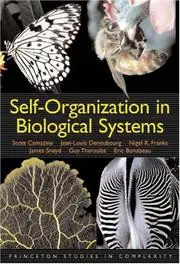
Self-organization in biological systems
Scott Camazine · 2001
Minds, machines and the future › Origin of life and bioenergetics
#15,065 most recommended
Hacker News
2
mentions by 2 people · top 79% of 15,732 books
Open Library
—
No ratings yet
3 want to read
Wikipedia
—
No article yet
About the book
The book is an introduction to self-organization and complexity in biology, a field in which orderly structures and behaviour emerge from interactions among many simple components rather than from a central controller. It covers examples from social insects, slime molds, embryonic development, and pattern formation, and it introduces the mathematical and computational models used to study them. Self-organization is a general explanatory framework for many biological patterns and collective behaviours, and it can be described with a small set of shared principles: positive feedback, negative feedback, amplification of random fluctuations, and multiple interactions among components. The authors argue that models such as reaction-diffusion systems and agent-based simulations can reproduce observed biological structures, and that these models show how local rules produce global order without a blueprint.
Written by Claude from what it knows of this book.
What Hacker News says 100% recommend · 0% critical
In the commenters’ own words
This book isn't directly related to all of OP's comment, but it addresses emergent, meta-properties of systems---which seems to me to be an important…
I highly recommend 'Self Organization in Biological Systems' by Camazine et. al. Each chapter describes a single mechanism found in biology: e.g., ant…
What Open Library readers say
No Open Library reader has rated it yet.
- 3 want to read
- 0 reading
- 0 have read
What critics say, via Wikipedia
No Wikipedia article about this book yet, so no critics to quote.
Reddit communities — coming later
Details
- First published
- 2001
- ISBN
- 9780691116242
- Editions known
- 2 at Open Library
- Open Library
- OL20977924W
BIOLOGIABiological systemsBiologieDrawing, europeanSelf-organizing systemsSystèmes auto-organisésSystèmes biologiquesZelforganiserende systemen
Read next: its neighbours on the mosaic
 Complex adaptive systemsJohn H. Miller · 2006 · recommended by 1 person · similar by subject and what people say about it
 The lives of a cellLewis Thomas · 1974 · recommended by 6 people · loosely similar by subject
 InvestigationsStuart A. Kauffman · 2000 · recommended by 2 people · similar by subject and what people say about it
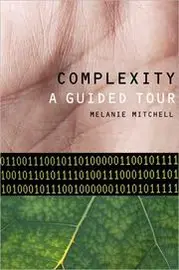 Complexity: A Guided TourMelanie Mitchell · 2009 · recommended by 6 people · similar by subject and what people say about it
 Hen's teeth and horse's toesStephen Jay Gould · 1983 · recommended by 1 person · loosely similar by subject
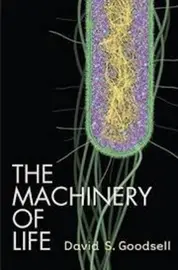 The machinery of life - 2. ed.David S. Goodsell · 2010 · recommended by 35 people · similar by subject and what people say about it
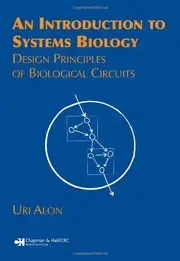 An introduction to systems biologyUri Alon · 2007 · recommended by 9 people · similar by subject and what people say about it
 The beak of the finchJonathan Weiner · 1994 · recommended by 5 people · loosely similar by subject
 The evolving selfMihaly Csikszentmihalyi · 1993 · recommended by 1 person · similar by subject and what people say about it
 Principles of Biomedical InformaticsIra J. Kalet · 2008 · recommended by 1 person · loosely similar by subject
 The origins of orderStuart A. Kauffman · 1993 · recommended by 4 people · similar by subject and what people say about it
 ComplexityRoger Lewin · 1992 · recommended by 3 people · similar by subject and what people say about it
 ConsilienceEdward Osborne Wilson · 1998 · recommended by 9 people · similar by subject and what people say about it
 Molecular Biology of the CellBruce Alberts · 1983 · recommended by 49 people · loosely similar by subject
 Self-Assembling BrainPeter Robin Hiesinger · 2021 · recommended by 3 people · loosely similar by subject
 The Selfish GeneRichard Dawkins · 1976 · recommended by 220 people · loosely similar by subject
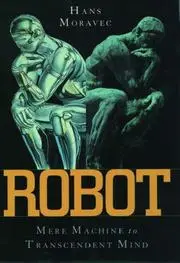 RobotHans Moravec · 1998 · recommended by 2 people · loosely similar by subject
 Steps to an ecology of mindGregory Bateson · 1972 · recommended by 7 people · loosely similar by subject
 The web of lifeFritjof Capra · 1996 · recommended by 4 people · loosely similar by subject
 Physical Biology of the CellRob Phillips · 2008 · recommended by 5 people · loosely similar by subject
 At home in the universeStuart A. Kauffman · 1995 · recommended by 10 people · loosely similar by subject
 The Extended PhenotypeRichard Dawkins · 1982 · recommended by 20 people · loosely similar by subject
 An introduction to cyberneticsWilliam Ross Ashby · 1956 · recommended by 7 people · loosely similar by subject
 Life, the science of biologyDavid Sadava · 2006 · recommended by 2 people · loosely similar by subject