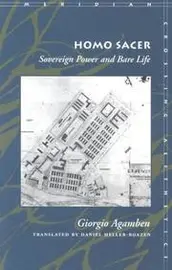
Homo sacer
Giorgio Agamben · 1995
Politics, economics and society › Critical theory and cultural philosophy
#13,247 most recommended
Hacker News
2
mentions by 2 people · top 79% of 15,732 books
Open Library
4.00★★★★★★★★★★
1 rating · 22 want to read
Wikipedia
—
No article yet
About the book
Agamben's study traces the figure of homo sacer, a person in Roman law who may be killed without the killing counting as sacrifice or as a crime, and uses that figure to examine the relation between sovereign power and bare life. Its scope runs from archaic law and Roman institutions through Western political philosophy to the concentration camps and the biopolitics of the twentieth century. Agamben argues that sovereign power is structured by an inclusive exclusion: the sovereign decides on a life that is outside the law's protection yet still bound to it, and this bare life is the political foundation of the state. He claims that the state of exception, once a temporary suspension of law, has become the normal technique of modern government, and that the camp is its paradigmatic space. He develops these claims with readings of Schmitt, Benjamin, Arendt and Foucault, and argues that biopolitics has been present in Western politics since antiquity.
Written by Claude from what it knows of this book.
What Hacker News says 50% recommend · 0% critical
In the commenters’ own words
Relax. I'm just trying to encourage you to think about your deeply held assumption, since you seem to care about women. And no, I am not "deliberately…
The Coming Community , Giorgio Agamben: A series of reflections on medieval philosophy and language that culminates in a notion of community that isn't…
What Open Library readers say 4.00 from 1 rating
- 50
- 41
- 30
- 20
- 10
- 22 want to read
- 0 reading
- 3 have read
Only 1 rating: treat the average as a hint.
What critics say, via Wikipedia
No Wikipedia article about this book yet, so no critics to quote.
Reddit communities — coming later
The threads it came up in
Details
- First published
- 1995
- ISBN
- 9780804732178
- Editions known
- 14 at Open Library
- Open Library
- OL61552W
Camps de concentrationConcentration campsDas SakraleDroit a? la vieDroit à la vieDroits de l'homme (Droit international)EtatEthikHet heiligeHuman rightsInterneringskampenInternment campsMachtMenschenrecht
Read next: its neighbours on the mosaic
 NecropoliticsAchille Mbembe · 2016 · recommended by 1 person · similar by subject and what people say about it
 The Human ConditionHannah Arendt · 1958 · recommended by 4 people · similar by subject and what people say about it
 If this is a manPrimo Levi · 1946 · recommended by 9 people · similar by subject and what people say about it
 Kingdom of God Is Within Yougraf Tolstoy · 2018 · recommended by 11 people · similar by subject and what people say about it
 The strange death of EuropeDouglas Murray · 2017 · recommended by 4 people · similar by subject and what people say about it
 The Sane SocietyErich Fromm · 1955 · recommended by 7 people · similar by subject and what people say about it
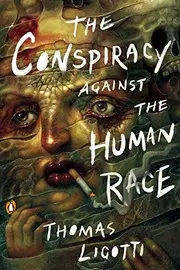 The Conspiracy Against the Human RaceThomas Ligotti · 2010 · recommended by 13 people · similar by subject and what people say about it
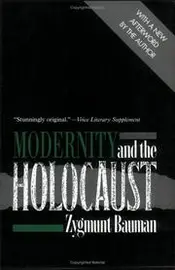 Modernity and the HolocaustZygmunt Bauman · 1989 · recommended by 2 people · similar by subject and what people say about it
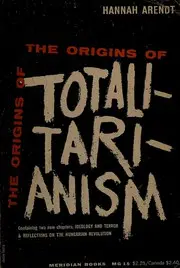 The Origins of TotalitarianismHannah Arendt · 1951 · recommended by 14 people · similar by subject and what people say about it
 The Captive MindCzesław Miłosz · 1990 · recommended by 7 people · loosely similar by subject
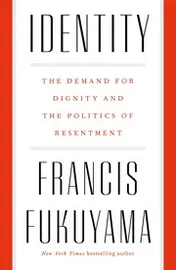 IdentityFrancis Fukuyama · 2018 · recommended by 0 people · loosely similar by subject
 Man for HimselfErich Fromm · 1947 · recommended by 2 people · loosely similar by subject
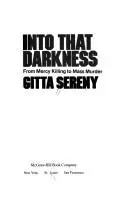 Into that darknessGitta Sereny · 1974 · recommended by 3 people · loosely similar by subject
 Violence and the SacredRené Girard · 2005 · recommended by 4 people · loosely similar by subject
 Ecco HomoFriedrich Nietzsche · 2003 · recommended by 1 person · loosely similar by subject
 Escape from FreedomErich Fromm · 1941 · recommended by 23 people · loosely similar by subject
 Eichmann in JerusalemHannah Arendt · 1963 · recommended by 21 people · loosely similar by subject
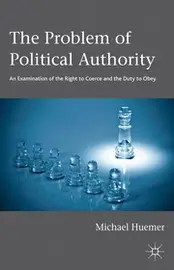 The Problem of Political AuthorityMichael Huemer · 2013 · recommended by 11 people · loosely similar by subject
 Against civilizationJohn Zerzan · 2005 · recommended by 2 people · loosely similar by subject
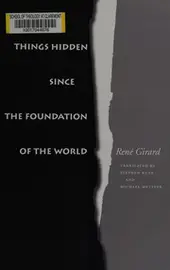 Things hidden since the foundation of the worldRené Girard · 1978 · recommended by 6 people · loosely similar by subject
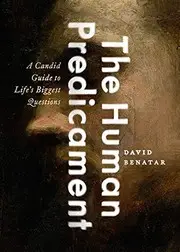 The human predicamentDavid Benatar · 2017 · recommended by 2 people · loosely similar by subject
 Discipline and PunishMichel Foucault · 1975 · recommended by 36 people · loosely similar by subject
 Huis-closJean-Paul Sartre · 1947 · recommended by 3 people · loosely similar by subject
 Existentialism Is a HumanismJean-Paul Sartre · 1946 · recommended by 6 people · loosely similar by subject