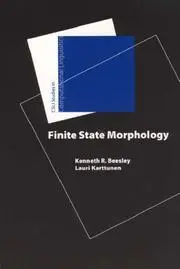
Finite state morphology
Kenneth R. Beesley · 2003
Minds, machines and the future › Linguistics and language
#11,849 most recommended
Hacker News
3
mentions by 2 people · top 64% of 15,732 books
Open Library
—
No ratings yet
Wikipedia
—
No article yet
About the book
The book covers finite-state morphology, the study of how words are built from stems, affixes and other morphemes, and the computational methods for describing and processing that structure. Its scope includes lexicons of morphemes, the morphotactic rules that combine them, and the spelling alternations that relate underlying forms to surface forms. It was written with Lauri Karttunen and centres on the Xerox finite-state toolkit as the working environment. The central claim is that morphological analysis and generation can be modelled exactly as regular relations, so that lexicons and alternation rules become finite-state transducers that can be compiled and composed into a single system usable in both directions. The authors argue that this approach is practical for real languages and not only a theoretical device. They show how two-level rules and replace rules compile into transducers, and they support the case with worked examples from several languages.
Written by Claude from what it knows of this book.
What Hacker News says 0% recommend · 0% critical
In the commenters’ own words
[Hunspell has been very successful as the OP correctly points out, and my comments are intended to improve over the state of the art rather than badmouthing…
Related projects: 1. - Xerox xfst 2. - Xerox lexc 3. - Xerox twolc 4. - Mans Hulden's FOMA Repo: https://fomafst.github.io/ Paper…
What Open Library readers say
No Open Library reader has rated it yet.
What critics say, via Wikipedia
No Wikipedia article about this book yet, so no critics to quote.
Reddit communities — coming later
Details
- First published
- 2003
- ISBN
- 9781575864341
- Editions known
- 4 at Open Library
- Open Library
- OL5969101W
Comparative and general GrammarComputational linguisticsData processingGrammar, comparative and general, morphologyMorphology
Read next: its neighbours on the mosaic
 Describing morphosyntaxThomas Edward Payne · 1997 · recommended by 2 people · similar by subject and what people say about it
 Regular algebra and finite machinesJohn Horton Conway · 1971 · recommended by 2 people · similar by subject and what people say about it
 MorphogenesisAlan Mathison Turing · 1992 · recommended by 2 people · similar by subject and what people say about it
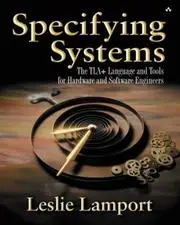 Specifying systemsLeslie Lamport · 2002 · recommended by 18 people · similar by subject and what people say about it
 Laws of formGeorge Spencer-Brown · 1969 · recommended by 8 people · loosely similar by subject
 Flex & bisonJohn R. Levine · 2009 · recommended by 3 people · loosely similar by subject
 Formal syntax and semantics of programming languagesKenneth Slonneger · 1994 · recommended by 2 people · loosely similar by subject
 Compiling with ContinuationsAndrew W. Appel · 1992 · recommended by 19 people · loosely similar by subject
 Domain-Specific LanguagesMartin Fowler · 2010 · recommended by 2 people · loosely similar by subject
 Parsing TechniquesDick Grune · 2007 · recommended by 16 people · loosely similar by subject
 The formal semantics of programming languagesGlynn Winskel · 1993 · recommended by 5 people · loosely similar by subject
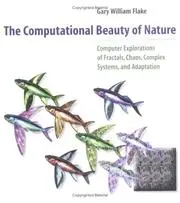 The Computational Beauty of NatureGary William Flake · 1998 · recommended by 19 people · loosely similar by subject
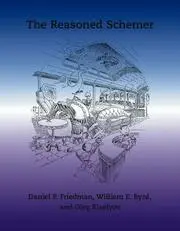 The reasoned schemerDaniel P. Friedman · 2005 · recommended by 45 people · loosely similar by subject
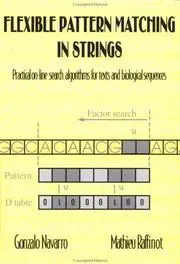 Flexible Pattern Matching in StringsGonzalo Navarro · 2002 · recommended by 4 people · loosely similar by subject
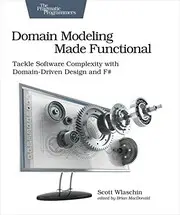 Domain Modeling Made FunctionalScott Wlaschin · 2018 · recommended by 43 people · loosely similar by subject
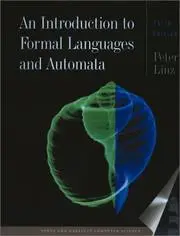 An introduction to formal languages and automataPeter Linz · 1990 · recommended by 4 people · loosely similar by subject
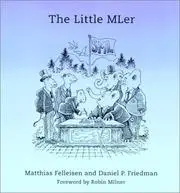 The little MLerMatthias Felleisen · 1998 · recommended by 6 people · loosely similar by subject
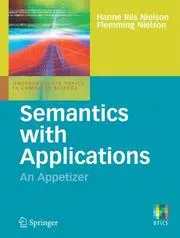 Semantics with applicationsHanne Riis Nielson · 2007 · recommended by 5 people · loosely similar by subject
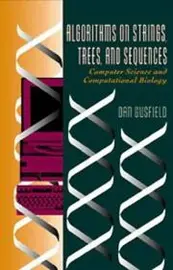 Algorithms on strings, trees, and sequencesDan Gusfield · 1997 · recommended by 3 people · loosely similar by subject
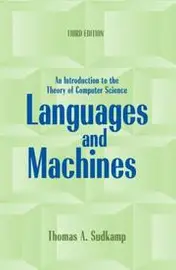 Languages and machinesThomas A. Sudkamp · 1988 · recommended by 2 people · loosely similar by subject
 The algorithmic beauty of plantsPrzemyslaw Prusinkiewicz · 1990 · recommended by 18 people · loosely similar by subject
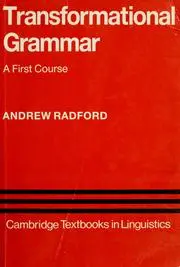 Transformational grammarAndrew Radford · 1989 · recommended by 1 person · loosely similar by subject
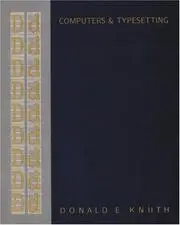 METAFONTDonald Knuth · 1986 · recommended by 1 person · loosely similar by subject
 Practical Foundations for Programming LanguagesRobert Harper · 2016 · recommended by 17 people · loosely similar by subject