
Eurozone Dystopia
Mitchell, William · 2015
Money and investing › Money and central banking
#11,925 most recommended
Hacker News
3
mentions by 2 people · top 64% of 15,732 books
Open Library
—
No ratings yet
Wikipedia
—
No article yet
About the book
The book examines the institutional design and economic management of the European Monetary Union (the eurozone). It focuses on the period from the late 2000s financial crisis onward, including the policy responses of EU institutions and national governments such as fiscal rules, austerity, and the handling of the crisis in peripheral member states like Greece. Mitchell argues that the eurozone was built on mainstream economic assumptions that treat a currency union without a central fiscal authority as workable, and that policymakers' commitment to those assumptions produced groupthink and denial once the system failed. He contends that members who give up their own currency lose the ability to finance deficits and manage demand, so the burden of adjustment falls on labour markets through unemployment and wage suppression. On this account, the austerity imposed in response deepened recessions and hardship rather than restoring competitiveness, and he treats fundamental change to the arrangement as necessary.
Written by Claude from what it knows of this book.
What Hacker News says 50% recommend · 0% critical
In the commenters’ own words
The article I read that in originally references a mixture of private and "IFI funding"[1] which I took to mean International Financial Institutions (which…
Anyone who follows the work of Randall Wray[1] and Bill Mitchell[2] knows this is a terrible idea. Relinquishing sovereignty of your currency (or pegging it…
What Open Library readers say
No Open Library reader has rated it yet.
What critics say, via Wikipedia
No Wikipedia article about this book yet, so no critics to quote.
Reddit communities — coming later
Details
- First published
- 2015
- ISBN
- 9781784716653
- Editions known
- 6 at Open Library
- Open Library
- OL25735893W
European union countries, politics and governmentGroup decision makingMonetary policyMonetary unions
Read next: its neighbours on the mosaic
 MacroeconomicsMitchell, William · 2019 · recommended by 2 people · similar by subject and what people say about it
 Modern Money TheoryL. Randall Wray · 2012 · recommended by 4 people · loosely similar by subject
 Soft currency economicsWarren Mosler · 2012 · recommended by 2 people · loosely similar by subject
 AusterityMark Blyth · 2013 · recommended by 4 people · similar by subject and what people say about it
 The Deficit MythStephanie Kelton · 2020 · recommended by 14 people · loosely similar by subject
 The Global Minotaur America Europe And The Future Of The Global EconomyGianns Baruphaks · 2013 · recommended by 3 people · similar by subject and what people say about it
 And the weak suffer what they must?Yanis Varoufakis · 2016 · recommended by 5 people · similar by subject and what people say about it
 Boom and BustWilliam Quinn · 2020 · recommended by 1 person · similar by subject and what people say about it
 Bad MoneyKevin Phillips · 2008 · recommended by 1 person · similar by subject and what people say about it
 The strange death of EuropeDouglas Murray · 2017 · recommended by 4 people · similar by subject and what people say about it
 The Map and the TerritoryAlan Greenspan · 2013 · recommended by 2 people · similar by subject and what people say about it
 Another NowYanis Varoufakis · 2020 · recommended by 4 people · similar by subject and what people say about it
 Extraordinary Popular Delusions and the Madness of CrowdsCharles MacKay · 1841 · recommended by 28 people · loosely similar by subject
 Adults in the roomYanis Varoufakis · 2017 · recommended by 7 people · similar by subject and what people say about it
 Dynamic Economic SystemsJohn M. Blatt · 2019 · recommended by 2 people · similar by subject and what people say about it
 Extreme EconomiesRichard Davies · 2019 · recommended by 2 people · similar by subject and what people say about it
 Three New DealsWolfgang Schivelbusch · 2006 · recommended by 2 people · similar by subject and what people say about it
 The global minotaurYanis Varoufakis · 2011 · recommended by 5 people · similar by subject and what people say about it
 A treatise on moneyJohn Maynard Keynes · 1930 · recommended by 0 people · similar by subject and what people say about it
 Globalization and its discontentsJoseph E. Stiglitz · 2002 · recommended by 3 people · similar by subject and what people say about it
 Small Is BeautifulE. F. Schumacher · 1973 · recommended by 19 people · loosely similar by subject
 The Wages of DestructionJ. Adam Tooze · 2006 · recommended by 18 people · loosely similar by subject
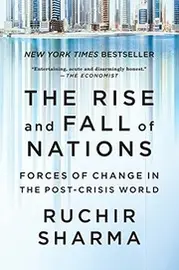 The rise and fall of nationsRuchir Sharma · 2016 · recommended by 2 people · loosely similar by subject
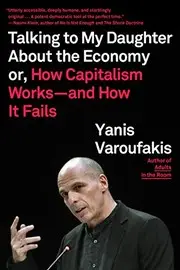 Talking to My Daughter About the EconomyYanis Varoufakis · 2017 · recommended by 3 people · loosely similar by subject