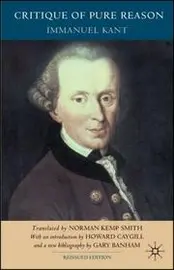
Critique of Pure Reason
Immanuel Kant · 1781
Philosophy and ancient history › Modern European philosophy
#234 most recommended
Hacker News
180
mentions by 132 people · top 2% of 15,732 books
Open Library
4.00★★★★★★★★★★
1 rating · 14 want to read
Wikipedia
13k
article views a month
About the book
The book examines the faculty of reason itself, asking what the mind can know a priori, independent of experience, and where its claims go beyond what it can legitimately establish. Its scope is theoretical reason, covering the forms of sensibility (space and time), the pure concepts of the understanding and their use in experience, and the illusions that arise when reason reaches for the soul, the world as a whole, and God. Kant claims that knowledge requires both sensible intuition and concepts, and that the mind supplies forms such as space, time, and the categories that structure any possible experience. Objects as we know them are therefore appearances, while things in themselves lie beyond theoretical knowledge. He argues that synthetic a priori judgments are nonetheless possible, which grounds mathematics and the principles of natural science. When reason applies its concepts beyond experience, it produces unavoidable illusions and conflicting arguments, the antinomies, so metaphysical claims about the self, the cosmos, and God cannot be known but are limited to a practical role.
Written by Claude from what it knows of this book.
What Hacker News says 21% recommend · 5% critical
In the commenters’ own words
Here's my promised list (note it's only a rough guide). As mentioned, I couldn't post earlier versions as they were too big. Even this new rehash (which was…
> I was raised atheist and I've always felt like a believe in the supernatural doesn't mix with an intellectual, scientific view on the world. This is of…
What Open Library readers say 4.00 from 1 rating
- 50
- 41
- 30
- 20
- 10
- 14 want to read
- 2 reading
- 2 have read
Only 1 rating: treat the average as a hint.
What Wikipedia says
- published 1781
- 856 pages
- articles in 51 languages
Reddit communities — coming later
The threads it came up in
- Ask HN: What books changed the way you think about almost everything?
- Ask HN: What books have made the biggest impact on your mental models?
- Ask HN: Great books you read in 2009?
- Ask HN: Which books do you consider real gems in your field of work/study?
- Ask HN: What books do you keep on your desk?
- Ask HN: What are your favorite books or essays written at least 100 years ago?
- What are you reading?
- Ask HN: What's one book that changed your life?
Details
- First published
- 1781
- ISBN
- 9780230013377
- Editions known
- 4 at Open Library
- Open Library
- OL99703W
121B2778.e5 s63 2007CausationKnowledge, theory ofReasonTheory of Knowledge
Read next: its neighbours on the mosaic
 Prolegomena to any future metaphysicsImmanuel Kant · 1783 · recommended by 4 people · named together in 3 comments
 The phenomenology of spiritGeorg Wilhelm Friedrich Hegel · 1807 · recommended by 7 people · 3 people recommended both
 Essay concerning human understandingJohn Locke · 1689 · recommended by 5 people · named together in 3 comments
 Being and NothingnessJean-Paul Sartre · 1943 · recommended by 4 people · 2 people recommended both
 The Interpretation of DreamsSigmund Freud · 1899 · recommended by 4 people · similar by subject and what people say about it
 The Birth of TragedyFriedrich Nietzsche · 1872 · recommended by 5 people · similar by subject and what people say about it
 The science of logicGeorg Wilhelm Friedrich Hegel · 1812 · recommended by 3 people · similar by subject and what people say about it
 Thus Spoke ZarathustraFriedrich Nietzsche · 1883 · recommended by 31 people · 2 people recommended both
 Heidegger's Being And TimeWilliam Blattner · 2007 · recommended by 8 people · named together in 2 comments
 Nicomachean EthicsAristotle · 1558 · recommended by 28 people · 2 people recommended both
 Second Treatise of GovernmentJohn Locke · 2016 · recommended by 5 people · 2 people recommended both
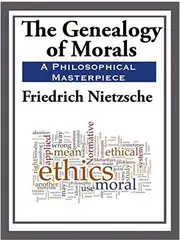 Geneaology of MoralsFriedrich Nietzsche · 2012 · recommended by 3 people · similar by subject and what people say about it
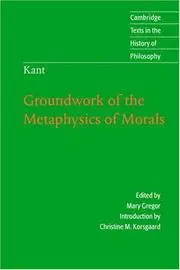 Groundwork of the metaphysics of moralsImmanuel Kant · 1964 · recommended by 4 people · similar by subject and what people say about it
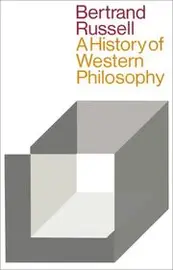 A History of Western PhilosophyBertrand Russell · 1945 · recommended by 64 people · named together in 3 comments
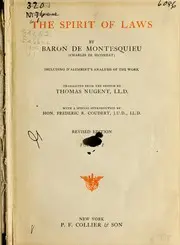 The spirit of the lawsCharles-Louis de Secondat baron de La Brède et de Montesquieu · 2010 · recommended by 4 people · similar by subject and what people say about it
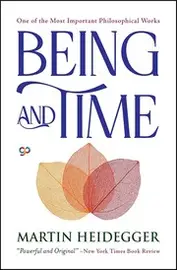 Being and TimeMartin Heidegger · 1927 · recommended by 13 people · named together in 2 comments
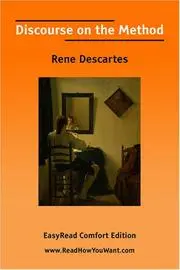 Discourse on the methodRené Descartes · 1637 · recommended by 8 people · similar by subject and what people say about it
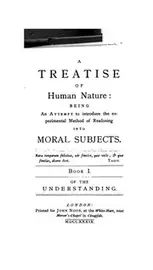 A treatise of human natureDavid Hume · 1739 · recommended by 12 people · named together in 2 comments
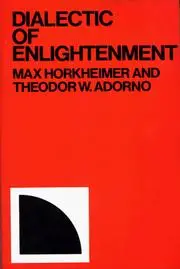 Dialectic of EnlightenmentTheodor W. Adorno · 1944 · recommended by 10 people · similar by subject and what people say about it
 The Structure of Scientific RevolutionsThomas S. Kuhn · 1962 · recommended by 96 people · similar by subject and what people say about it
 The Sublime Object of IdeologySlavoj Žižek · 1989 · recommended by 8 people · similar by subject and what people say about it
 An enquiry concerning human understandingDavid Hume · 1748 · recommended by 18 people · similar by subject and what people say about it
 The Problems of PhilosophyBertrand Russell · 1912 · recommended by 17 people · similar by subject and what people say about it
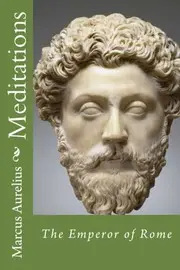 MeditationsMarcus Aurelius · 2016 · recommended by 284 people · similar by subject and what people say about it