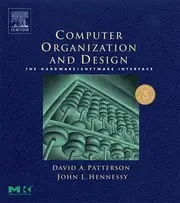
Computer organization and design
David A. Patterson · 2004
Programming and computer science › Electronics and computer architecture
#455 most recommended
Hacker News
101
mentions by 84 people · top 4% of 15,732 books
Open Library
4.00★★★★★★★★★★
1 rating · 31 want to read
Wikipedia
—
No article yet
About the book
A textbook on how computer hardware and software fit together, covering the path from high-level code and compilers down to the processor, memory, and I/O. It builds up a simple MIPS processor design, with assembly-to-C and assembly-to-Java translations and Real Stuff sections on commercial chips such as Intel IA-32, PowerPC 604, and AMD Opteron, along with benchmark suites. The central claim is that programmers and engineers need to understand the hardware/software interface, meaning the instruction set architecture, to reason about performance and correctness. It presents a small, concrete MIPS design as a way to teach the principles of datapath, control, pipelining, and memory hierarchy. It also argues that design choices should be judged quantitatively, using measured benchmarks and cost-performance trade-offs, rather than by intuition.
Written by Claude from what it knows of this book.
What Hacker News says 60% recommend · 2% critical
In the commenters’ own words
Now that you've got a foundation in software development we can move onto exploit-development. Well not quite first you need to bridge your knowledge from…
I'm extremely grateful and was not at all expecting such an explanation. I wanna exlpain few things. Let me rephrase what I meant by "minimize the time…
What Open Library readers say 4.00 from 1 rating
- 50
- 41
- 30
- 20
- 10
- 31 want to read
- 3 reading
- 1 have read
Only 1 rating: treat the average as a hint.
What critics say, via Wikipedia
No Wikipedia article about this book yet, so no critics to quote.
Reddit communities — coming later
The threads it came up in
- Ask HN: Books with a high signal to noise ratio?
- Ask HN: Do you recall any book or course that made a topic finally click?
- Ask HN: What are you reading Feb 2024
- Ask HN: What books are recommended to learn the semiconductor industry?
- Ask HN: Best book for understanding hardware-software interface
- A Crash Course in Computer Science: Reading List
- Ask HN: What book/s do you recommend for learning computer architecture?
- Ask HN: What are your favorite books about computer hardware?
Details
- First published
- 2004
- ISBN
- 9780128017333
- Editions known
- 12 at Open Library
- Open Library
- OL2956523W
077744Computer architectureComputer engineeringComputer interfacesComputer organizationComputer scienceCs.cmp_sc.archEngineering (general)GeneralMicroelectronicsMicroprocessorsPhysical & earth sciences -> science -> generalProfessional, career & trade -> computer science -> computer engineering
Read next: its neighbours on the mosaic
 Computer architectureJohn L. Hennessy · 1989 · recommended by 59 people · 4 people recommended both
 Computer organization and architectureWilliam Stallings · 1987 · recommended by 3 people · similar by subject and what people say about it
 Computation structuresStephen A. Ward · 1990 · recommended by 8 people · 2 people recommended both
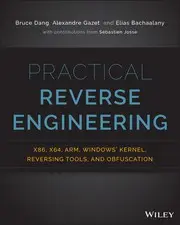 Practical Reverse EngineeringBruce Dang · 2014 · recommended by 6 people · 2 people recommended both
 Computer architectureCaxton C. Foster · 1970 · recommended by 5 people · similar by subject and what people say about it
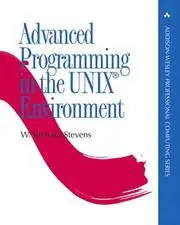 Advanced programming in the Unix environmentW. Richard Stevens · 1992 · recommended by 100 people · 5 people recommended both
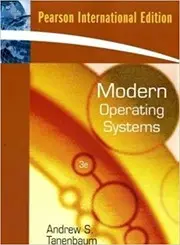 Modern Operating SystemsAndrew S. Tanenbaum · 1992 · recommended by 52 people · 3 people recommended both
 Digital integrated circuitsJan M. Rabaey · 1995 · recommended by 1 person · similar by subject and what people say about it
 The Practice of ProgrammingBrian W. Kernighan · 1999 · recommended by 90 people · 4 people recommended both
 Compilers, principles, techniques, and toolsAlfred V. Aho · 1986 · recommended by 195 people · 4 people recommended both
 Digital Design and Computer ArchitectureSarah Harris · 2010 · recommended by 26 people · named together in 2 comments
 Algorithm designJon Kleinberg · 1922 · recommended by 30 people · 2 people recommended both
 Inside the MachineJon Stokes · 2006 · recommended by 27 people · 2 people recommended both
 Design of the Unix Operating SystemMaurice J. Bach · 1986 · recommended by 23 people · 2 people recommended both
 The art of electronicsPaul Horowitz · 1980 · recommended by 153 people · 3 people recommended both
 The Elements of Computing SystemsNoam Nisan · 2005 · recommended by 204 people · named together in 3 comments
 The algorithm design manualSteven S. Skiena · 1998 · recommended by 195 people · 5 people recommended both
 Computer Organization and Design RISC-V EditionDavid A. Patterson · 2017 · recommended by 6 people · similar by subject and what people say about it
 Structured Computer OrganizationAndrew S. Tanenbaum · 1975 · recommended by 21 people · similar by subject and what people say about it
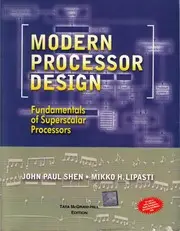 Modern processor designJohn Paul Shen · 2005 · recommended by 6 people · similar by subject and what people say about it
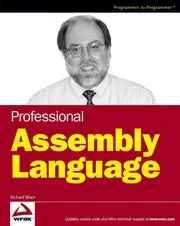 Professional assembly languageRichard Blum · 2005 · recommended by 5 people · similar by subject and what people say about it
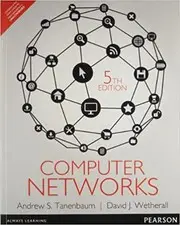 Computer NetworksAndrew S. Tanenbaum · 1981 · recommended by 50 people · similar by subject and what people say about it
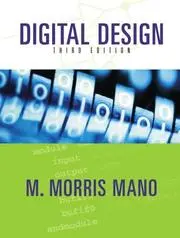 Digital designM. Morris Mano · 1984 · recommended by 5 people · similar by subject and what people say about it
 Operating System ConceptsAbraham Silberschatz · 1982 · recommended by 26 people · similar by subject and what people say about it